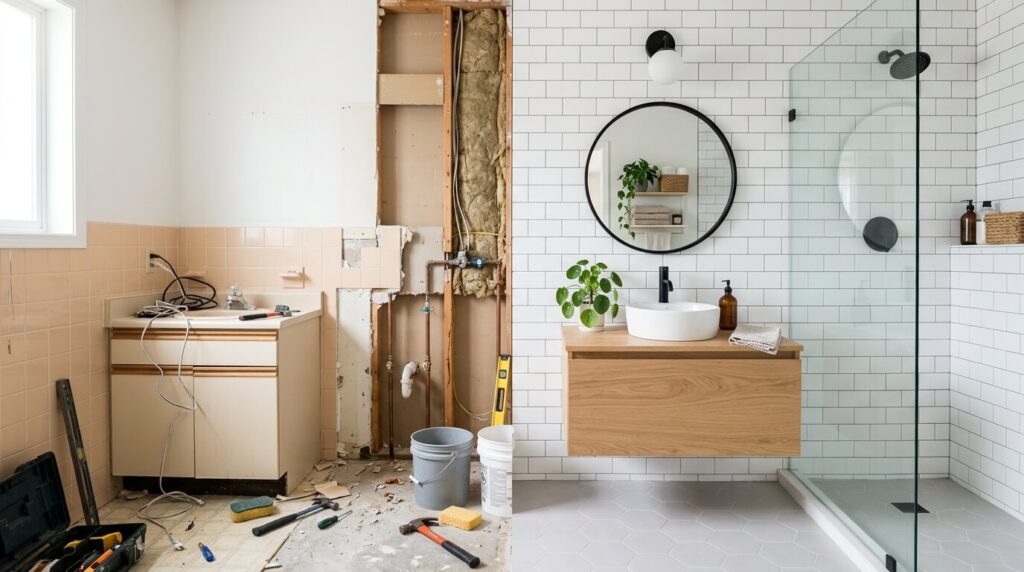
A bathroom reno on a budget doesn’t have to mean a sad, half-finished space. It means making a handful of smart calls — about where your money actually shows up, what you can safely do yourself, and what order to do things in — so you don’t end up redoing work you just paid for.
This guide skips the vague inspiration-board advice and gets into real numbers, a clear splurge-vs-save framework, and the planning steps that keep a small budget from turning into a money pit.
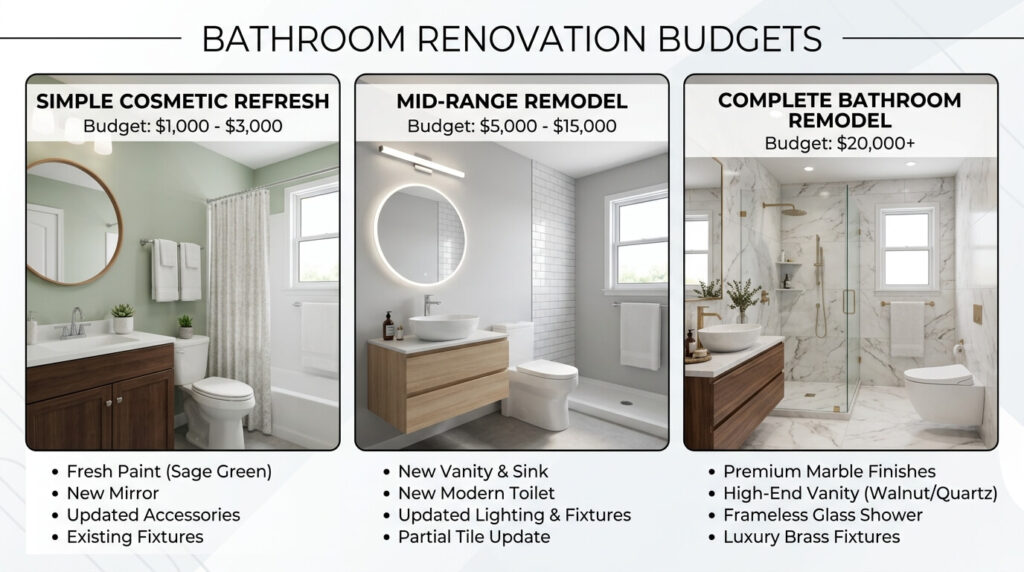
What “Budget” Actually Means: 3 Renovation Tiers
“Budget bathroom remodel” means different things depending on what you’re starting with. Before picking ideas, figure out which tier you’re in.
| Tier | What’s Involved | Typical Cost Range |
|---|---|---|
| Cosmetic refresh | Paint, hardware, mirror, lighting, accessories — no plumbing or layout changes | $300–$1,500 |
| Mid-range update | New vanity, new tile in key areas, new toilet, updated fixtures — same layout, same plumbing | $3,000–$8,000 |
| Full remodel, kept layout | Gut to the studs but plumbing and fixtures stay in their original spots | $8,000–$15,000+ |
Flag for citation: insert a current, sourced national average cost-per-square-foot figure here from a reputable industry cost guide (e.g., HomeAdvisor, NAHB, or a regional contractor association report).
The single biggest budget-killer is moving plumbing. Relocating a toilet, tub, or shower drain means cutting into the slab or subfloor, which adds labor and inspection costs fast. If you only do one thing to protect your budget, keep fixtures where they already are.
Bathroom Reno On A Budget Guide
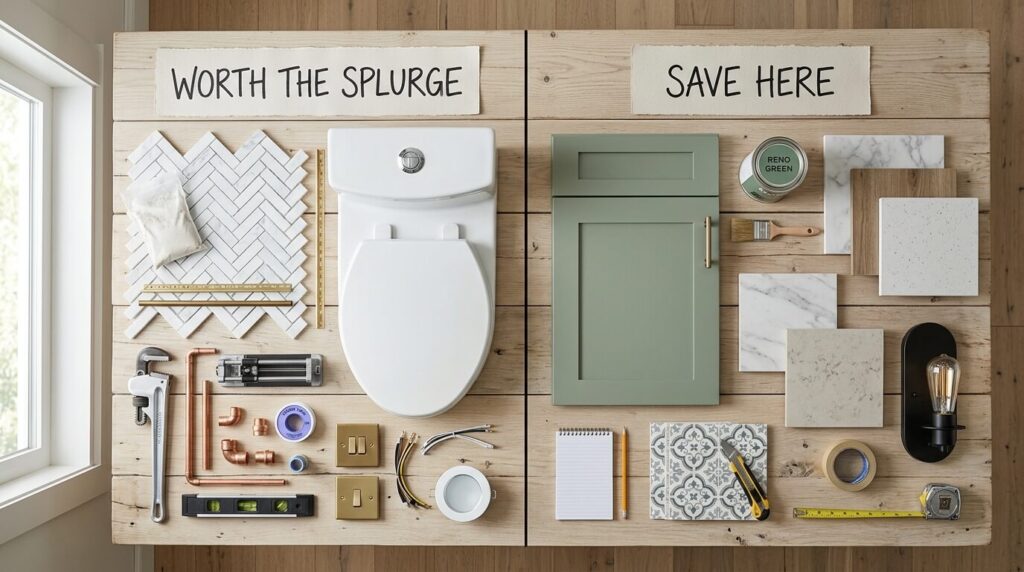
Where to Splurge (and Why It Pays Off)
Not every dollar in a bathroom budget should go toward “cheap.” A few categories are worth the extra spend because they’re either hard to redo or directly tied to safety.
Tile in wet areas. Cheap tile in a shower can fail at the grout line within a few years, leading to water damage behind the wall — a repair that costs far more than the tile savings. Spend more on shower-floor and surround tile; save on tile outside the wet zone.
Plumbing and electrical labor. This is foundational work that’s expensive to redo and risky to get wrong. A poorly sealed shower pan or an ungrounded GFCI outlet isn’t a place to cut corners — hire a licensed pro for both.
The toilet. A mid-range toilet with a reliable flush mechanism saves on water bills and avoids the all-too-common cycle of replacing a bargain toilet within a couple of years.
Where to Save (Without It Looking Cheap)
Countertops. Quartz looks high-end but laminate and butcher block have both come a long way in style and durability — and cost a fraction per square foot.
Cabinets. Refacing or repainting an existing vanity cabinet, rather than replacing it, can cut this line item dramatically. If you do need a new vanity, look for one that bundles the sink and countertop together — buying those pieces separately often costs hundreds more.
Lighting. LED fixtures cost more upfront but use less energy and last longer, which actually makes them a save in the long run, not a splurge.
Tile outside the shower. Peel-and-stick tile on an accent wall or backsplash gets the visual impact of tile at a fraction of the material and labor cost — just don’t use it inside the wet zone.
| Category | Splurge | Save Instead |
|---|---|---|
| Countertop | Granite/marble | Laminate or butcher block |
| Cabinets | Full custom replacement | Reface or repaint existing |
| Tile | Wet-zone tile | Peel-and-stick for accent areas |
| Fixtures | Toilet, plumbing labor | Lighting fixtures, hardware |
DIY vs. Hire a Pro: A Decision Framework
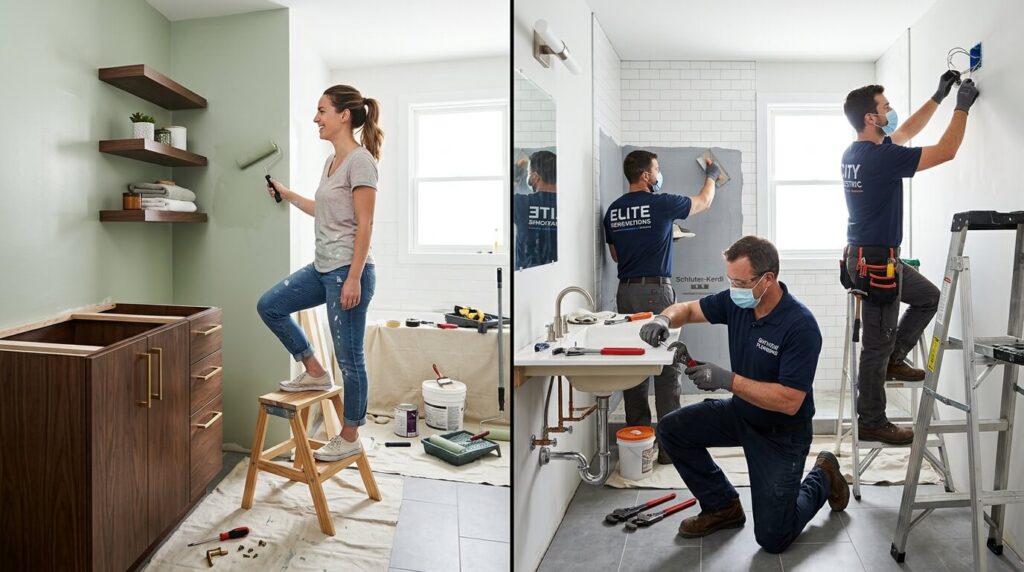
The fastest way to blow a budget is hiring a pro for something you could’ve done yourself — or DIYing something that needed a license. Use this as a rough filter:
Safe to DIY for most people:
- Painting walls, trim, and cabinets
- Swapping hardware, towel bars, and light fixture shades
- Installing floating shelves or wall-mounted storage
- Caulking and regrouting
- Installing peel-and-stick tile on dry, non-structural surfaces
Hire a licensed professional for:
- Any work that opens a wall where plumbing or wiring runs
- Shower pan installation and waterproofing (slope and membrane mistakes cause mold and rot you won’t see until it’s expensive)
- New circuits, GFCI outlets, or exhaust fan wiring
- Moving a toilet, tub, or shower drain
A good middle ground: hire a pro for the plumbing and electrical rough-in, then DIY the paint, tile-setting, and finish work yourself once the dangerous parts are done correctly.
Author/expertise note: this is a good spot to cite a licensed contractor or insert a first-hand renovation example with a real itemized budget, similar to how a personal renovation blog might document actual line-item costs.
The Right Order of Operations
Sequencing matters more than people expect on a tight budget, because doing things out of order means redoing finished work.
- Demo and inspect. Open things up before buying finishes — you need to know what’s behind the walls (rot, mold, old wiring) before committing to a budget.
- Plumbing and electrical rough-in. Get this inspected and signed off before closing up any walls.
- Waterproofing and tile substrate. This is where shower failures start if rushed.
- Flooring and wet-area tile.
- Vanity, toilet, and fixture installation.
- Paint, hardware, lighting, and decor.
Buying finish materials (tile, vanity, fixtures) before this sequence is confirmed is one of the most common budget mistakes — measurements change once demo reveals what’s actually there.
8 No-Demo Cosmetic Upgrades
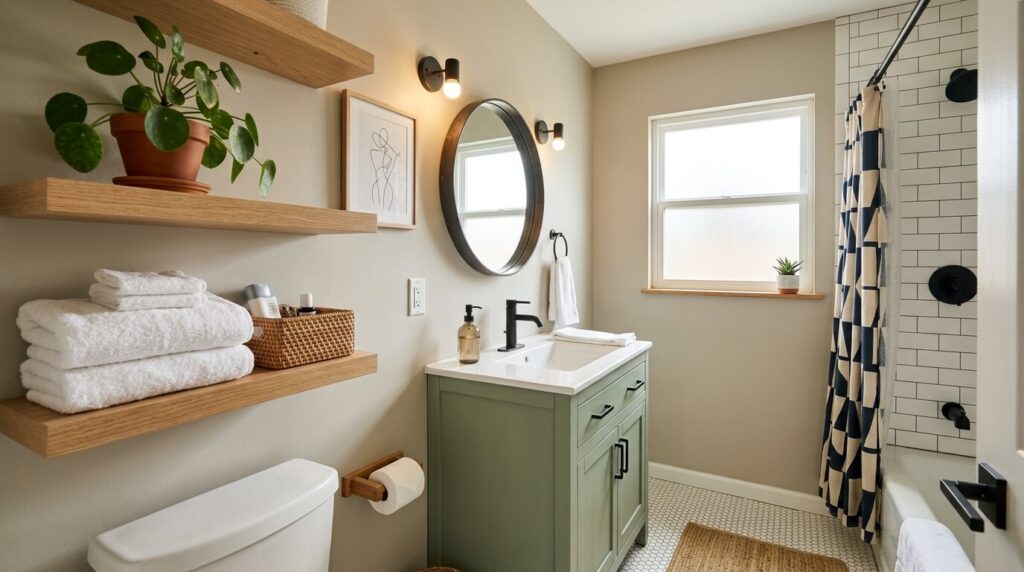
If you’re in the cosmetic-refresh tier, these moves give the biggest visual return without touching plumbing or walls:
- Repaint walls, ceiling, and vanity in one cohesive light, neutral tone
- Reframe or replace the mirror with a framed or backlit option
- Swap cabinet hardware and faucets for a matching finish
- Add floating shelves or a wall-mounted organizer for storage
- Use a grout pen to refresh tile lines instead of full regrouting
- Hang a patterned fabric shower curtain instead of a plastic liner
- Add a small accent rug and matching towel/accessory set
- Bring in a low-light, humidity-tolerant plant for warmth
Hidden Costs That Blow Budgets
These are the line items that don’t show up on a Pinterest board but show up on the invoice:
- Mold or water damage discovered behind old tile or under a tub
- Outdated wiring that doesn’t meet current code, requiring an upgrade before new fixtures can be installed
- Permit fees, which vary by city and project scope
- Subfloor repair if there’s been a slow leak under the flooring
- Disposal/dumpster fees for demo debris
Building a 15–20% contingency into the budget upfront — rather than treating it as optional — is what separates renovations that stay on budget from ones that don’t.
Smart Shopping Strategies
- Compare prices online by model number before buying in-store; factor in tax and shipping, since “free shipping plus no sales tax” online deals can beat in-store pricing.
- Check secondhand sources — local marketplace listings, salvage yards, and warehouse discounters that resell open-box or returned fixtures — for vanities, medicine cabinets, and lighting at a steep discount.
- Buy tile with straight edges rather than hexagon or mosaic patterns; fewer cuts during installation means lower labor costs even if the material price is similar.
- Time material purchases around seasonal sales and clearance events rather than buying everything at full price at once.
FAQ For Bathroom Reno On A Budget
How much does a budget bathroom remodel cost?
A cosmetic refresh typically runs $300–$1,500, while a mid-range update that keeps the existing layout falls between $3,000 and $8,000. Full remodels that preserve plumbing locations can still run $8,000–$15,000+, but that’s far less than a remodel involving moved plumbing.
What is the cheapest way to remodel a bathroom?
Keep all plumbing and fixtures in their existing locations, do the demo and finish work yourself, and focus spending on the wet-area tile and a reliable toilet rather than countertops or cabinets.
What should I splurge on in a bathroom remodel?
Wet-zone tile, the toilet, and any plumbing or electrical labor — these are the hardest and most expensive items to fix later if done poorly.
Can I remodel a bathroom myself to save money?
Yes, for cosmetic work like painting, hardware swaps, and storage additions. Leave shower waterproofing, plumbing relocation, and electrical wiring to a licensed professional.
What adds the most value to a bathroom remodel on a budget?
A new vanity with an integrated sink and countertop, a refreshed tile surface in the shower, and updated lighting tend to offer the best visual return relative to cost.
How long does a budget bathroom renovation take?
cosmetic refresh can be done over a weekend. A mid-range update that keeps the layout intact typically takes one to two weeks, depending on contractor availability and material lead times.
Final Thoughts
A bathroom reno on a budget comes down to three decisions: which tier you’re actually working in, where your money does the most good (tile, plumbing, the toilet), and what order you tackle the work in so you’re not redoing anything. Start with the cost table above, pick your tier honestly, and build in that contingency before you fall in love with a finish you haven’t priced out yet.
Call to action: ready to map out your own budget? Start by sketching your bathroom’s current layout and listing what’s actually staying versus moving — that one step prevents most of the budget surprises above.