
There’s a reason the wood bathroom vanity has never really gone out of style. Other materials cycle in and out — polished chrome, lacquered MDF, painted wood composites — but a well-chosen wood vanity stays. It ages gracefully, adds genuine warmth to a space that can easily feel clinical, and carries a tactile richness that no engineered material quite replicates.
But choosing a wood bathroom vanity is more nuanced than picking a finish you like online. Wood and water have a complicated relationship. Humidity, steam, and daily splashes can accelerate warping, cracking, or swelling if the wrong species or finish is used in the wrong setting. Get it right, though, and your vanity could outlast two or three sets of tile replacements.
This guide covers everything — wood species, moisture protection, sizing, style pairings, buying mistakes, and long-term care — so you can make a decision you’ll still love a decade from now.
Why Wood Bathroom Vanities Are Having a Lasting Moment
Interior design trends come in waves. But the current move toward natural materials isn’t a passing phase — it reflects a deeper cultural shift toward biophilic design, sustainability, and homes that feel genuinely lived in rather than staged.
Wood brings something irreplaceable: organic variation. Every plank has its own grain pattern, its own knots and imperfections. That means no two wood vanities are ever truly identical, which matters to people who want their bathroom to feel personal rather than catalog-perfect.
Designers have also noted the psychological effect. Spaces with natural wood elements tend to feel calmer and more grounding — qualities especially welcome in a room built around morning routines and winding down at night.
From a market perspective, searches for “natural wood bathroom vanity” and “warm bathroom design” have climbed steadily over the past three years. Light woods like white oak and maple have seen the sharpest growth, largely because they work equally well in Scandinavian, transitional, and modern interiors without forcing an aesthetic commitment.
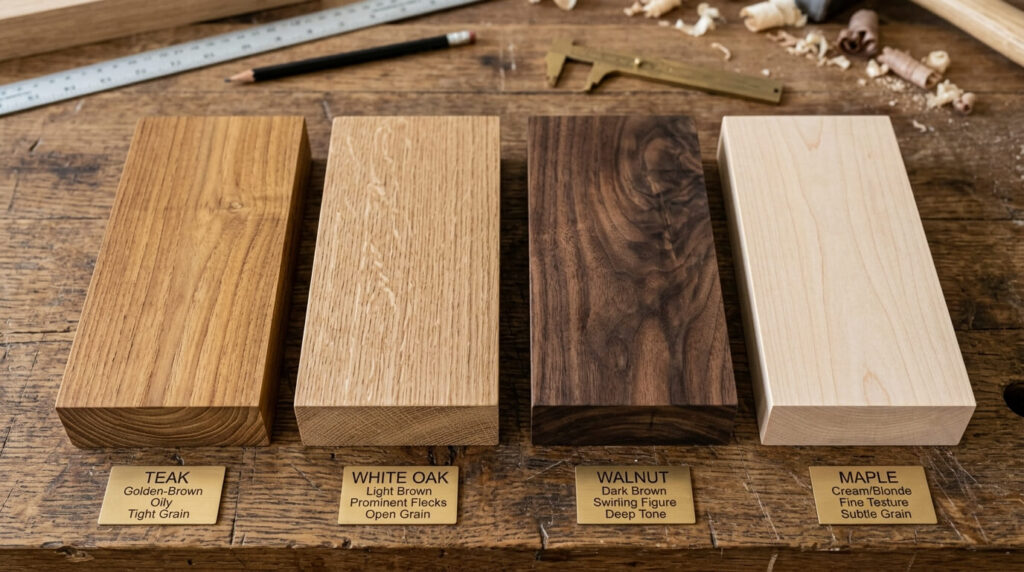
The Best Wood Species for a Bathroom Vanity
Not all wood performs equally in a humid environment. Here’s how the most common species stack up:
| Wood Species | Moisture Resistance | Grain Character | Typical Tone | Best For |
|---|---|---|---|---|
| Teak | Excellent (natural oils) | Medium, straight | Warm golden-brown | Master baths, high-humidity rooms |
| White Oak | Very Good | Pronounced, with ray flecks | Light to medium tan | Modern, Scandinavian, transitional |
| Walnut | Good | Rich, flowing | Deep chocolate brown | Luxury, mid-century modern, moody bathrooms |
| Maple | Good | Fine, subtle | Creamy white to light tan | Contemporary, minimalist |
| Bamboo | Very Good | Tight, linear | Pale blonde or carbonized amber | Eco-conscious, spa-inspired |
| Pine | Fair | Knotty, rustic | Light yellow to amber | Farmhouse, cottage, budget builds |
| Cherry | Good | Smooth, medium | Reddish-brown (deepens with age) | Traditional, classic interiors |
The real-world takeaway: Teak is the gold standard for bathroom use because of its natural silica and oil content, which repel water at a molecular level. White oak is the practical favorite — widely available, dimensionally stable, and gorgeous with a matte or satin finish. Walnut is stunning but benefits from more careful sealing in high-humidity bathrooms.
Solid Wood vs. Wood Veneer vs. MDF with Wood Finish: What’s the Real Difference?
One of the most common points of confusion is understanding what “wood bathroom vanity” actually means on a product listing. These three constructions behave very differently:
Solid wood is exactly what it sounds like — planks or panels milled from a single species. It’s the most durable, refinishable, and authentic option. It can also expand and contract slightly with seasonal humidity changes, which is worth knowing before installation.
Wood veneer uses a thin layer of real wood (often 1–3mm) bonded over a substrate like MDF or plywood. Done well, it looks identical to solid wood while offering better dimensional stability. The limitation is that it can only be lightly sanded and refinished once or twice before the veneer layer is compromised.
MDF or plywood with a wood-look finish is neither solid nor veneer — it’s a printed or foil finish applied to an engineered core. It’s cost-effective and moisture-resistant when the finish is intact, but chips, peels, and cannot be refinished if the surface is damaged.
For a bathroom vanity you plan to keep for 10+ years, solid wood or high-quality veneer over birch plywood is worth the investment. MDF-core vanities work well for rental properties, guest baths, or lower-traffic applications.
How Bathroom Humidity Actually Affects Wood (And What to Do About It)
Here’s what most buying guides skim over: the enemy isn’t water itself — it’s the cycle of moisture absorption and drying. When a bathroom heats up during a shower and cools after, wood absorbs humidity and then releases it. Over time, this cycling can cause warping, joint separation, or finish degradation.
The good news is that this is almost entirely preventable with the right choices and simple habits.
Protective Finish Options
- Polyurethane (oil or water-based): The most common protective coating. Water-based polyurethane dries clear and resists yellowing; oil-based offers slightly more durability but can amber over time.
- Teak oil: Best for teak wood specifically. Penetrates the grain to reinforce the wood’s natural water resistance.
- Hardwax oil: Popular in European cabinetry; provides a natural, matte look while still repelling moisture.
- Marine varnish: Used in boat building — tough, glossy, and extremely water resistant. Overkill for most bathrooms, but worth considering in very wet environments.
Ventilation: The Underrated Factor
No finish lasts indefinitely if your bathroom doesn’t breathe. Running the exhaust fan during and for 15–20 minutes after every shower reduces the ambient humidity enough to dramatically extend the life of any wood surface — not just your vanity, but your flooring, mirror frames, and wall paint too.
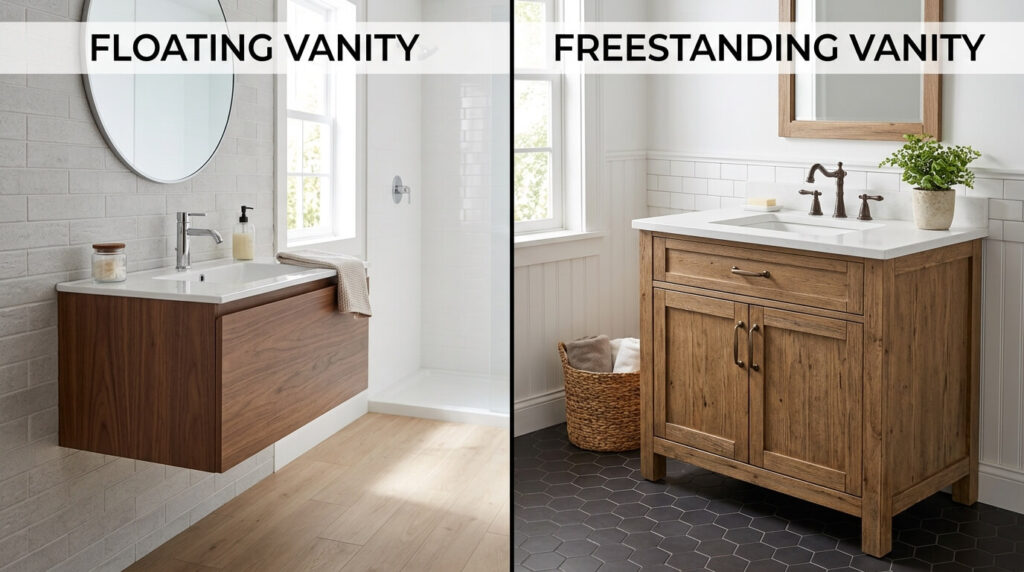
Floating vs. Freestanding Wood Vanities: Which Is Right for You?
Both styles look excellent in natural wood finishes, but they serve different functions.
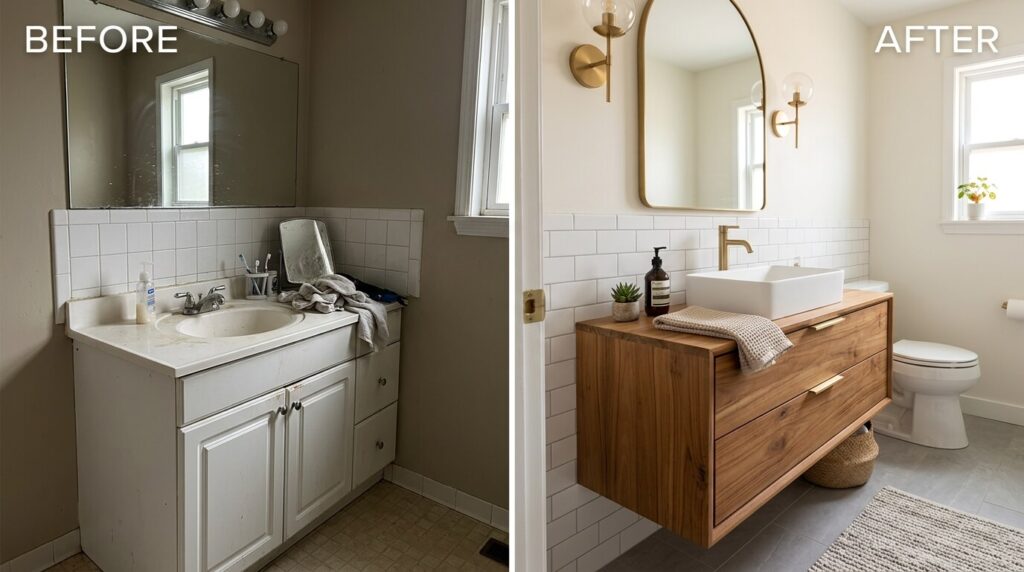
Floating (wall-mounted) wood vanities are mounted directly to the wall with no floor contact. This has several advantages: the floor reads as continuous beneath it, making smaller bathrooms feel larger; there’s no junction between the vanity base and the floor where water can pool and cause damage; and cleaning the floor is significantly easier. The trade-off is that installation requires locating wall studs and supporting adequate weight — important when you’re adding a solid wood cabinet, mirror, and countertop.
Freestanding wood vanities sit on the floor with legs or a toe kick. They’re typically easier to install, offer more storage in the base cabinet, and feel more traditional or furniture-like in their presence. The classic “furniture-style” bathroom vanity — with tapered legs, an apron front, or decorative hardware — is almost always freestanding.
Which to choose?
- Floating: modern or minimalist bathrooms, smaller rooms, households that prioritize easy cleaning
- Freestanding: traditional, farmhouse, or transitional spaces; larger bathrooms; when maximizing storage is essential
Sizing a Wood Bathroom Vanity: Getting the Proportions Right
Vanity sizing affects both function and the visual balance of the room. Here’s a practical framework:
Width:
- 24″–30″: Ideal for powder rooms and small single-person bathrooms
- 36″–48″: Standard for a single-sink primary bathroom
- 60″–72″: Double sink; appropriate when two people share the space and the room is at least 7’–8′ wide
Depth: Standard vanity depth is 21″–22″. Going shallower (18″) preserves floor space in tight bathrooms but limits under-sink storage. Going deeper (24″) accommodates larger sinks and feels more furniture-like but requires more clearance in front.
Height: Standard is 32″–34″. Comfort-height vanities at 35″–36″ are increasingly popular — they reduce back strain for taller adults and are especially worth considering if you’re remodeling for accessibility.
Rule of thumb for bathroom proportion: Leave at least 21″ of clearance between the vanity and the opposite wall or toilet for comfortable use. In a double-vanity setup, you’ll want the room to be at least 60″ wide (exclusive of doorways) to avoid a cramped feeling.
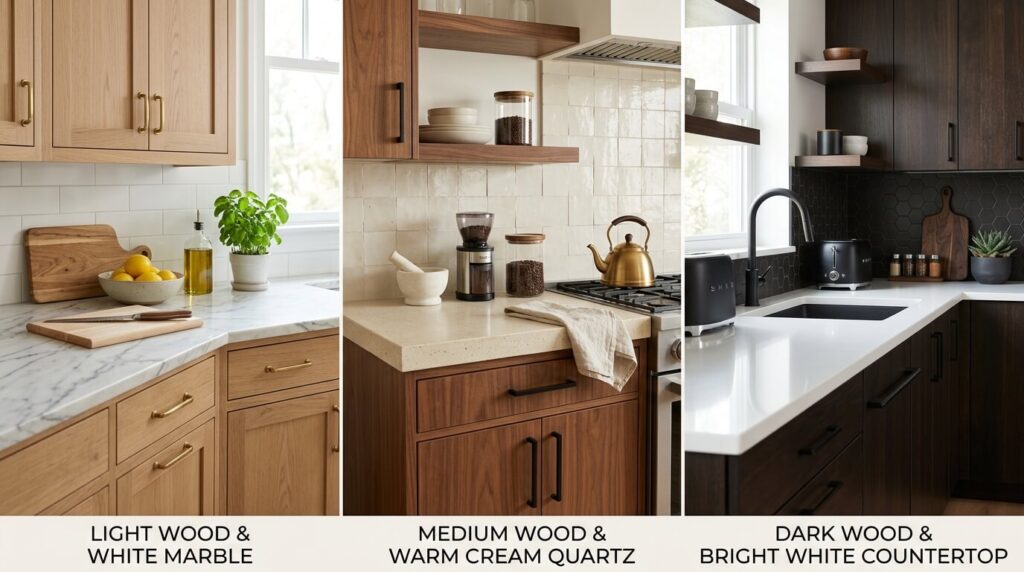
Wood Tones and Interior Design: A Practical Pairing Guide
One of the most common mistakes buyers make is choosing a wood tone they love in isolation without considering what it will live alongside in the finished room.
Light wood vanities (white oak, maple, birch, blonde teak): These work beautifully with white subway tile, polished or matte black hardware, light gray floors, and brushed nickel fixtures. They suit Scandinavian, modern farmhouse, and transitional styles. Pair with warm-white walls (not cool white, which can make light wood look yellowish) for the best result.
Medium wood vanities (red oak, cherry, natural walnut at mid-range): Versatile enough for transitional and traditional interiors. These tones pair well with creamy subway tile, oil-rubbed bronze or antique brass hardware, and warm-toned countertops like beige marble or quartz.
Dark wood vanities (espresso, ebonized oak, dark walnut): Dramatic and grounding. These work best in larger bathrooms where they won’t make the space feel cave-like. Pair with white or light gray countertops, plenty of lighting (especially vanity lighting at mirror level), and matte or polished gold hardware for a luxurious result.
Countertop pairings by wood tone:
| Wood Tone | Best Countertop Pairings |
|---|---|
| Light (blonde, natural oak) | White marble, white quartz, concrete, light limestone |
| Medium (honey, warm walnut) | Calacatta marble, cream quartz, soapstone |
| Dark (espresso, ebonized) | White Carrara marble, bright white quartz, terrazzo |
7 Common Mistakes When Buying a Wood Bathroom Vanity
Most buying regrets come from a handful of predictable missteps. Here’s what to avoid:
1. Choosing style before measuring. A vanity that looks perfect in a photo can look cramped or oversized once installed. Measure your space first — including door swing clearance — before falling in love with a specific model.
2. Ignoring the finish quality. Raw or lightly finished wood in a bathroom is a recipe for damage. Always ask the manufacturer whether the finish is moisture-rated or confirm that you’ll be applying additional sealant before installation.
3. Overlooking the countertop overhang. Most pre-configured vanities include a countertop, but the overhang on the sides and front affects both aesthetics and splashback. An overhang of ¾” to 1″ is typical; anything less can look undersized.
4. Buying online without checking return policies. Wood grain, stain color, and overall tone can look significantly different on a screen versus in person. Whenever possible, request a physical sample chip or visit a showroom before committing.
5. Assuming all “solid wood” claims are equal. Confirm which species is used and whether all visible surfaces are solid or only the door fronts. Some vanities advertise “solid wood doors” but use MDF or plywood for the carcass — not necessarily a problem, but worth knowing.
6. Skipping the plumber’s conversation. If you’re changing vanity depth or sink configuration, your existing plumbing rough-in may need adjustment. A 15-minute conversation with a plumber before purchasing can save you a significant installation headache.
7. Underestimating lighting needs. Dark wood absorbs light. If you’re upgrading from a white or light-colored vanity, you may find the bathroom feels noticeably dimmer. Factor in new lighting — especially backlit mirrors or upgraded wall sconces — as part of the budget.
How to Care for a Wood Bathroom Vanity (Long-Term)
Proper care is simple but specific. Follow these habits and a quality wood vanity can last 20–30 years or more.
Daily habits:
- Wipe standing water off the countertop and backsplash immediately after use
- Keep a hand towel accessible so wet hands aren’t dragged across the wood surface
Weekly:
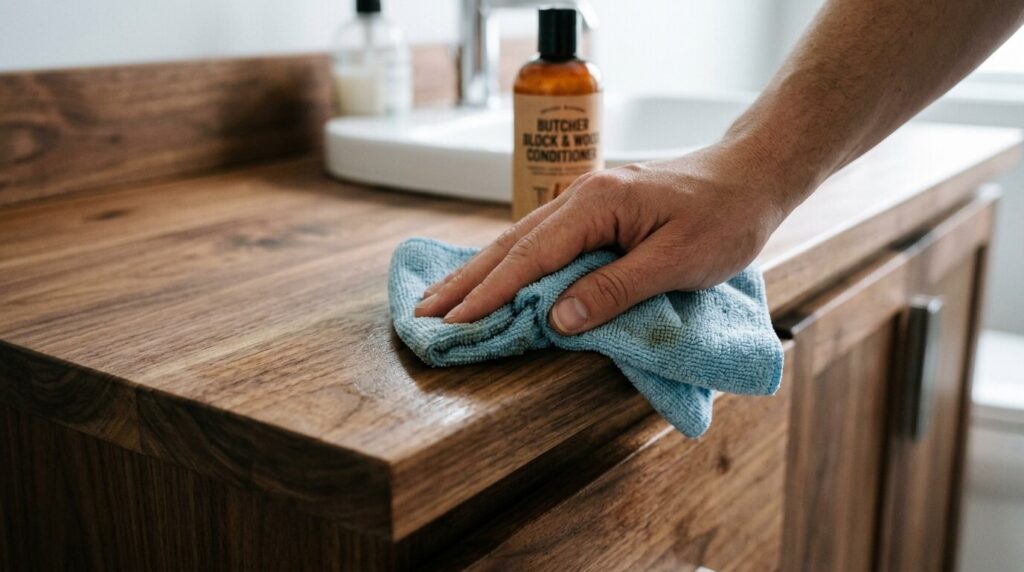
- Clean wood surfaces with a barely damp cloth; follow immediately with a dry cloth
- Avoid all-purpose sprays with bleach, ammonia, or high alcohol content — these degrade wood finishes over time
Annually:
- Inspect the finish for dullness, micro-scratches, or areas where water no longer beads up
- Apply a wood conditioner or a fresh coat of furniture-grade wax to maintain the protective layer
- Check caulk lines around the sink and countertop; reseal if cracking or separation is visible
If the finish is damaged:
- Light scratches in solid wood can often be buffed out with fine-grit sandpaper (220+) and refinished
- Veneer surfaces require more caution — light buffing only, no deep sanding
- Swollen or warped drawers are usually a sign of consistent water exposure; address the source before attempting to repair the wood
Is a Wood Bathroom Vanity Worth the Investment?
The honest answer is yes — provided you buy quality and maintain it. Here’s a simple way to think about it:
A well-made solid wood vanity costs more upfront than a painted MDF alternative but typically lasts 15–25 years with normal care. An MDF vanity in a frequently used bathroom may need replacement in 7–10 years due to swelling, delamination, or finish failure. Over two replacement cycles, the cheaper option often costs more in total — not including the labor of two full vanity removals and installations.
Wood also adds measurable home value. Bathrooms are consistently ranked among the highest-return renovation categories, and natural material finishes — particularly solid wood and stone — are features that resonate with buyers.
Conclusion
A wood bathroom vanity is one of those design choices that gets more rewarding over time. The right species, a quality finish, and a few simple care habits transform what could be a high-maintenance purchase into a bathroom centerpiece that genuinely improves with age.
Start with your bathroom’s humidity level and ventilation setup. Then choose a wood species suited to that environment. Match the tone to your existing tile, hardware, and light sources. And buy from a manufacturer who is transparent about construction quality — solid vs. veneer, finish type, and moisture ratings.
Done right, a wood bathroom vanity isn’t just furniture. It’s the visual anchor that makes everything else in the room make sense.
Frequently Asked Questions
Q: Is a wood bathroom vanity a good idea?
Yes, when properly sealed and maintained, a wood bathroom vanity is an excellent choice. Hardwoods like teak, white oak, and walnut offer durability, moisture resistance, and timeless visual appeal that most other materials can’t match over the long term.
Q: What is the best wood for a bathroom vanity?
Teak offers the best natural moisture resistance due to its inherent oil content. White oak is the most practical and widely available option, offering excellent stability and a beautiful grain that suits most design styles. Walnut is ideal for luxury or moody aesthetics, provided it’s properly sealed.
Q: Will a wood bathroom vanity warp or crack?
It can if exposed to consistent water contact without proper sealing, or if the bathroom has poor ventilation. Using a moisture-rated finish, running the exhaust fan during showers, and wiping up water immediately dramatically reduces this risk.
Q: How do I protect a wood vanity in a humid bathroom?
Apply a water-resistant finish (polyurethane, hardwax oil, or teak oil depending on the species). Ensure the bathroom has adequate ventilation. Clean with a barely damp cloth and avoid harsh chemical cleaners.
Q: What’s the difference between a solid wood vanity and a wood veneer vanity?
Solid wood is milled entirely from a single species and can be sanded and refinished multiple times. Wood veneer uses a thin real-wood layer over an engineered core — more dimensionally stable but limited in refinishing potential. Both can look identical from the surface.
Q: What countertop goes best with a wood bathroom vanity?
Light wood pairs beautifully with white or light marble and quartz. Medium wood tones work well with creamy or warm-toned stone. Dark wood vanities benefit from high-contrast white countertops that prevent the bathroom from feeling too heavy.
Q: How do I clean a wood bathroom vanity?
Use a slightly damp microfiber cloth, then immediately dry the surface. Avoid bleach, ammonia-based cleaners, and abrasive scrubbers. Annual conditioning with a furniture wax or wood conditioner helps preserve the finish.
Q: Are floating wood vanities harder to install?
They require more precise installation — studs must be located and the mounting hardware must support the full loaded weight of the vanity, sink, and countertop. A professional installation is recommended, particularly for solid wood floating vanities.