
Walk into almost any bathroom renovation showroom today and one thing immediately stands out: natural wood is everywhere. Not faux wood laminate. Not printed vinyl wrap. Real, tactile, grain-forward wood that makes a bathroom feel less like a utility room and more like a retreat.
If you’ve been considering a natural wood bathroom vanity, you’re in good company. But here’s what most buying guides won’t tell you: not all wood performs equally in a bathroom environment, styling choices that look stunning in a showroom can fall flat in your actual space, and the difference between a vanity that warps in two years and one that lasts twenty often comes down to a few decisions made before you even place the order.
This guide covers all of it — from wood species and moisture protection to design pairings and the maintenance mistakes that quietly ruin beautiful pieces.
Why Natural Wood Bathroom Vanities Are Dominating Bathroom Design
Bathroom trends have cycled through white-on-white minimalism, bold color cabinetry, and floating concrete basins. But the return to natural wood isn’t a passing trend — it’s a response to something deeper. People want warmth. They want authenticity. They want a space that doesn’t look like every other bathroom on Instagram.
Natural wood delivers on all three. The grain patterns are genuinely one-of-a-kind; no two pieces are identical. The tactile warmth of wood simply cannot be replicated by MDF with a wood-tone foil, no matter how convincing it looks in product photography.
There’s also a biophilic design principle at work. Research in environmental psychology consistently shows that natural materials — wood, stone, plant life — reduce cortisol levels and promote relaxation. For a room dedicated to personal care, that’s not a trivial consideration.
The 2025 bathroom design outlook reflects this clearly. Light oak, rift-sawn white oak, teak, and walnut vanities are appearing in everything from spa-style primary bathrooms to compact powder rooms where a single statement piece does all the visual heavy lifting.
Solid Wood vs. Wood Veneer vs. Wood-Look Alternatives
Before going further, it’s worth drawing clear lines between the three categories you’ll encounter while shopping.
- Solid wood vanities are constructed entirely (or primarily) from milled timber. They’re the most durable, most repairable, and most expensive option. Scratches can be sanded out. Joints can be re-glued. A well-made solid wood vanity can outlast the house.
- Wood veneer vanities use a thin layer of real wood over an engineered wood core (typically MDF or plywood). The surface looks identical to solid wood and handles moisture better in some cases, since the engineered core is less prone to expansion. The tradeoff: once the veneer is damaged, repair is difficult.
- Wood-look alternatives (thermofoil, PVC foil, printed laminate) are not natural wood. They’re included here only because they’re frequently marketed alongside genuine wood options. They cost less, clean easily, and fool the eye from a distance — but they don’t offer the longevity, repairability, or resale appeal of the real thing.
This guide focuses on the first two — real wood in its solid and veneered forms.
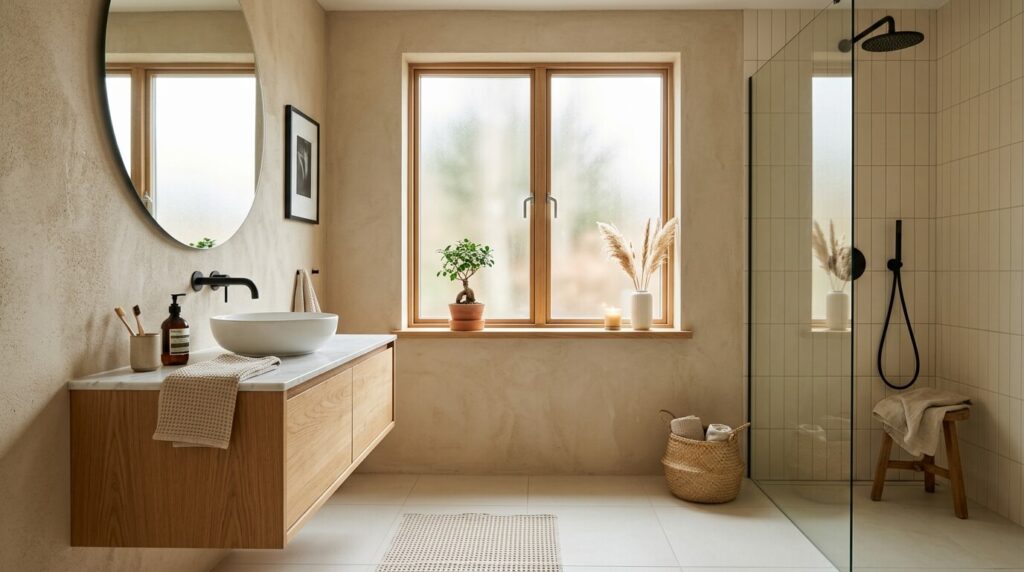
Best Wood Species for a Bathroom Vanity: A Comparative Breakdown
Choosing a wood species isn’t just an aesthetic decision. It determines how your vanity will respond to daily humidity cycles, steam exposure, and the occasional splash or drip. Here’s an honest breakdown of the most commonly used species:
| Wood Type | Best For | Moisture Resistance | Price Range |
| Teak | High-humidity bathrooms | Excellent (natural oils) | $$$–$$$$ |
| White Oak | Modern & transitional styles | Good (tight grain) | $$–$$$ |
| Walnut | Luxury & mid-century styles | Moderate (needs sealing) | $$$–$$$$ |
| Bamboo | Eco-conscious buyers | Very Good (dense fibers) | $–$$ |
| Acacia | Rustic & farmhouse designs | Good (naturally dense) | $$–$$$ |
Teak — The Gold Standard for Wet Environments
Teak has been used in boat building for centuries, and for good reason. Its natural silica content and high oil concentration make it extraordinarily resistant to moisture-related warping and cracking. In a bathroom with limited ventilation, teak is arguably the most forgiving wood you can choose. It’s golden-brown when new and develops a silvery-grey patina over time if left untreated — a look many homeowners actively seek out.
White Oak — The Workhorse of Modern Bathrooms
White oak has surged in popularity over the past five years, and it deserves every bit of the attention. Its tight, closed grain structure (compared to red oak’s more open grain) makes it significantly more moisture-resistant. It takes stains beautifully, works well with natural oils and water-based polyurethanes, and complements almost every design aesthetic from mid-century modern to Japandi to coastal farmhouse.
Walnut — Rich, Dark, and Distinctive
Walnut is what you choose when you want the vanity to be a conversation piece. Its deep chocolate tones and dramatic grain patterns are simply gorgeous. The tradeoff is that walnut is slightly more porous than oak or teak, meaning it needs more diligent sealing in a bathroom environment. In a well-ventilated bathroom with good exhaust, walnut performs beautifully. In a poorly ventilated space with chronic moisture, it requires more attention.
Bamboo — The Sustainable Dark Horse
Technically a grass, bamboo is engineered into dense panels that outperform many traditional hardwoods in moisture resistance. Its carbon footprint is dramatically lower than slow-growing hardwoods, making it the clear choice for environmentally-conscious buyers. Modern bamboo vanities have shed the utilitarian look of early-generation products; today’s options are refined, elegant, and available in a range of natural tones.
Acacia — Affordable Character
Acacia is often overlooked, but it punches well above its price point. The species features dramatic grain variation, natural color shifts within a single board, and respectable hardness. For rustic, farmhouse, or eclectic bathrooms, acacia delivers personality that more uniform species can’t match.
Moisture Is the Enemy: How to Protect Your Natural Wood Vanity
The single most common reason wood bathroom vanities fail prematurely is inadequate moisture protection — either a poor factory finish, improper installation, or neglectful maintenance. Here’s how to get it right from day one.
The Right Finish Makes All the Difference
When purchasing, always ask about the factory finish applied to the wood. The most protective options for bathroom applications are:
- Catalyzed lacquer — an extremely durable two-part finish that creates a hard, moisture-resistant shell. Used by many premium manufacturers. Difficult to touch up at home but very long-lasting.
- Water-based polyurethane — applies clear, resists yellowing, and provides solid moisture protection. More DIY-friendly for touch-ups and reapplication.
- Penetrating oil (tung oil, Danish oil) — soaks into the wood grain rather than sitting on top. Provides a natural, matte look. Requires more frequent reapplication (typically annually) but is easy to maintain.
- Marine-grade varnish — overkill for most bathrooms, but appropriate for coastal homes or bathrooms with chronic high humidity.
Avoid: wax finishes (insufficient moisture protection), shellac (not water-resistant), and unfinished wood left in a bathroom for any significant length of time.
Installation Gaps and Caulking
Water damage to wood vanities rarely starts at the front of the cabinet — it starts where the vanity meets the wall, the floor, or the countertop. Ensure every joint is properly caulked with a paintable silicone caulk (not latex, which cracks and allows moisture infiltration). If your countertop is separate from the vanity base, verify that the transition is sealed.
Ventilation: The Underrated Factor
Even the most moisture-resistant wood will struggle in a bathroom with no exhaust fan or a grossly undersized one. The Building Performance Institute recommends an exhaust fan sized for at least one air change per hour in the bathroom volume. For reference, a 5×8 foot bathroom with an 8-foot ceiling needs at least a 50 CFM fan running during and for 20 minutes after every shower. Without adequate airflow, no wood finish will compensate for chronic humidity.
Design Styles That Work Beautifully with Natural Wood Vanities
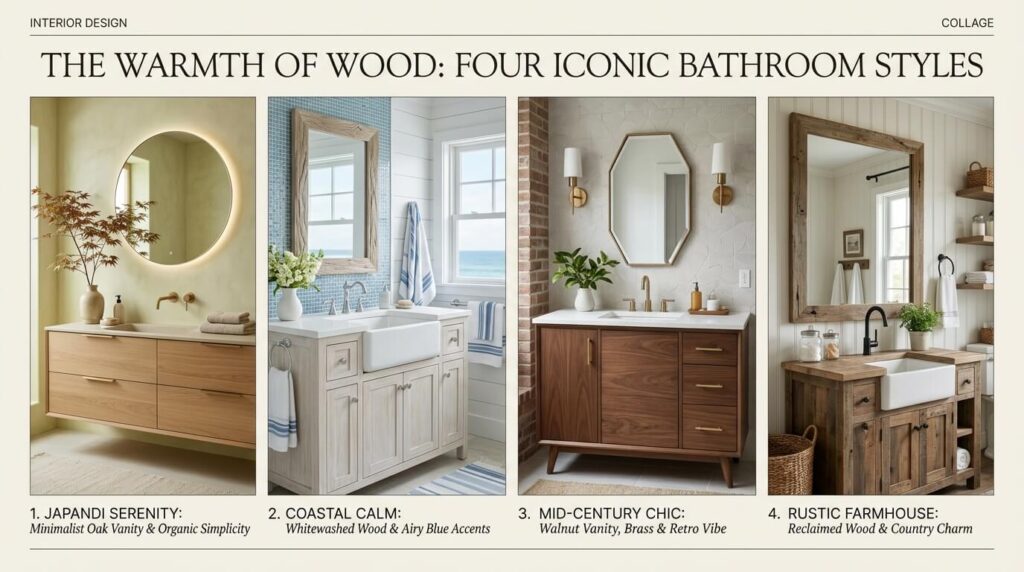
One of the great strengths of natural wood is its design versatility. Depending on the species, finish, hardware, and countertop pairing, the same material can read as rustic cabin, sleek Scandinavian, warm coastal, or refined contemporary. Here’s how to nail each:
Japandi (Japanese-Scandinavian Fusion)
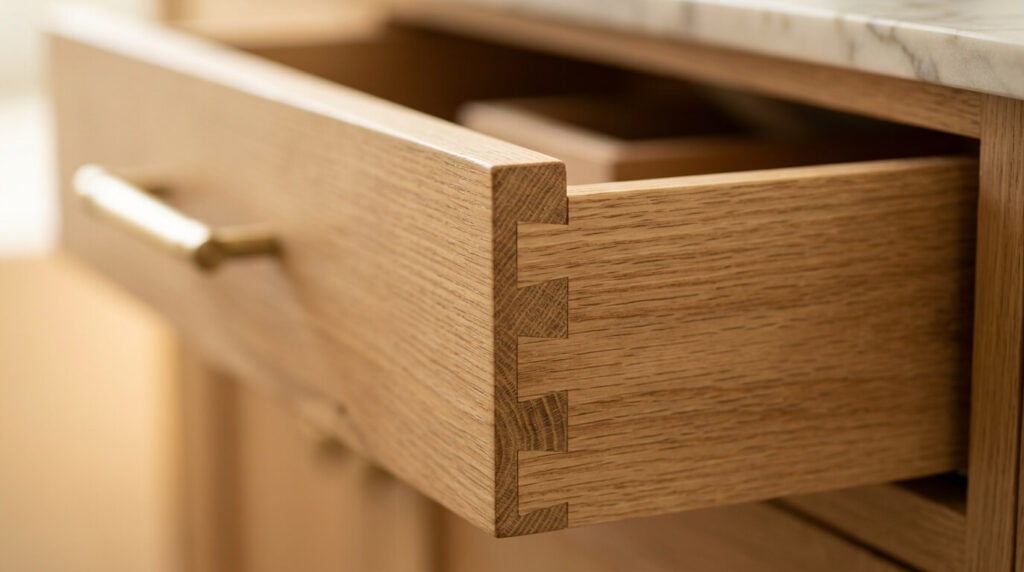
This is currently the aesthetic most closely associated with natural wood vanities. Japandi bathrooms favor pale, lightly-figured oak or bamboo in simple, frameless cabinet designs. Pair with matte black hardware, a thin stone or concrete countertop, and an integrated vessel sink for the full effect. Keep accessories minimal. The wood does the talking.
Coastal and Organic Modern
Light teak, bleached oak, or naturally-weathered finishes pair beautifully with soft greens, sandy neutrals, and woven textures. If your bathroom gets natural light, a lighter wood species will shift visibly through the day — a genuinely lovely effect in a coastal-style space. Brass or brushed gold hardware complements the warmth of the wood without competing with it.
Mid-Century Modern
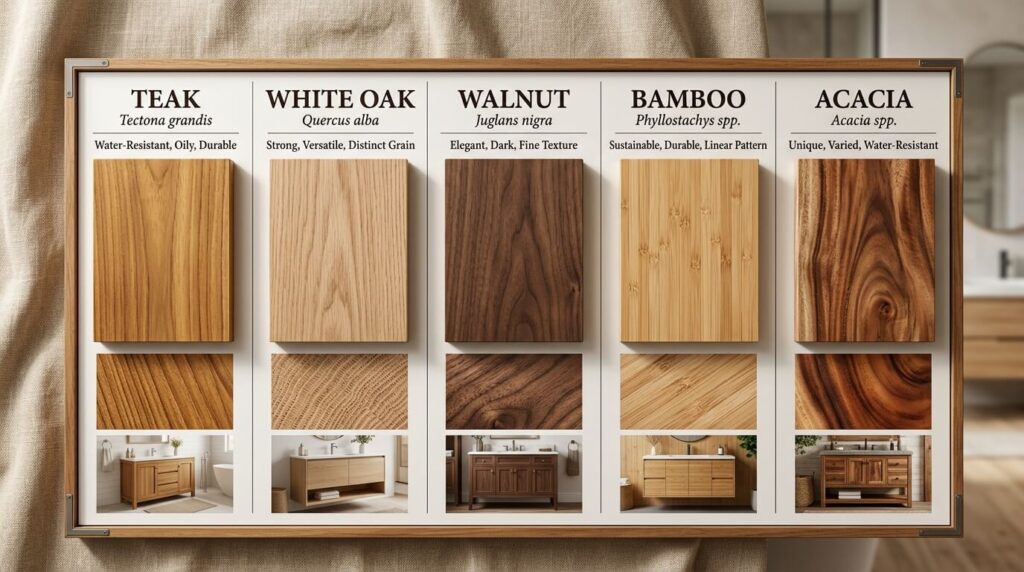
Walnut is the wood of mid-century modern. Its rich, dark tones pair with period-correct details: tapered legs on a freestanding vanity, warm-toned brass fixtures, a rectangular undermount sink, and a simple frameless mirror with a thin profile. If authenticity is a priority, look for vanities with dovetail drawer joints — a hallmark of genuine mid-century craftsmanship.
Farmhouse and Rustic
Acacia, distressed oak, or reclaimed wood are the go-to choices here. The design language embraces imperfection — visible grain variation, knots, and color shifts tell the story of the material’s origin. Pair with an apron-style porcelain sink, oil-rubbed bronze fixtures, and shiplap walls if the space allows.
Transitional and Traditional
Natural wood integrates into traditional bathrooms surprisingly well when paired with raised-panel door styles, polished nickel hardware, and classic Carrara marble countertops. The wood brings warmth to what can otherwise be a cold aesthetic dominated by white tile and chrome.
Choosing the Right Size and Configuration
Beyond style and species, the practical dimensions of your vanity matter enormously. Getting this wrong is an expensive mistake.
Standard Sizes and What They Suit
- 18–24 inches: Ideal for powder rooms and very small bathrooms. Often single-sink, sometimes wall-mounted to preserve visual space.
- 30–36 inches: The sweet spot for single-sink vanities in full bathrooms. Fits most standard bathroom layouts without overwhelming the space.
- 48–60 inches: Accommodates single or double sinks. Works well for shared bathrooms or primary suites.
- 60–72+ inches: Double vanity territory. Requires substantial floor space and is best suited for large primary bathrooms.
Floating vs. Freestanding
Floating (wall-mounted) vanities are popular for several reasons beyond aesthetics: they make the floor look larger, they’re easier to clean beneath, and they can be installed at a custom height — a significant ergonomic benefit for taller households or accessibility needs. The tradeoff is that wall-mounting requires the wall studs or a solid blocking structure to carry the weight; this isn’t a job for hollow drywall anchors alone.
Freestanding vanities are easier to install and provide more enclosed storage. Traditional bathroom layouts typically favor freestanding designs.
Countertop Pairings That Elevate Natural Wood
The countertop material you choose interacts with the wood in both visual and practical ways. Some combinations sing; others compete.
- White marble or Carrara marble: Classic, elegant, and one of the most versatile pairings. The cool stone offsets the warmth of wood without clashing. Works across almost every wood species.
- Honed black granite: Dramatic and contemporary. Best paired with lighter wood tones (white oak, bamboo) to prevent the overall palette from becoming too heavy.
- Quartz (Calacatta or solid white): Practical and low-maintenance. Quartz’s uniformity contrasts nicely with the organic variation of wood grain.
- Concrete: Textural and modern. Works particularly well with teak or walnut in industrial or organic modern bathrooms.
- Vessel sinks: Placing a vessel sink directly on a wood slab counter is a beautiful, dramatic choice — but requires careful waterproofing around the base of the vessel where it contacts the wood surface.
Common Mistakes to Avoid When Buying a Natural Wood Bathroom Vanity
The bathroom vanity market is full of products that look gorgeous in listing photos and disappoint in person. Here’s what experienced designers and contractors consistently flag:
Mistake 1: Choosing Based on Photos Alone
Wood is a material where color temperature, grain pattern, and finish sheen vary enormously depending on lighting conditions. A vanity photographed under warm studio lighting can look significantly different under cool LED bathroom lighting or natural daylight. Whenever possible, request a physical sample of the wood finish before purchasing — most reputable manufacturers provide them.
Mistake 2: Ignoring Joinery Quality
The corners and joints of a wood vanity reveal more about its quality than the wood species does. Dovetail joints on drawers, mortise-and-tenon construction for frame assemblies, and solid wood drawer boxes (rather than metal or particleboard) indicate a product built to last. Stapled cardboard drawer boxes are a red flag regardless of how handsome the exterior looks.
Mistake 3: Underestimating Plumbing Clearance
Standard plumbing rough-in measurements don’t always align with vanity configurations — particularly with wall-mounted faucets, vessel sinks, or wider double vanities. Measure twice, order once. Include the depth of the countertop overhang in your calculations.
Mistake 4: Skipping the Humidity Test
Before your new vanity arrives, spend a week monitoring your bathroom’s peak humidity levels with an inexpensive hygrometer. If you’re regularly exceeding 70% relative humidity after showers without recovery to below 55% within 30 minutes, you need to address ventilation before introducing sensitive natural wood. No amount of premium finish will compensate for a chronically humid environment.
Natural Wood Vanity Maintenance: A Practical Annual Calendar
Good maintenance doesn’t require much time, but it does require consistency. Here’s a simple framework:
- Weekly: Wipe down the wood surfaces with a slightly damp microfiber cloth. Dry immediately. Never let standing water sit on wood surfaces.
- Monthly: Inspect caulk lines at the wall, floor, and countertop junctions. Replace any caulk showing cracks, separation, or discoloration.
- Every 6–12 months (oil-finished vanities): Reapply your chosen penetrating oil. Clean the surface first with mineral spirits, allow to fully dry, then apply oil in thin coats per manufacturer instructions.
- Every 3–5 years (polyurethane or lacquer finishes): Light sanding with 220-grit sandpaper followed by a fresh topcoat will restore the protective seal and refresh the appearance.
- As needed: Address any minor water rings immediately with a paste of equal parts baking soda and non-gel toothpaste, rubbed gently with the grain.
Conclusion: Is a Natural Wood Bathroom Vanity Right for You?
A natural wood bathroom vanity is one of the most rewarding investments you can make in a bathroom renovation — but it’s a relationship, not just a purchase. The material responds to its environment, develops character over time, and rewards attentive maintenance with decades of beauty that no synthetic alternative can replicate.
The key decisions are straightforward when you know what to look for: choose a wood species suited to your bathroom’s humidity profile, verify the quality of the protective finish, match the size and style to your actual space rather than an aspirational photo, and commit to simple but consistent care.
Get those things right, and a natural wood bathroom vanity won’t just look beautiful on day one. It will look better in ten years than it does today.
Frequently Asked Questions
Can a natural wood bathroom vanity handle daily humidity?
Yes, with the right preparation. Choose a naturally moisture-resistant species (teak, white oak, or bamboo are top choices), ensure the vanity has a quality protective finish, and maintain adequate bathroom ventilation. A properly finished and ventilated wood vanity will handle daily shower humidity without issue.
What is the best wood for a bathroom vanity?
Teak is widely considered the most moisture-resistant option due to its natural oils and silica content. White oak is the best balance of moisture resistance, aesthetic versatility, and price. Walnut offers unmatched visual richness but requires more diligent sealing in humid environments.
How do I prevent a wood vanity from warping?
Warping is caused by uneven moisture exposure. Keep all exposed wood surfaces sealed, address any plumbing leaks immediately, ensure your bathroom exhaust fan is appropriately sized, and avoid leaving wet towels or sponges in direct contact with wood surfaces.
Is a floating (wall-mounted) wood vanity harder to maintain than a freestanding one?
Not particularly. Both require the same surface care. Floating vanities have the advantage of easier floor cleaning beneath them. The installation is more involved (requires proper wall blocking), but once installed, day-to-day maintenance is identical.
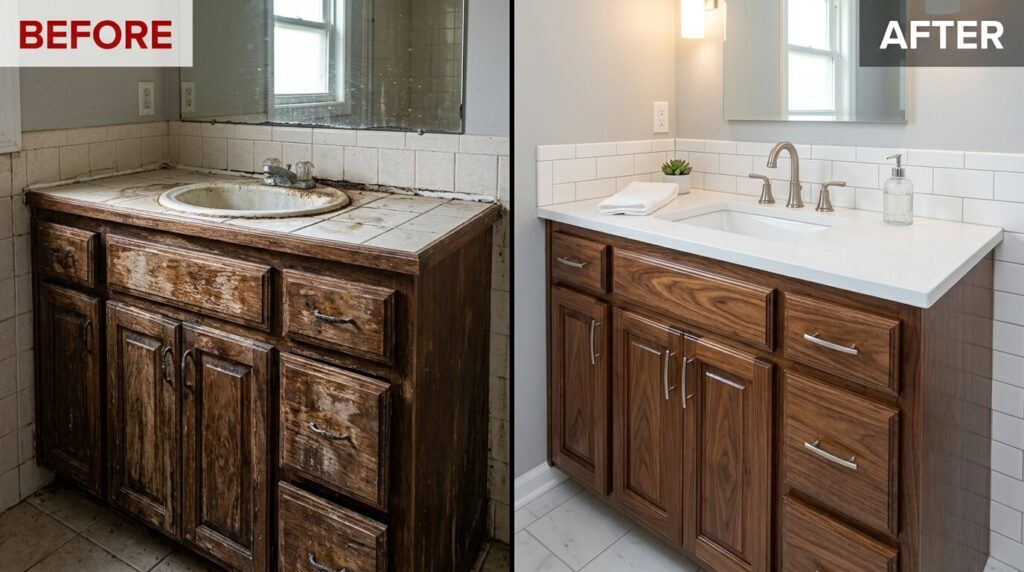
How often does a wood bathroom vanity need to be refinished?
This depends on the finish type. Penetrating oil finishes typically need reapplication every 1–2 years. Hard film finishes (polyurethane, catalyzed lacquer) can last 5–10 years before a full topcoat refresh is needed, though minor touch-ups may be required earlier in high-use areas.
Can I DIY install a natural wood bathroom vanity?
Freestanding vanities are generally within reach of an experienced DIYer — the primary skills needed are basic plumbing connection and careful leveling. Floating wall-mounted vanities require locating studs or installing proper wall blocking, which adds complexity. In both cases, the countertop and sink connection is where most DIY installations go wrong; if you’re unsure, hire a plumber for that stage.
What countertop pairs best with a natural wood vanity?
White marble or honed Carrara is a classic pairing that works with virtually every wood tone. Quartz offers the same visual effect with more durability and less maintenance. Concrete countertops are a compelling modern choice for walnut or teak vanities. Avoid high-gloss countertops in strong contrasting colors, which can compete with the natural warmth of the wood.