
You’re remodeling your bathroom and everything is going smoothly — until you hit the toilet aisle. Suddenly, you’re staring at two options that look almost identical but carry very different price tags, weight specs, and long-term implications.
The one piece toilet vs two piece toilet debate is one of those decisions that seems minor but can affect your daily routine, cleaning habits, and plumbing repair bills for the next decade or more. And if you pick the wrong one for your space or lifestyle, you’ll know it every single time you clean your bathroom.
The good news? This decision isn’t complicated once you understand what actually separates the two — not just in looks, but in real-world performance.
Let’s break it all down.
What Is a One Piece Toilet?
A one piece toilet is exactly what it sounds like: the tank and bowl are fused together into a single molded unit. There’s no joint, no gasket connecting two separate parts, and no visible seam between the tank and the bowl.
This seamless construction is the defining feature. It gives one piece toilets their signature low-profile, streamlined silhouette that fits naturally into modern and contemporary bathroom designs. It also eliminates one of the most common sources of toilet leaks — the tank-to-bowl gasket that gradually wears down over time.
Because the unit arrives as a single piece, installation is faster in terms of assembly. However, the weight is something to plan around. Most one piece toilets weigh between 80 and 120 pounds, which makes maneuvering them into tight spaces a two-person job.
What Is a Two Piece Toilet?
A two piece toilet has a separate tank and bowl that are bolted together during installation. This is the traditional toilet configuration — the one that’s been standard in homes for decades — and it still dominates the market for good reason.
Because the tank and bowl ship separately, they’re lighter to handle, easier to carry through narrow hallways and doorways, and simpler for a confident DIYer to install alone. The bowl half typically weighs around 50–60 pounds, and the tank adds another 25–35 pounds on top.
The two piece design also makes future repairs more straightforward. If the tank cracks or a flush valve fails, you can replace just the tank rather than the entire unit. That flexibility adds up to real savings over time.
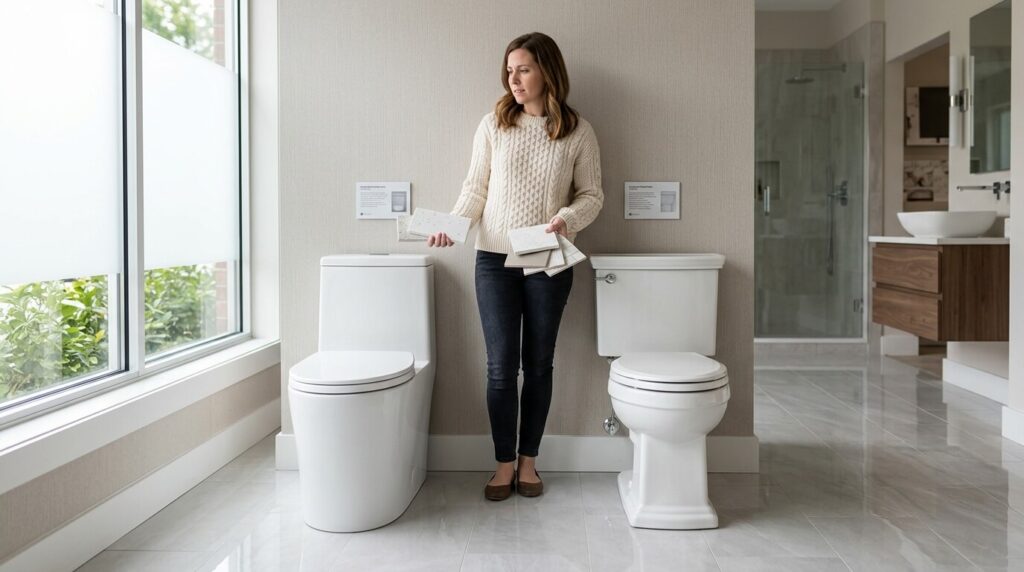
One Piece Toilet vs Two Piece Toilet: Side-by-Side Comparison
| Feature | One Piece | Two Piece |
|---|---|---|
| Price (unit) | $300–$1,200+ | $100–$600 |
| Installation cost | ~$800 total | ~$375 total |
| Weight | 80–120 lbs | 50–95 lbs (combined) |
| Cleaning ease | Easier (no seam) | Harder (seam collects grime) |
| Leak risk | Lower | Higher (tank gasket) |
| Repair flexibility | Replace whole unit | Replace tank or bowl only |
| Space footprint | Compact, lower profile | Slightly taller, wider |
| Design aesthetic | Modern/sleek | Traditional/versatile |
| Part availability | Less common | Widely available |
| DIY installation | Harder (heavy) | Easier |
| Lifespan | 15–30+ years | 15–30+ years |
Cleaning: Where One Piece Toilets Genuinely Win
This is probably the most practically important difference for most households.
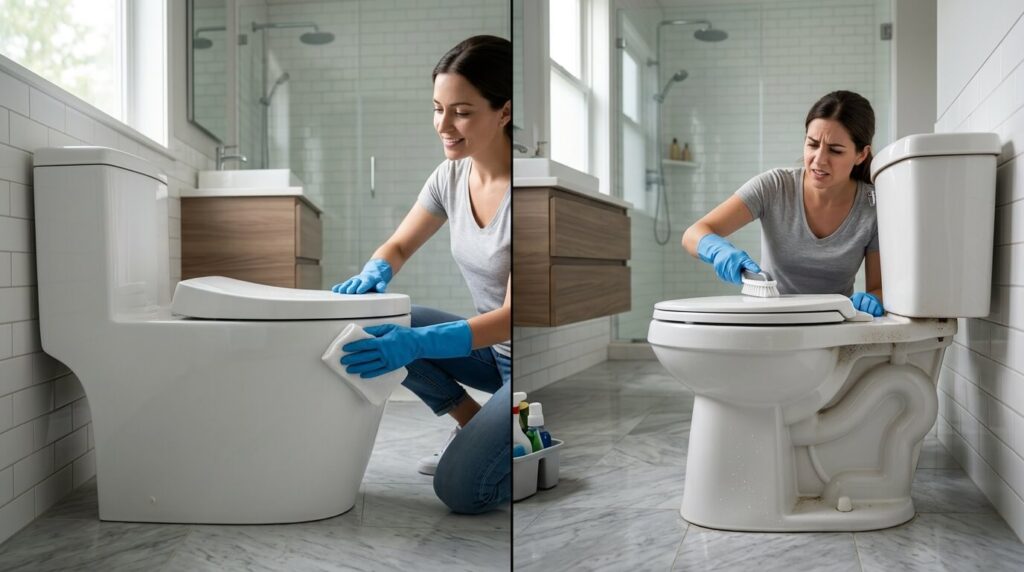
A two piece toilet has a seam where the tank meets the bowl. That gap is a magnet for dust, moisture, mildew, and bacteria — and it’s notoriously difficult to clean. Over months and years, discoloration and grime build up in that crevice no matter how often you wipe down the exterior.
A one piece toilet has no seam. The surface runs continuously from the top of the tank down to the base of the bowl. Wiping it down takes half the effort and leaves nowhere for bacteria to hide.
If cleaning is a major priority in your household — especially if someone has allergies or you simply hate scrubbing around awkward corners — the one piece toilet’s advantage here is real and consistent.
Cost: Two Piece Toilets Are Significantly Cheaper
There’s no way around this. One piece toilets cost more — sometimes dramatically more.
A basic two piece toilet from a reputable brand like American Standard or Kohler can run anywhere from $100 to $400. A comparable one piece model from the same manufacturer will typically cost $300 to $600 more for similar features and flushing technology.
When you factor in installation, the gap widens further. Because one piece toilets are heavier and bulkier, professional installation tends to cost more — roughly $800 total compared to around $375 for a two piece model.
For homeowners outfitting a guest bathroom, a rental property, or simply working within a tight renovation budget, two piece toilets offer excellent value without meaningfully sacrificing performance or durability.
Durability and Leak Prevention
Both types can last 15 to 30+ years with normal use and basic maintenance. The core vitreous china construction is the same. However, there is one structural difference that matters over time.
Two piece toilets have a rubber gasket and two bolts connecting the tank to the bowl. That gasket gradually degrades, and when it starts to fail, water can seep out from underneath the tank — sometimes so slowly that homeowners don’t notice until they see staining or detect a musty odor. Replacing the gasket is inexpensive and straightforward, but it is an additional maintenance task that one piece toilet owners never face.
One piece toilets eliminate this failure point entirely. Without a tank-to-bowl junction, there’s one less place for things to go wrong over the long term.
Installation: What Nobody Tells You
Both toilet types require roughly the same plumbing work — a wax ring over the drain flange, floor bolts, and a water supply connection. What’s different is the physical challenge.
Two piece installation: You carry the bowl and tank separately, which makes each manageable. You then bolt the tank to the bowl, making sure the gasket seats properly. This extra step takes time but gives most DIYers confident control over alignment and sealing.
One piece installation: No tank bolting required, which saves a step. But you’re wrestling a 100+ pound single unit into position over the wax ring. In a small bathroom with a tight floor plan, this is genuinely difficult. Most plumbers and experienced homeowners strongly recommend having a second person help with one piece toilet installation.
One thing most guides skip: the rough-in measurement. Before buying either type, measure the distance from your wall to the center of the drain pipe (the “rough-in”). Most toilets are designed for a 12-inch rough-in, but older homes sometimes have 10-inch or 14-inch rough-ins. Two piece toilets offer slightly more flexibility here because the bowl size doesn’t change between models the way it can on one piece designs.
Space Considerations: Small Bathrooms vs. Large Bathrooms
Counter to what you might expect, one piece toilets often have a smaller footprint — not because the unit is physically shorter, but because the tank and bowl are designed to integrate compactly into a single mold.
They also tend to sit lower, which creates a visual openness in tight spaces that can make a small bathroom feel less cluttered.
That said, two piece toilets come in a wider range of rough-in sizes and configurations. If you have an unusual floor plan or a non-standard drain location, a two piece toilet gives you more flexibility to find the right fit without custom ordering.
Bottom line for small bathrooms: Either can work, but one piece models often look and feel less intrusive in compact powder rooms or half-baths.
Repairs and Replacement Parts
This is where two piece toilets have a clear, practical advantage.
If the tank on your two piece toilet cracks or a flush valve wears out beyond repair, you can buy a replacement tank at any plumbing supply store. Parts for popular brands like Kohler, American Standard, and TOTO are widely stocked and inexpensive.
With a one piece toilet, a cracked tank means replacing the entire unit. Since tank and bowl are fused, there’s no separating them. Depending on the model and brand, that replacement could cost several hundred dollars more than the repair would on a two piece toilet.
If you’re installing in a rental property, a vacation home, or any setting where long-term serviceability matters, this is worth factoring into your decision.
Water Efficiency: A Tie, With Some Nuance
Both one piece and two piece toilets are available with WaterSense-certified models that use 1.28 gallons per flush (GPF) or less. High-efficiency dual-flush systems — which use less water for liquid waste — are available in both configurations.
There’s no inherent water savings advantage to one type over the other based purely on construction. What matters is the flush rating and technology of the specific model you choose, not whether it’s one piece or two.
If water conservation is a priority, look for the EPA WaterSense label and compare GPF ratings directly between models you’re considering.
Which Type of Toilet Is Right for You?
Choose a one piece toilet if:
- You prioritize easy cleaning and hygiene
- You’re designing a modern or contemporary bathroom
- You want fewer leak points over the long term
- Space is limited and you want a low-profile fixture
- Budget is less of a constraint
Choose a two piece toilet if:
- You’re working within a tighter budget
- You want straightforward DIY installation
- You want easier access to replacement parts
- You’re outfitting a secondary bathroom, rental, or vacation property
- You need flexibility in rough-in sizing
There’s no universally “better” toilet. The right choice depends on the specific bathroom, your lifestyle, your budget, and how long you plan to stay in your home.
Common Mistakes to Avoid
1. Skipping the rough-in measurement. Many homeowners buy a toilet before measuring and end up with a misaligned drain connection. Measure before you shop.
2. Assuming one piece toilets are always more durable. Both types last equally long. One piece toilets simply eliminate one specific failure point (the tank gasket), but the vitreous china itself is equally fragile in both.
3. Ignoring weight during installation. A one piece toilet is not a solo installation project. Attempting it alone often results in a crooked wax seal and a toilet that rocks.
4. Buying based on price alone. The cheapest two piece toilet may have a noisy flush, a weak flush valve, or a seat that cracks within a year. Compare flush performance and user reviews — not just cost.
5. Forgetting the seat. Neither toilet type always includes a seat. Confirm before purchasing, especially with one piece models marketed as complete units.
Conclusion
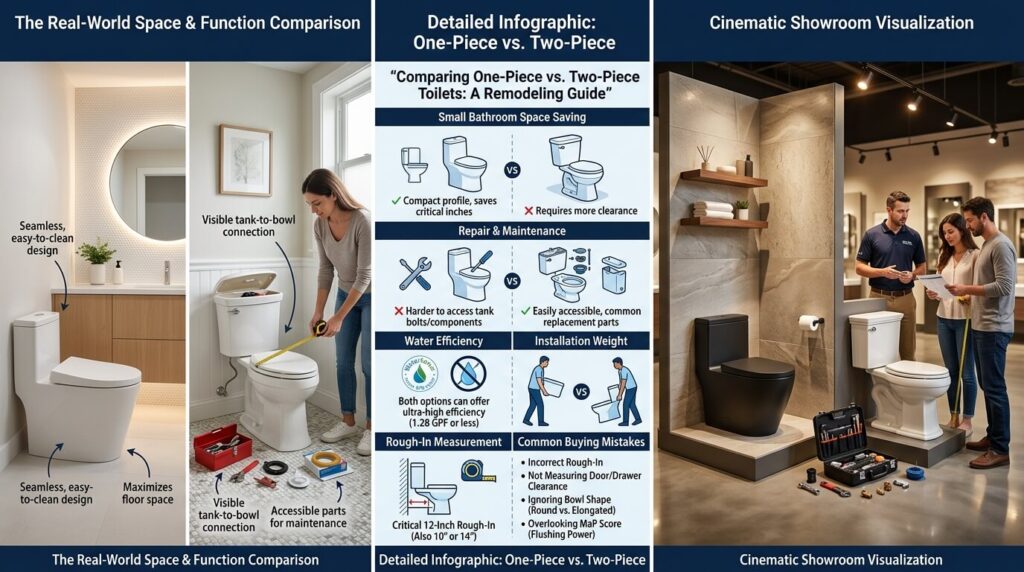
The one piece toilet vs two piece toilet decision comes down to a few honest trade-offs.
One piece toilets are easier to clean, look more modern, and eliminate the tank-to-bowl leak risk. But they cost more, weigh more, and are harder to repair if something major breaks.
Two piece toilets are more affordable, easier to install, and simpler to service over time. The seam between tank and bowl requires more cleaning attention, but for most households, that’s a manageable trade-off.
Neither option is the wrong choice — they serve different priorities. Figure out what matters most in your bathroom, and let that guide you.
Frequently Asked Questions
Q: Is a one piece toilet better than a two piece toilet? A: It depends on your priorities. One piece toilets are easier to clean and have a sleeker look, but cost significantly more and are harder to repair. Two piece toilets are more affordable, easier to install, and offer flexible part replacement. Neither is universally better.
Q: Are one piece toilets harder to install? A: The installation process is similar in complexity, but one piece toilets are much heavier (80–120 lbs vs. 50–60 lbs for just the bowl on a two piece). You’ll almost certainly need a second person to safely position a one piece toilet over the wax ring.
Q: Do one piece toilets leak less? A: They eliminate one specific leak risk — the tank-to-bowl gasket that can deteriorate on two piece models. However, they can still develop leaks at the wax ring or supply line connection, which are common to both types.
Q: How long do one piece and two piece toilets last? A: Both typically last 15 to 30+ years with normal use. The porcelain construction is the same. What differs is which parts are most likely to need replacement — two piece toilets may need a new tank gasket or flush valve over time, while one piece toilets rarely require any external repairs unless the unit itself cracks.
Q: Are one piece toilets worth the extra money? A: For primary bathrooms where you prioritize aesthetics and easier cleaning, yes. For guest bathrooms, rental properties, or budget renovations, the price difference is hard to justify — a quality two piece toilet performs just as well.
Q: Can I replace the tank on a one piece toilet? A: No. Because the tank and bowl are permanently fused, you cannot replace just the tank. If the tank is damaged beyond repair, the entire toilet must be replaced.
Q: Which toilet is easier to clean? A: One piece toilets are notably easier to clean because there’s no seam between the tank and bowl where grime, mold, and bacteria accumulate. The smooth, continuous surface wipes down more quickly and thoroughly.
Q: What is a comfort height toilet? A: Comfort height (also called ADA height) refers to a toilet bowl seat height of 17–19 inches from the floor, compared to standard height at 15–16 inches. Both one piece and two piece toilets are available in comfort height. It’s particularly beneficial for taller adults and those with mobility limitations.