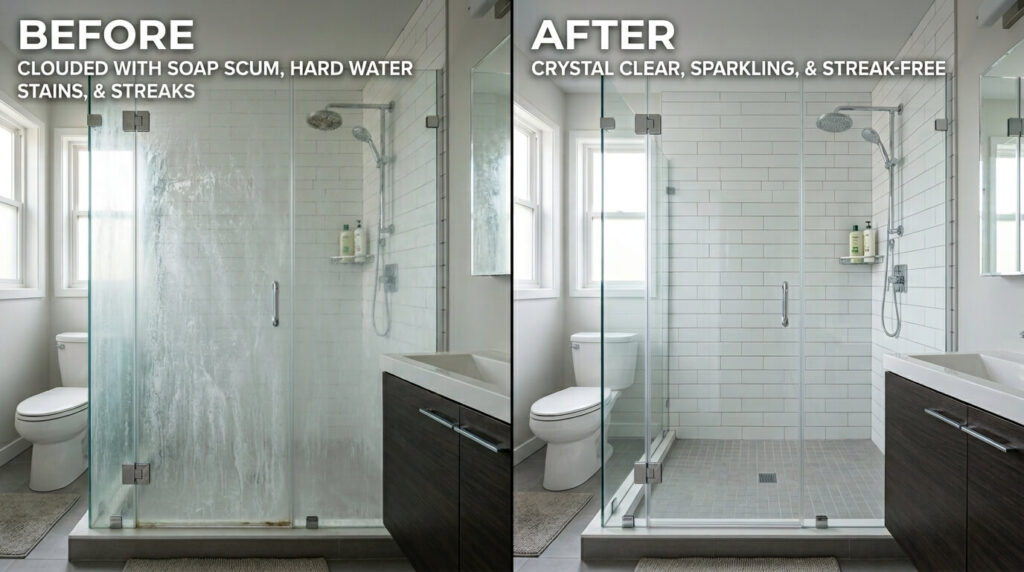
Learn how to clean glass shower doors the right way — from soap scum and hard water stains to textured glass and rubber seals. Step-by-step methods, natural cleaners, and pro tips for a sparkling shower every time. There’s a certain kind of frustration that comes with stepping into what should be a clean, beautiful shower — only to be greeted by cloudy, streaked glass that looks like it hasn’t seen a sponge in months. If that sounds familiar, you’re not alone. Glass shower doors are one of the most challenging surfaces to keep clean in any bathroom, not because the task is complicated, but because most people aren’t using the right approach.
This guide covers everything you need to know about how to clean glass shower doors — from quick daily habits that prevent buildup in the first place, to deep-cleaning methods that tackle years of soap scum and hard water deposits. Whether you have frameless glass panels, textured rain glass, sliding doors with tracks, or a simple pivot-hinge door, you’ll find a cleaning method here that works.
Why Glass Shower Doors Get So Dirty (And Why It’s Not Your Fault)
Before diving into cleaning methods, it helps to understand what you’re actually dealing with. That white, hazy film on your shower doors isn’t just dirt — it’s a combination of three different types of buildup that each require a slightly different approach:
Soap scum forms when the fatty acids in bar soap react with the minerals in your water and bond to the glass. Liquid body washes tend to leave less residue than traditional bar soap, which is worth knowing if you’re looking for an easy prevention upgrade.
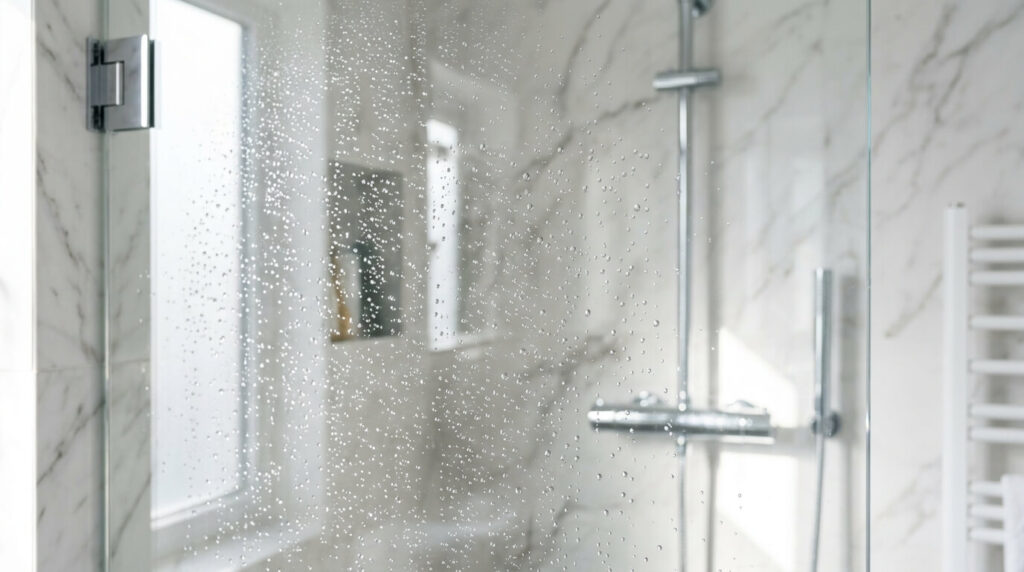
Hard water deposits (also called limescale or mineral buildup) are left behind when water evaporates and leaves calcium and magnesium minerals on the glass surface. If your home has hard water — which affects a large portion of homes across the US, UK, Canada, and Australia — this buildup happens every single time someone showers.
Mold and mildew thrive in the warm, damp environment of a shower and can colonize rubber door seals, silicone caulking, and the corners of door frames. Mildew appears as black or pink spots and needs to be treated differently from mineral deposits.
Knowing which type of buildup you’re dealing with tells you which cleaner to reach for — acidic cleaners dissolve mineral deposits and soap scum, while anti-fungal cleaners or bleach solutions address mold.
What You’ll Need
You don’t need a cabinet full of specialized products. Here’s what covers most situations:
Cleaning tools:
- Microfiber cloths (two or three)
- A non-scratch sponge or soft scrub pad
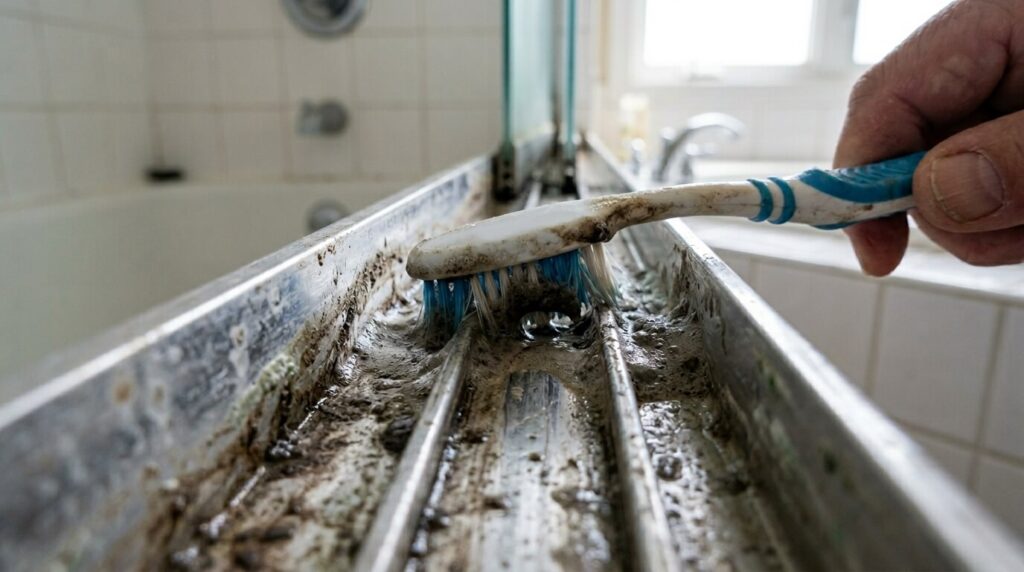
- An old toothbrush (for tracks, seals, and corners)
- A rubber squeegee
- A spray bottle
- A small bowl for mixing pastes
Cleaning solutions (choose based on your situation):
- White distilled vinegar
- Baking soda
- Dawn dish soap (the original blue formula works particularly well)
- Hydrogen peroxide (3%)
- Commercial soap scum remover (CLR, Method, or similar)
- Rubbing alcohol (for streak-free finishing)
How to Clean Glass Shower Doors: Step-by-Step Methods
Method 1: The Vinegar Spray (Best for Regular Maintenance)
This is the workhorse method — effective on moderate soap scum and mineral deposits, safe for most glass types, and cheap.
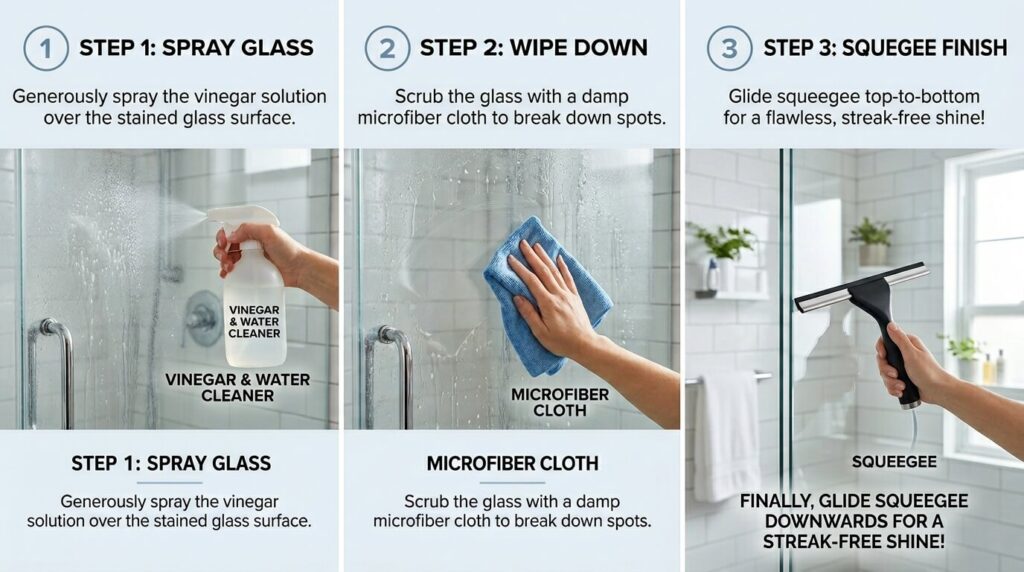
- Fill a spray bottle with undiluted white vinegar, or mix equal parts vinegar and warm water for light buildup.
- Spray generously over the entire glass surface. Don’t be shy — you want the glass thoroughly wet.
- Let it sit for 5 to 10 minutes. For heavy deposits, leave it for up to 20 minutes. The acetic acid in vinegar is dissolving the mineral bonds during this time, so don’t skip the wait.
- Scrub with a non-scratch sponge using circular motions, working from top to bottom.
- Rinse thoroughly with warm water.
- Dry immediately with a microfiber cloth or squeegee to prevent new water spots.
Pro tip: If your shower is particularly smelly from mold, add a few drops of tea tree oil to the vinegar solution. It won’t clean better, but it will neutralize odors and has mild antifungal properties.
⚠️ Caution: Do not use vinegar on natural stone tiles (marble, travertine, or granite) that may surround your shower. The acid will etch and damage polished stone. Protect those surfaces or use a pH-neutral cleaner instead.
Method 2: Baking Soda Paste (Best for Stubborn Soap Scum)
When vinegar alone doesn’t cut through heavy, built-up soap scum — especially on glass that hasn’t been cleaned in a while — a baking soda paste provides gentle abrasion without scratching.
- In a small bowl, mix baking soda with just enough dish soap and water to form a thick, spreadable paste. The consistency should be similar to toothpaste.
- Apply the paste directly to the glass using a damp sponge or your fingers.
- Leave it for 15 to 20 minutes.
- Scrub in circular motions. The mild abrasion from the baking soda will lift the scum while the dish soap helps it emulsify and rinse away cleanly.
- Rinse with warm water and dry thoroughly.
For extra power on really stubborn stains, apply the baking soda paste first, then spray white vinegar over it. The fizzing reaction helps lift grime from porous glass surfaces.
Method 3: Dawn Dish Soap Spray (Best All-Rounder)
This has quietly become one of the most widely recommended shower cleaning hacks, and for good reason — it works on soap scum, cuts through grease, and leaves glass sparkling without harsh chemicals.
- Mix 1 part Dawn dish soap with 3 parts white vinegar in a spray bottle. Warm the vinegar slightly before mixing to help it blend.
- Shake gently to combine.
- Spray liberally over all glass surfaces.
- Allow to sit for 5 minutes.
- Wipe down with a damp sponge or microfiber cloth — no scrubbing required in most cases.
- Rinse well and dry.
This solution is especially effective if you’re looking for one go-to spray for weekly cleaning sessions.
Method 4: Commercial Cleaners (Best for Deep Cleaning and Hard Water Stains)
Sometimes the buildup is severe enough that DIY methods aren’t the most efficient option. Commercial cleaners formulated specifically for soap scum and mineral deposits — products like CLR Bathroom & Kitchen Cleaner, Kaboom Shower, Tub & Tile, or Bar Keepers Friend — contain oxalic acid or other chelating agents that break the chemical bond between limescale and glass.
When using commercial cleaners:
- Always read the label and do a spot test on an inconspicuous area first
- Never mix commercial cleaners with other products, especially bleach
- Ensure the bathroom is well-ventilated
- Wear gloves if the product recommends it
- Follow the dwell time on the label — usually 1 to 3 minutes
For particularly stubborn hard water etching (where the deposits have been left for months or years), a product containing hydrofluoric acid — like some professional glass restoration compounds — may be the only option. These are not for general consumer use; if your glass has significant etching, consult a glass restoration professional.
Method 5: Hydrogen Peroxide and Baking Soda (Best for Mold and Mildew)
If black or pink spots are appearing on your glass, door seals, or in the silicone grout lines around your shower, you’re dealing with mold or mildew — and that requires a disinfecting approach, not just a cleaning one.
- Spray 3% hydrogen peroxide directly onto the affected areas.
- Sprinkle a small amount of baking soda over the peroxide.
- Allow to sit for 15 to 30 minutes — the mixture will bubble as it reacts.
- Scrub with a soft brush or old toothbrush.
- Rinse thoroughly.
For persistent mold on rubber seals and silicone caulking, a diluted bleach solution (1 part bleach to 10 parts water) is more effective, but never use bleach on metal fixtures or colored grout.
How to Clean Different Types of Glass Shower Doors
Cleaning Textured or Rain Glass Shower Doors
Frosted and rain-glass shower doors offer privacy but are genuinely harder to clean because soap scum and minerals settle into the texture. Here’s what works:
- Use a soft-bristle brush (like a clean nail brush or paintbrush) rather than a sponge, so the bristles reach into the textured surface.
- The baking soda + vinegar method works especially well here — the fizzing action pushes into the grooves.
- A hydrogen peroxide and baking soda paste left for 30 minutes before scrubbing can lift deep-set residue.
- Weekly maintenance sprays prevent buildup from embedding in the texture.
Cleaning Sliding Glass Shower Doors and Tracks
Sliding doors require two extra steps that most guides skip: vacuuming the tracks before you wet them, and drying the tracks completely after.
To clean the tracks:
- Before adding any moisture, use a vacuum with a crevice attachment to remove hair, dust, and debris. Cleaning wet gunk is much harder than removing it dry.
- Apply a mix of warm water and white vinegar to the tracks and let it soak for 5 minutes.
- Scrub with an old toothbrush, paying particular attention to corners and the junction points.
- Wipe out the loosened residue with a damp cloth.
- Dry completely with a dry cloth — standing water in tracks leads to rust and mold growth.
Sliding tracks are also a good place to apply a thin layer of petroleum jelly or silicone lubricant after cleaning, which keeps the door gliding smoothly and makes future cleaning easier.
Cleaning Frameless Glass Shower Doors
Frameless doors are actually the easiest to keep clean because there are no metal frames to trap residue. The same vinegar or dish soap methods work perfectly. Focus attention on the hinges and pivot points, where mineral deposits can build up and affect function.
Cleaning the Door Seal and Sweep
The rubber strip (or “sweep”) at the bottom of your shower door is a mold magnet. Clean it as part of every regular cleaning session:
- Wipe both sides with your cleaning solution of choice.
- For mold, use the hydrogen peroxide method described above.
- If the seal has black staining that won’t budge, it may be beyond cleaning — replacements are inexpensive (usually under $20) and a fresh seal makes a significant difference.
Cleaning Metal Frames, Hinges, and Hardware
Stainless steel and chrome hardware can be cleaned with most of the same solutions you use on the glass itself. After cleaning, apply a tiny amount of baby oil or a dedicated metal polish to chrome surfaces — this creates a barrier against future water spots and keeps the finish looking new.
For brushed nickel or matte black finishes, use only mild soap and water. Acidic cleaners and abrasives can strip or dull these finishes permanently.
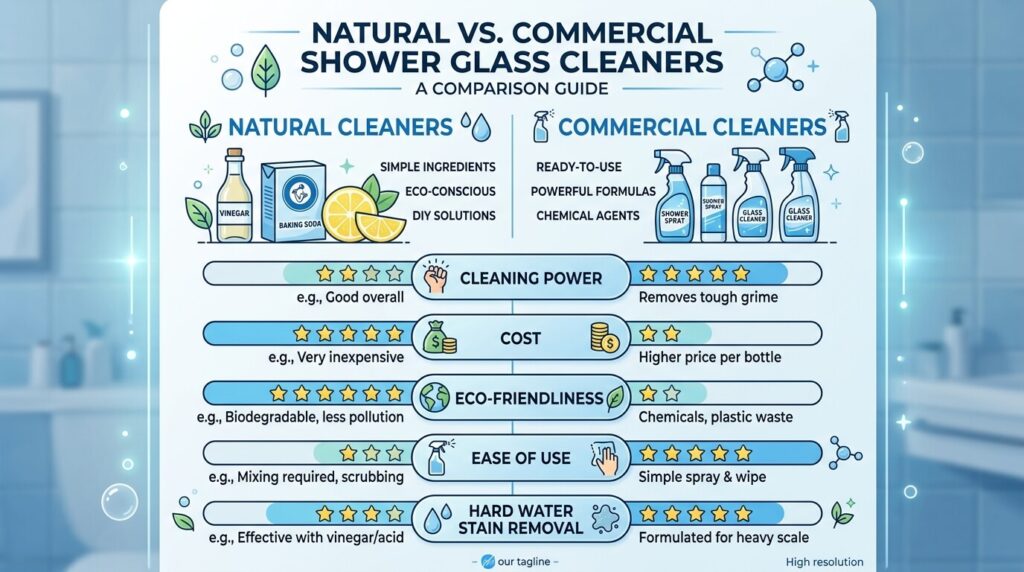
Comparison: Natural vs. Commercial Cleaners for Glass Shower Doors
| Cleaner | Best For | Effectiveness | Cost | Safety |
|---|---|---|---|---|
| White vinegar | Mineral deposits, light soap scum | ⭐⭐⭐⭐ | Very low | Safe |
| Baking soda paste | Stubborn soap scum | ⭐⭐⭐⭐ | Very low | Safe |
| Dawn + vinegar spray | General cleaning | ⭐⭐⭐⭐⭐ | Low | Safe |
| Hydrogen peroxide | Mold and mildew | ⭐⭐⭐⭐ | Low | Safe |
| CLR / commercial | Heavy limescale buildup | ⭐⭐⭐⭐⭐ | Moderate | Use with care |
| Bleach solution | Persistent mold (non-metal surfaces) | ⭐⭐⭐⭐⭐ | Low | Ventilate well |
| Bar Keepers Friend | Deep-set stains, mineral etching | ⭐⭐⭐⭐⭐ | Low | Safe with gloves |
How to Keep Glass Shower Doors Clean Longer
Cleaning is much easier when you’re maintaining, not restoring. These habits take seconds but make a real difference:
After every shower: Run a squeegee over the glass. This single habit prevents the majority of water spot and mineral deposit formation. Keep the squeegee hanging inside the shower so it’s always within reach.
Weekly: A quick spray of your DIY vinegar solution followed by a wipe-down takes under two minutes and prevents soap scum from hardening.
Monthly: A full clean with your preferred method, including the tracks, seals, and hardware.
Upgrade your soap: Switching from bar soap to a liquid body wash or gel reduces soap scum formation significantly. Bar soap’s fatty acids are the main contributor to that stubborn film.
Improve ventilation: The faster your shower dries after use, the fewer mineral deposits form. Run your bathroom exhaust fan during and for at least 15 minutes after every shower. If your fan is older, it may not be performing at its rated capacity — a cleaning or replacement might be overdue.
Protective Coatings: The Long-Term Solution
One thing most cleaning guides don’t mention is that glass is actually a porous material. Heat and humidity cause the microscopic surface of the glass to roughen over time, giving soap and minerals more surface area to cling to. This is why older shower doors seem to get harder and harder to clean.
Protective shower coatings address this at the source. Products like ShowerGuard (which uses a patented ion-beam process to fuse a protective layer to the glass) or Cardinal’s C10 coating (which comes with a 10-year warranty) fill the pores of the glass, making the surface hydrophobic. Water beads up and rolls off rather than spreading and evaporating into mineral deposits.
If you’re having a new shower installed, ask your glass company about factory-applied coatings — they represent a one-time cost that significantly reduces long-term cleaning effort. For existing showers, consumer-grade ceramic coating products (similar to car paint protection) can be applied at home and last anywhere from 6 months to 2 years with proper maintenance.
With a coated shower, even heavy hard water stains can often be removed with nothing more than undiluted white vinegar and a soft sponge.
Common Mistakes That Make Glass Shower Doors Harder to Clean
Letting it go too long. The longer soap scum and mineral deposits sit, the more they bond to the glass. A quick weekly wipe is far easier than a monthly deep-clean.
Using abrasive scrubbers on clear glass. Steel wool, rough scrub pads, and powdered cleansers with coarse particles will scratch glass. Scratched glass holds more dirt and looks permanently foggy.
Not rinsing thoroughly. Leftover cleaning solution dries into its own filmy residue. Always rinse well and then dry with a microfiber cloth or squeegee.
Using hard water to rinse. If your water is heavily mineralized, rinsing the glass with tap water just deposits more minerals. In hard water areas, do a final wipe-down with a cloth rather than a water rinse.
Cleaning in direct sunlight or a hot shower. Heat causes cleaning solutions to evaporate before they can work and can leave streaks. Clean in a cool environment when possible.
Neglecting the door seals and tracks. These are where mold establishes a foothold. If you clean the glass but ignore the rubber seals, the mold will spread back.
Mixing cleaners. Never mix bleach with vinegar or ammonia-based products — this creates toxic chlorine gas.
When to Consider Replacing Your Shower Glass
Even the best cleaning routine has limits. If your glass is:
- Permanently etched (a hazy, rough texture that doesn’t respond to any cleaning)
- Scratched from years of abrasive cleaning
- Structurally damaged, chipped, or cracked
- Discolored in a way that appears to be within the glass itself, not on the surface
…then you may be cleaning glass that simply cannot be restored to a clear finish. At that point, professional glass restoration (which can polish out surface etching) or full replacement are worth exploring. Glass shower doors that are severely scratched or etched can also be a safety concern, as damage affects the structural integrity of tempered glass over time.
Conclusion
Keeping glass shower doors clean is one of those tasks that feels harder than it needs to be — right up until you have a system. The key insights are simple: understand what kind of buildup you’re dealing with, use the right cleaner for the job, squeegee daily to prevent accumulation, and don’t neglect the tracks, seals, and hardware that turn every shower into a slightly more complex cleaning challenge.
Whether you go the natural route with vinegar and baking soda, reach for a commercial cleaner, or invest in a protective glass coating for long-term ease, consistently clean glass shower doors are genuinely achievable. Start with the daily squeegee habit — it costs nothing and makes everything else easier.
Frequently Asked Questions
What is the best homemade cleaner for glass shower doors?
A mixture of equal parts white vinegar and warm water with a few drops of Dawn dish soap is one of the most effective and widely used homemade cleaners. It cuts through soap scum, dissolves mineral deposits, and leaves glass streak-free when rinsed and dried thoroughly.
How do I remove hard water stains from glass shower doors?
White vinegar is your best starting point — spray it undiluted on the glass, let it sit for 15 to 20 minutes, then scrub and rinse. For severe limescale, use a commercial calcium and lime remover like CLR. Applying the product and letting it dwell for several minutes is more effective than scrubbing immediately.
How do I clean glass shower doors without streaks?
The key to streak-free glass is drying it immediately after rinsing. Use a clean microfiber cloth in vertical strokes, or better yet, use a squeegee first and follow up with a dry microfiber cloth. Avoid letting any water or cleaner air-dry on the glass.
Can I use WD-40 to clean glass shower doors?
WD-40 is sometimes recommended as a water repellent for shower glass, but it’s not a cleaner — it simply coats the surface. It can actually attract more grime over time and is not a substitute for regular cleaning.
How often should glass shower doors be cleaned?
Squeegee after every use. Do a full wipe-down with your preferred cleaner weekly. Complete a deep clean including tracks, seals, hardware, and frames at least monthly. If you have hard water, weekly cleaning becomes more important.
Why do my glass shower doors look cloudy even after cleaning?
Cloudiness that persists after cleaning is often due to mineral etching — a condition where hard water deposits have physically roughened the glass surface over years of exposure. This isn’t something that can be cleaned away; it may require professional glass polishing or replacement.
Is it safe to use bleach on glass shower doors?
Diluted bleach (1 part bleach to 10 parts water) is safe for glass but should not be used on metal fixtures, colored grout, or natural stone. It’s most useful for treating mold on the rubber door seals or silicone caulking. Always ventilate the bathroom well and never mix bleach with vinegar or ammonia.
What is the easiest type of glass shower door to keep clean?
Frameless, clear glass shower doors are the easiest to maintain because there are no frames or tracks to trap debris. Smooth glass is significantly easier to clean than textured rain glass or frosted glass. Adding a factory-applied or aftermarket hydrophobic coating makes any glass shower door much easier to keep clean.
How do I clean the rubber seal on the bottom of my shower door?
Wipe the seal with your regular cleaning solution using a cloth or soft brush. For mold, apply hydrogen peroxide and let it sit for 15 minutes before scrubbing with a toothbrush. If mold staining is permanent, replacement seals are inexpensive and widely available.
Does vinegar damage shower glass?
No — white vinegar is safe for glass. It should not be used on natural stone tiles or marble surrounding the shower, as the acid will etch polished stone. If your shower has a factory-applied hydrophobic coating, check the manufacturer’s care instructions, as some recommend avoiding acidic cleaners.