Discover 50 stunning shower ideas for bathroom spaces of every size — from walk-in shower designs for small bathrooms to luxurious spa-style wet rooms. Includes tile tips, layout guides, budget advice, and 2026 design trends. There’s a moment most homeowners know too well: you step into a dated, cramped shower, the tiles are yellowing, the pressure is weak, and the whole experience feels like a chore. But it doesn’t have to be that way. Also how to clean shower grout but how how?
Your shower is where you start every single morning. It sets your mood. It’s five minutes of genuine solitude in a busy day. Getting the design right — whether you’re working with a small bathroom or a sprawling master suite — can transform a purely functional ritual into something that genuinely feels good.
This guide covers 50 shower ideas for bathroom spaces of all sizes, broken down by style, layout, material, and budget. Whether you want a sleek walk-in shower, a cozy tiled alcove, or a full spa-inspired wet room, you’ll find actionable inspiration here. These ideas also incorporate the top 2026 design trends confirmed by interior designers and bathroom specialists.
Let’s get into it.
What Makes a Great Shower Design? (Start Here)
Before you browse finishes and fixtures, it helps to answer three questions:
- How much space do you actually have? Measure your bathroom carefully — not just the floor area, but ceiling height, window placement, and plumbing locations.
- What’s your primary goal? Spa-like relaxation? Space efficiency? Accessibility? Easy cleaning? Different goals drive very different design choices.
- What’s your realistic budget? A walk-in shower conversion can range from $2,000 to $15,000+ depending on materials, layout complexity, and whether you’re moving plumbing.
Knowing these answers up front will save you hours of indecision and prevent expensive mid-project changes.
Walk-In Shower Ideas for Small Bathrooms
This is the search term millions of homeowners type every month — and for good reason. A walk-in shower in a small bathroom feels counterintuitive at first. Won’t it take up more space? In reality, a well-designed walk-in shower often makes a small bathroom feel larger, because removing a shower curtain or heavy glass door opens up visual sightlines.
Here are the most effective walk-in shower ideas for small bathrooms:
1. The Corner Walk-In with Frameless Glass
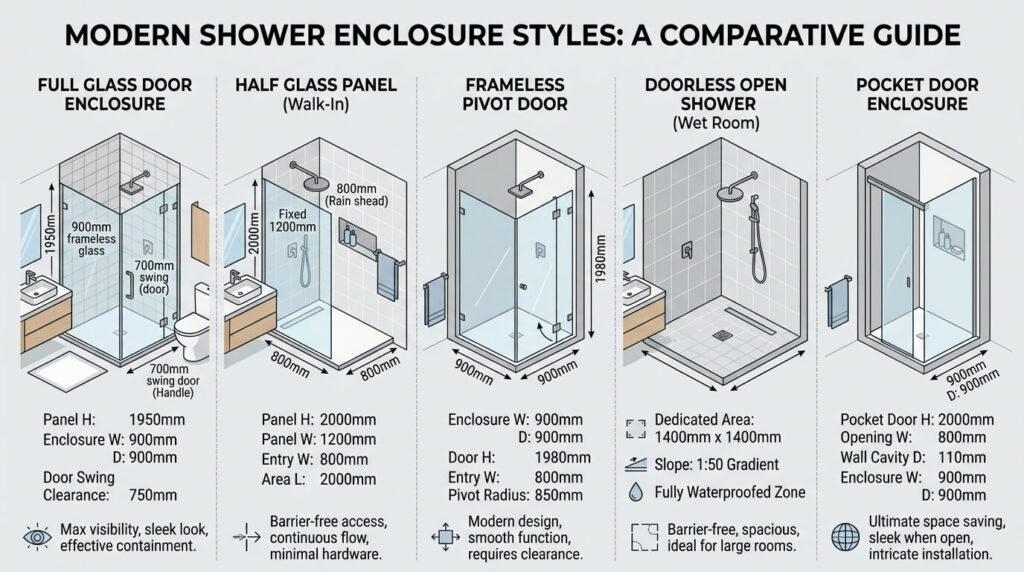
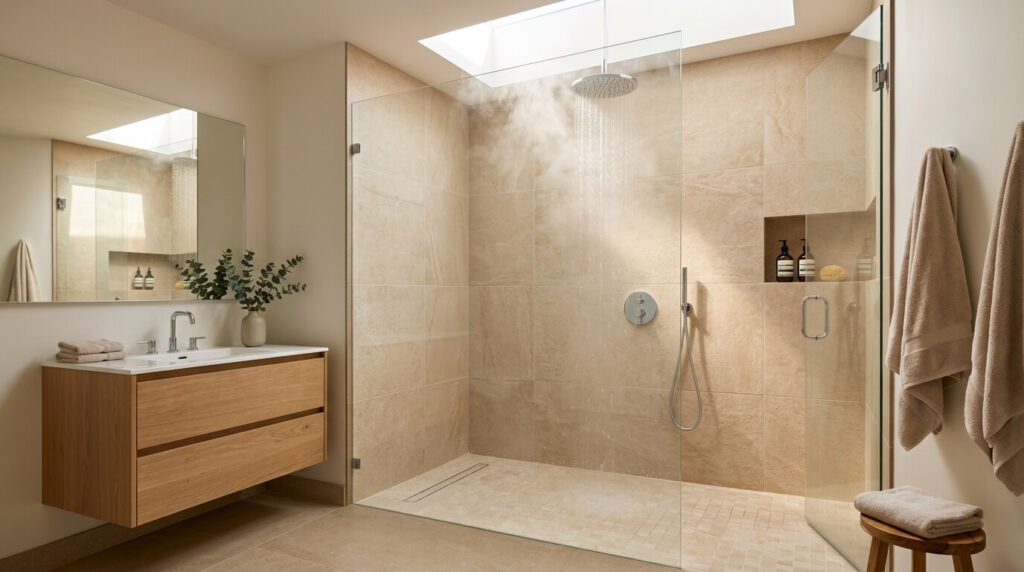
Use an unused corner by installing a frameless glass enclosure at a 90-degree angle. Frameless glass panels keep the space visually open, bouncing light around the room rather than blocking it. Even in a 5×8-foot bathroom, a 32×32-inch corner shower leaves ample floor space.
2. Barrier-Free (Curbless) Shower
Eliminate the shower curb entirely. A curbless shower with a gently sloping floor toward a linear drain creates a seamless transition between the shower zone and the rest of the bathroom. It’s also the gold standard for accessibility. In small bathrooms, the uninterrupted floor line makes the room appear significantly larger.
3. Wet Room Design
Take the curbless concept to its logical conclusion: waterproof the entire bathroom floor and walls and skip enclosures altogether. A wet room is the ultimate space-saver. Pair it with a wall-mounted toilet and floating vanity to maximize the feeling of open space.
4. Single Fixed Glass Panel (Half Wall)
Instead of a full enclosure, install one fixed glass panel — roughly 36 inches wide — on the shower’s open side. This contains the spray while keeping the entry fully open. It’s less expensive than a full frameless enclosure and wonderfully minimal-looking.
5. Pocket-Door Shower Enclosure
If you do want a door, a sliding pocket door that disappears into the wall is far more practical in a tight space than a swinging door. You gain back the full floor area the door arc would have consumed.
6. Extend Tile to the Ceiling
In a small shower, carrying the tile from floor all the way to the ceiling creates a powerful vertical line that draws the eye upward and makes the space feel taller. Large-format tiles (12×24 or bigger) with minimal grout lines amplify this effect.
7. Use a Single Continuous Tile Color
In tight spaces, pattern and color changes fragment the eye, making the room feel choppy and smaller. A single neutral tile — soft greige, warm white, matte sand — used consistently on walls and floor creates a calming envelope effect that reads as more spacious.
8. Built-In Niche Instead of a Caddy
Every wire caddy or over-showerhead shelf creates visual clutter. Recess a niche into the wall during your remodel — sized for your specific bottles. It looks intentional, it’s easier to clean, and it frees up visual breathing room.
9. Linear Drain Along the Back Wall
Linear drains are long, narrow channels that run along one edge of the shower floor (typically the back wall). They’re more architecturally elegant than center drains, they allow larger format floor tiles with fewer cuts, and they’re easier to clean.
10. Rainfall Showerhead Recessed Into the Ceiling
An overhead rainfall head mounted flush with the ceiling eliminates the protruding arm and extension that can feel bulky in a small shower. The “rain falling from the sky” effect in a compact space feels surprisingly luxurious.
Modern Shower Ideas for a Sleek, Contemporary Bathroom
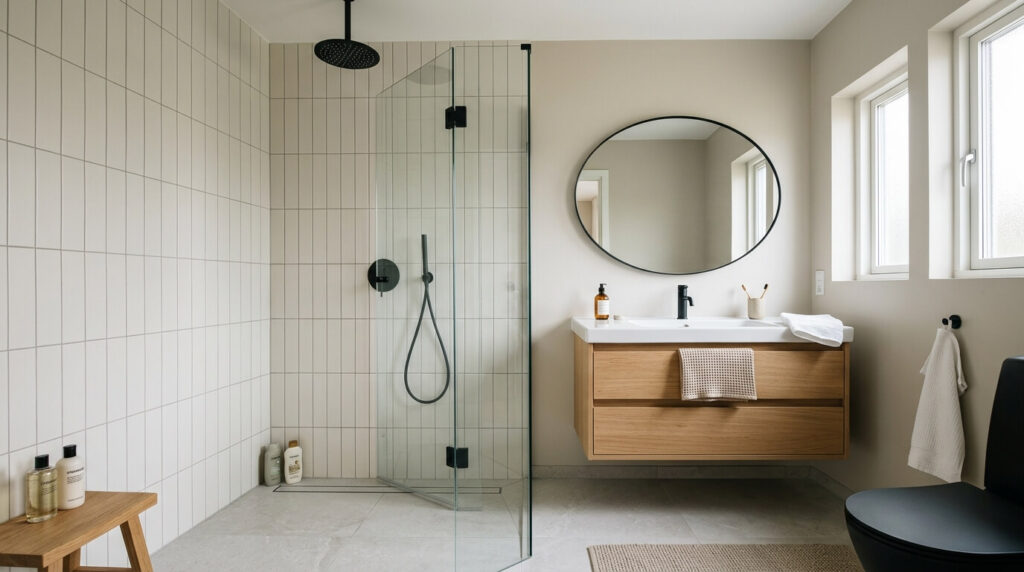
Modern shower design in 2026 is defined by restraint with warmth. The cold, clinical all-white minimalism of the 2010s is giving way to spaces that feel calming, textured, and human — while still being clean-lined and uncluttered.
11. Large-Format Porcelain Slabs
48×96-inch or even larger porcelain slabs (often called “book-matched” panels) eliminate almost all grout lines. The result is a shower that looks almost sculptural — like a single continuous piece of stone. These work especially well on shower walls as a backdrop to a floating teak bench or matte black fixtures.
12. Textured Zellige Tiles
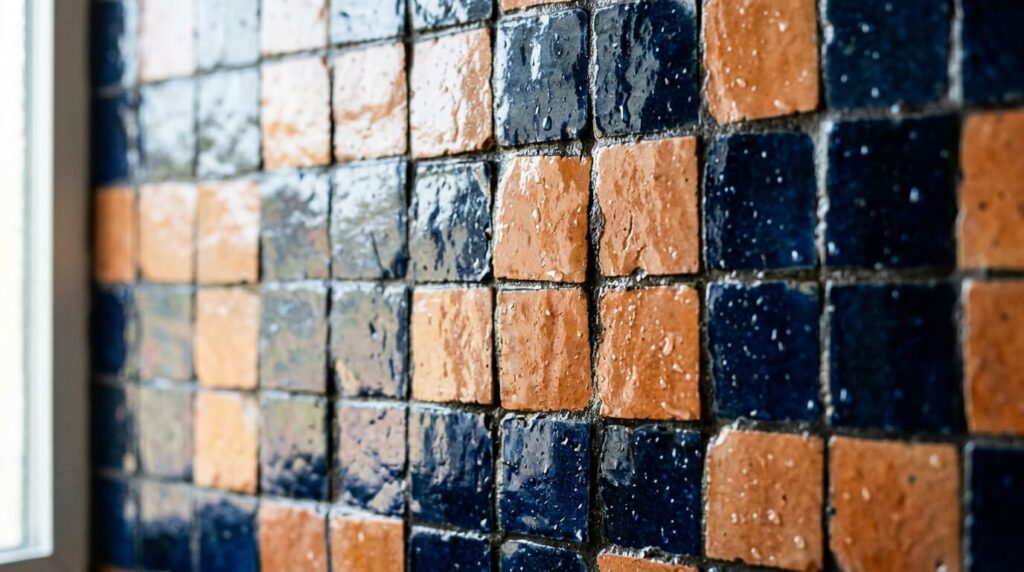
Zellige (hand-crafted Moroccan clay tiles) are having a serious moment in 2026. Their irregular surfaces catch light differently throughout the day, giving a handmade warmth to what could otherwise be a flat surface. Deep terracotta, inky navy, and sage green are the most sought-after colorways right now.
13. Matte Black Fixtures Throughout
Swapping chrome for matte black fixtures — showerhead, valve, hand shower, drain cover — creates a sophisticated tonal contrast against light tile. It’s a high-impact change that requires minimal construction.
14. Brushed Brass Fixtures with Warm Neutral Tile
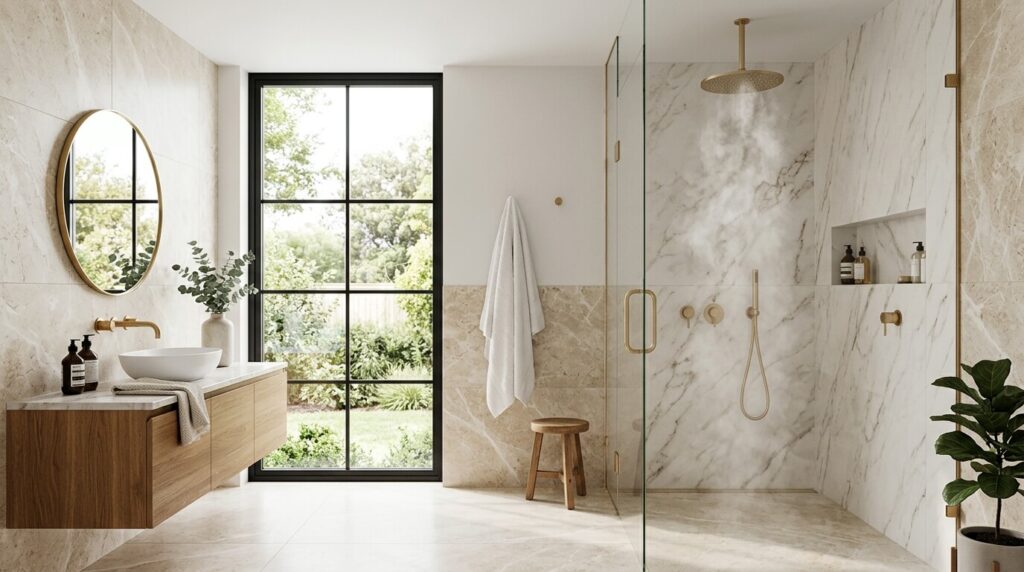
For a warmer, more collected aesthetic, brushed brass or unlacquered brass pairs beautifully with soft beige, warm gray, or terracotta tile. The key is keeping the brass to roughly 70% of your fixture choices and using a secondary matte finish (black or bronze) for the remaining hardware.
15. Mixed Metals, Done Intentionally
Using two metal finishes in a shower used to be a design no-no. Not anymore. The rule in 2026: choose one dominant finish (70%) and one accent finish (30%), and repeat them consistently. Brushed gold showerhead + matte black drain cover and handles, for example, reads as curated, not chaotic.
16. Terrazzo Tile Walls
Terrazzo — a composite of marble, quartz, glass, and stone chips set in cement — is having a significant comeback. It brings color and texture in a way that feels both retro and fresh. A terrazzo feature wall behind a rain shower is a particularly strong design statement.
17. Arched Shower Niche
A single arched niche (versus the more common rectangular cutout) gives a shower a sculptural, almost architectural presence. This detail is especially effective in otherwise minimal showers, where it reads as a considered piece of craftsmanship rather than an afterthought.
18. Dark Grout with Light Tile
Intentional grout color is a major trend for 2026. Specifying dark charcoal or espresso grout with light gray or white subway tile creates a graphic grid effect that looks deliberate and design-forward. It also hides soap scum far better than white grout.
19. Built-In Teak or Stone Bench
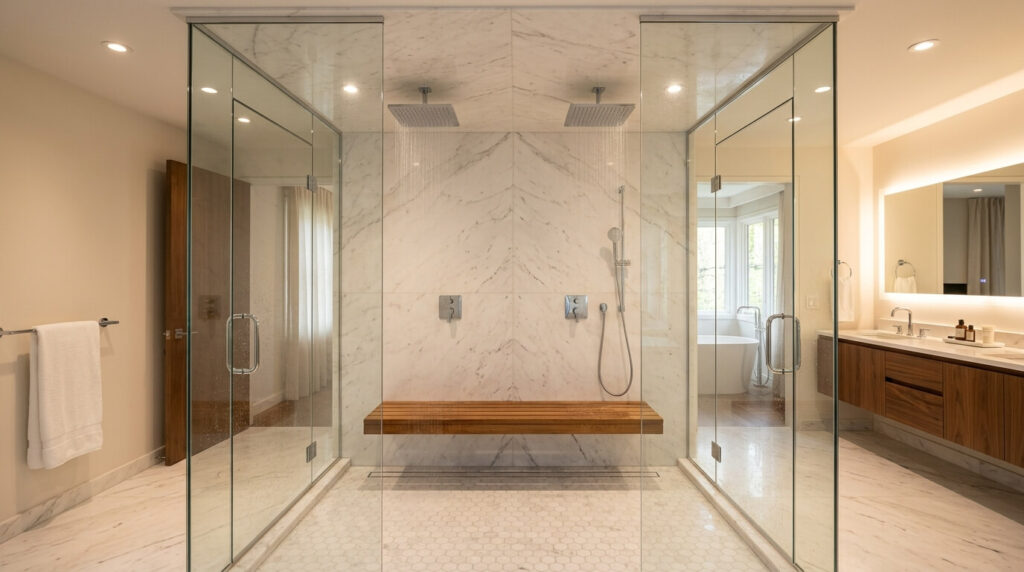
A shower bench isn’t just for accessibility (though it’s excellent for that). A cantilevered teak bench or a stone slab supported by tile walls gives the shower a spa-like quality that makes the experience feel intentionally luxurious rather than purely functional.
20. Frameless Pivot Door
Where a full frameless enclosure isn’t possible, a single frameless pivot door — hinged at the top and bottom rather than the side — creates an elegant, uninterrupted glass plane that feels more refined than traditional framed doors.
Luxurious Master Bathroom Shower Ideas
If you have the space, a master bathroom shower can become the centerpiece of your home’s most private retreat. These ideas are for homeowners thinking bigger.
21. Dual Showerheads (His and Hers Layout)
Two showerheads on opposing walls, each with its own thermostatic control, is one of the most requested upgrades in master bathroom remodels. Design tip: space them far enough apart (at least 36 inches) that the spray patterns don’t interfere with each other.
22. Full Wet Room with Freestanding Tub
Combine a barrier-free shower with a freestanding soaking tub on the same waterproofed platform. This is the defining bathroom design statement of the decade — the tub is purely aesthetic, the shower is daily use, and together they create a spa environment that is genuinely difficult to leave.
23. Steam Shower
A fully enclosed steam shower requires a sealed glass enclosure, a generator (typically installed in an adjacent cabinet), and slightly higher ceiling insulation. The payoff is genuine spa therapy at home. When designed well, with a built-in bench and aromatherapy port, a steam shower turns a 10-minute shower into a 45-minute ritual.
24. Thermostatic Shower System
A thermostatic valve remembers your preferred water temperature and delivers it instantly, without the cold-water wait. Paired with multiple body jets and a rainfall head, a thermostatic system turns your shower into a fully programmable experience. Smart versions (app or voice controlled) are increasingly accessible in the $800–$2,500 range.
25. Indoor/Outdoor Shower Connecting to a Garden
For ground-floor bathrooms with exterior wall access, a window-framed opening or glass door connecting the indoor shower to a private outdoor shower garden is an extraordinary design move. The contrast of warm water and open air (especially in evening light) is unlike any other home experience.
26. Skylight Over the Shower
Natural light changes everything in a shower. If your bathroom has roof access, a skylight centered over the shower fills the space with light that follows the sun throughout the day. Frosted or diffused glazing maintains privacy while delivering the mood-elevating benefits of natural daylight.
27. Feature Wall of Handmade Tiles
Commission or source handmade tiles in a single pattern or custom color for the shower’s feature wall — typically the back wall directly facing the entry. Artisan tiles, whether hand-painted, crackle-glazed, or relief-sculpted, create a sense of individuality that no catalogue-spec shower can replicate.
28. Walk-Through Shower Between Toilet Room and Closet
A walk-through shower — one entry from the main bathroom, one exit into the walk-in closet — is a clever luxury in master suite design. It streamlines the morning routine and creates an architectural flow that feels genuinely considered.
29. Floor-to-Ceiling Marble Surround
Real or large-format porcelain marble tile carried continuously from floor to ceiling, across the shower floor, walls, and even the ceiling itself, creates an immersive stone environment. The key: keep the veining pattern consistent and aligned at the corners for a “book-matched” effect.
30. Concealed Plumbing and Flush-Mount Fixtures
Concealing all plumbing within the walls (recessing valves and controls flush with the tile surface) creates a shower that looks almost like a minimalist art installation — nothing protruding, nothing to clean around, nothing to interrupt the visual clarity.
Budget-Friendly Shower Refresh Ideas (No Full Remodel Required)
Not every improvement requires demolition. These ideas deliver significant impact without gutting the bathroom.
31. Re-Grout with a Contrasting Color
Old, discolored grout makes even good tile look tired. Re-grouting with a fresh color — or switching from white to charcoal — revives the look of the shower for a few hundred dollars and a weekend of work.
32. Replace the Showerhead
A rainfall showerhead replacement is one of the highest ROI upgrades available. A quality fixed or adjustable rainfall head can be purchased for $80–$300 and installed without a plumber. The experience difference is dramatic.
33. Add a Frameless Mirror on the Shower Wall
A small frameless mirror mounted inside or adjacent to the shower creates a functional space for grooming and adds depth and reflected light to a small shower area.
34. Install LED Shower Lighting
Recessed LED lights mounted in the shower ceiling (rated for wet areas) transform the experience, particularly in bathrooms without natural light. Warm 2700K LEDs make skin look healthy and the space feel inviting; cool 4000K LEDs create an energizing morning environment.
35. Add a Tension-Rod Shower Caddy with Premium Finish
If a built-in niche isn’t possible, a floor-to-ceiling tension rod caddy in brushed gold or matte black — chosen to match your existing fixtures — looks far more intentional than a standard chrome over-door caddy.
36. Update the Shower Door or Curtain
A dated shower curtain is one of the first things guests notice. A quality linen-textured cotton curtain in a neutral stripe or solid color, hung on a ceiling-mounted track, dramatically elevates the look of the whole bathroom without touching a single tile.
37. Regrout and Add a Tile Accent Strip
Remove the center row of horizontal tile and replace it with a contrasting accent strip — a different color, format, or material. This simple intervention breaks up a monotonous tiled surface and gives the shower a custom-designed appearance.
38. Install a Teak Bath Mat or Shower Insert
A teak slatted insert placed over an existing shower floor covers dated tile, adds warmth, and creates a spa-like sensory experience underfoot. These are available in standard sizes or can be custom cut.
Tiled Shower Design Ideas
Tile is the single most influential element in shower design. Color, texture, format, and grout together create the visual character of the space. Here’s how to make the best tile decisions:
39. Subway Tile (The Reinvented Classic)
Standard 3×6 white subway tile is so common it risks feeling generic. To reinvent it: try a handmade version with beveled edges and slight color variation; install it in a vertical stack instead of horizontal stagger; use a dark or contrasting grout; or substitute the classic white for a soft sage, dusty rose, or warm clay color.
40. Geometric Floor Tile with Neutral Walls
A strong geometric pattern on the floor — hexagons, Moroccan fish scale, penny rounds — pairs beautifully with a quiet, neutral wall tile. The floor becomes the design moment; the walls recede. This approach has a classic interior design logic: one surface expressive, the others calm.
41. Vertical Tile for Height
Installing rectangular tiles vertically rather than horizontally draws the eye upward, making ceilings feel higher and showers feel taller. This is particularly effective in bathrooms with standard 8-foot ceilings.
42. Patterned Encaustic Cement Tiles
Encaustic cement tiles — with geometric or floral patterns pressed into them during manufacture — bring a richly layered, artisanal look to shower floors. They require sealing before and after installation, but the visual payoff is significant.
43. Monochromatic Tonal Tile (Same Color, Different Texture)
A shower where every surface is the same color family but varies in finish (matte wall tile, gloss floor tile, textured accent strip) creates a sophisticated, layered look that rewards close inspection. This is a design strategy used extensively in high-end European bathroom design.
44. Terrazzo for a Retro-Modern Statement
Terrazzo tile is everywhere in 2026 — and for good reason. Its speckled surface brings warmth and a sense of playfulness to a space that can otherwise feel clinical. Used on shower walls or floors, it reads as both retro and completely contemporary.
Accessible Shower Ideas (Aging-in-Place Design)
Accessible shower design doesn’t mean institutional-looking design. The best examples are completely indistinguishable from high-end bathroom remodels.
45. Roll-In Shower (Zero Threshold)
A roll-in shower is wheelchair accessible — the floor is completely flat, with no lip, threshold, or curb. Achieve this with a properly sloped floor and a linear drain at the perimeter. The design looks exactly like a luxury curbless shower.
46. Fold-Down Shower Seat
A teak or white solid-surface fold-down seat mounts to the shower wall and folds flat when not in use. It’s practical for users of all mobility levels, doubles as a shaving seat, and adds a spa-quality detail at modest cost.
47. Grab Bars Designed as Towel Bars
Modern grab bars are available in exactly the same finishes and profiles as standard towel bars and rails. Specifying ADA-compliant grab bars that also function as towel holders means accessibility hardware blends seamlessly into the design.
48. Handheld Showerhead on a Slide Bar
A handheld showerhead on a slide bar is adjustable for users of different heights and can be used seated. It’s one of the most useful fixtures in any shower, regardless of age or ability, and it adds practical flexibility without changing the aesthetics.
Shower Lighting Ideas
Lighting is the most underrated element in shower design. Most bathrooms rely on a single overhead fixture; thoughtful lighting design dramatically changes how the space feels.
49. Niche Lighting (LED Strip Behind the Shelf)
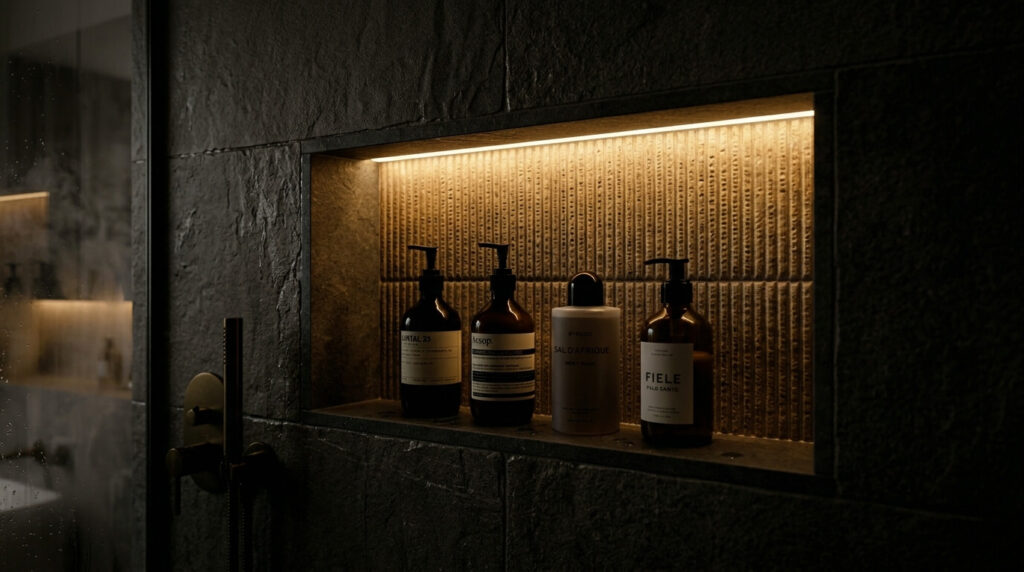
Mounting an LED strip light behind the back edge of a recessed shower niche illuminates the niche contents from behind, creates a soft ambient glow, and gives the shower a high-design detail that looks far more expensive than it is.
50. Indirect Cove Lighting at the Ceiling Junction
A recessed cove running along the top of the shower walls (where wall meets ceiling) filled with warm LED strip lighting creates a soft, diffused halo of light that eliminates harsh shadows and gives the shower a deeply relaxing, almost candlelit quality.
Common Shower Design Mistakes (And How to Avoid Them)
Even beautiful showers get undermined by a few repeating errors. Here’s what to watch for:
Choosing the wrong tile size for the space. Large tiles in small showers can look awkward; tiny mosaic tiles in a large shower look too busy. The general guideline: use the largest tile size that allows at least two full tiles across the shortest wall dimension.
Forgetting waterproofing behind the tile. Tile itself is not waterproof — the grout and substrate behind it must be properly waterproofed (cement board and waterproofing membrane) or moisture will eventually penetrate into the wall structure. This is one area where cutting corners is genuinely costly.
Underestimating ventilation. A shower generates significant moisture. An undersized exhaust fan — or none at all — leads to mold, mildew, and eventual structural damage. A fan rated for at least 1 CFM per square foot of bathroom floor area is the minimum; 1.5 CFM is better.
Installing the showerhead too low. Standard rough-in height for a showerhead is 80 inches from the floor. If anyone in your household is over 6 feet, specify 84–90 inches. This is a free change during rough-in that’s expensive to fix afterward.
Forgetting storage until the very end. Built-in niches need to be planned before tile installation — they require blocking in the wall during framing. A niche specified after tile is set means either no niche or significant demolition.
Choosing glossy floor tile. Glossy floor tile is slippery when wet. Matte, textured, or low-sheen tile with a DCOF (dynamic coefficient of friction) rating above 0.42 is the safety-compliant and practical choice for shower floors.
Step-by-Step: How to Plan Your Shower Remodel
If you’re ready to move from inspiration to action, here’s a practical sequence:
Step 1 — Measure and photograph your current space. Document every dimension: floor area, ceiling height, window and door locations, current drain position, existing plumbing wall.
Step 2 — Define your must-haves vs. nice-to-haves. Create two lists. Must-haves (e.g., curbless entry, rainfall head, niche) get protected budget; nice-to-haves (e.g., heated floor, steam generator) are cut first if costs rise.
Step 3 — Decide whether you’re moving plumbing. Moving plumbing is the single biggest cost driver in a shower remodel. If you can work with existing drain and supply locations, costs drop significantly.
Step 4 — Choose your tile first. Tile sets the palette for everything else — fixtures, grout, hardware. Select your hero tile, then build outward.
Step 5 — Select fixtures to complement the tile. Choose your fixture finish (matte black, brushed brass, chrome, etc.) based on the warmth or coolness of the tile. Warm tiles (beige, terracotta, cream) pair with warm metals; cool tiles (gray, white, blue) pair with chrome or matte black.
Step 6 — Get three quotes from licensed contractors. Shower waterproofing and tile work require skilled trades. Get itemized quotes that specify materials, waterproofing method, and warranty.
Step 7 — Plan the sequence. The correct build sequence is: demolition → framing → plumbing rough-in → waterproofing membrane → cement board → tile → fixtures → glass → final clean.
Shower vs. Tub-Shower Combo: Which Is Right for You?
This is one of the most common decisions in bathroom remodeling, and the answer is less universal than most people expect.
| Factor | Walk-In Shower | Tub-Shower Combo |
|---|---|---|
| Daily use | More practical, faster | Less practical for quick showers |
| Space efficiency | Better in small bathrooms | Requires more width (min 60″) |
| Resale value | Strong in master bath | Critical if home has only one bathroom |
| Accessibility | Superior (especially curbless) | Difficult for limited mobility |
| Cleaning | Easier | More surfaces to clean |
| Children / bathing | Not ideal | Preferred for young children |
| Aesthetics | Cleaner, more modern | Versatile; traditional or modern |
The general rule: If a bathroom is the only full bath in the home, retain the tub (or tub-shower combo) for resale value and practicality. In a master bathroom that’s one of two or more, a walk-in shower is usually the better design and lifestyle choice.
2026 Shower Design Trends Worth Knowing
Based on reporting from interior designers and bathroom design specialists confirmed for 2026:
Barrier-free showers are now the default in master bathrooms.
Open-concept designs with frameless glass and zero-threshold entries have moved from aspirational to standard in primary bathroom renovations. This reflects both aging-population accessibility awareness and a broader preference for spa-like flow.
Warm, nature-inspired color palettes are replacing cold grays.
The gray-everything aesthetic that dominated the 2010s is clearly in retreat. Warm beige, soft terracotta, natural limestone, and earthy sage are the dominant palette choices confirmed by designers for 2026.
Texture is the primary design tool.
Large, flat surfaces are giving way to intentionally textured materials — zellige, hand-painted tile, textured porcelain, fluted glass — that add visual and tactile warmth.
Smart shower systems are becoming mainstream.
App-controlled thermostatic valves, voice-activated start sequences, and integrated LED lighting are moving from luxury specification into the mid-range market in 2026.
Patina over polish.
Interior designers describe 2026 as the year polish gave way to patina. Unlacquered brass (which ages naturally), rough-edged limestone, and intentionally imperfect handmade tile are all being specified over shiny, uniform alternatives.
Conclusion
A great shower doesn’t require an unlimited budget or a sprawling master suite. It requires thoughtful decisions: the right tile for your space, a fixture finish that complements it, a niche sized for your bottles, a drain that works cleanly, and lighting that makes you feel good.
Whether you’re looking for walk-in shower ideas for small bathrooms, planning a full wet-room renovation, or just refreshing the fixtures you already have, these 50 shower ideas for bathroom spaces give you a complete toolkit. Start with the ideas that solve your biggest current frustrations, then layer in the refinements that move toward your ideal.
Your morning routine is worth it.
Frequently Asked Questions
What is the minimum size for a walk-in shower?
The minimum practical size for a walk-in shower is 36×36 inches, though 36×48 inches is more comfortable and is the standard recommended minimum. For a doorless walk-in shower, a minimum of 48×36 inches is typically needed to contain water spray effectively.
How do I make a small shower look bigger?
Use large-format tiles with minimal grout lines, carry a single tile color from floor to ceiling, install frameless glass enclosures, choose a curbless entry, and maximize natural or artificial lighting. A linear drain along one wall (instead of a center drain) also allows larger uninterrupted floor tiles.
What is the most durable tile for a shower floor?
Porcelain tile is the gold standard for shower floors — it’s dense, water-resistant, and available in textured finishes that meet slip-resistance requirements. Specifically, look for a DCOF (Dynamic Coefficient of Friction) rating above 0.42. Natural stone is beautiful but requires regular sealing.
How much does a walk-in shower conversion cost?
Converting a tub to a walk-in shower typically costs $2,000–$8,000 for a standard bathroom. A complete custom tile walk-in shower (including waterproofing, tile, fixtures, and glass) ranges from $5,000–$15,000. Premium materials, steam systems, or heated floors can push costs to $20,000+.
Are doorless showers practical?
Yes, when properly designed. A doorless shower needs adequate floor space (at least 48×36 inches), correct showerhead placement to contain spray, a properly sloped floor, and — in colder climates — a nearby heat source such as a towel warmer or in-floor heating to offset the lack of steam containment.
What is the best showerhead for a small bathroom?
A ceiling-mounted or arm-mounted rainfall showerhead works well in small showers because the spray falls vertically, reducing the spray area. Compact 6-inch ceiling mount rainfall heads deliver the rainfall experience without requiring the larger floor footprint that wall-mounted rainfall arms with extensions demand.
Is heated shower flooring worth the cost?
Electric radiant floor heating under tile adds approximately $10–$12 per square foot of floor area. In climates with cold winters, it’s widely considered one of the highest-satisfaction upgrades in bathroom remodeling — stepping onto a warm floor from a shower is a daily luxury that costs relatively little to run.
How do I prevent mold in my shower?
The three key factors are waterproofing (a proper membrane behind tile, not just tile over drywall), ventilation (exhaust fan rated for the bathroom size, run for at least 15 minutes after each shower), and grout sealing (annual sealing of unsealed grout). Choosing large-format tiles and epoxy grout minimizes grout surface area and dramatically reduces mold risk.