
What type of paint for bathroom walls holds up to steam, splashes, and mildew — plus finishes, primers, colors, and application tips. If you’ve ever watched paint bubble off a bathroom ceiling six months after a repaint, you already know this isn’t a room where you can grab whatever gallon is on sale. Picking the right paint for bathroom walls means balancing three things at once: moisture resistance, mildew protection, and a finish you can actually wipe clean. Get those three right, and a bathroom paint job can last 7-10 years even in a household with two teenagers and a steamy shower habit.
This guide walks through every layer of that decision — finish, formula, primer, surface type, color, and application — so you’re not left guessing halfway through a project.
Why Bathrooms Destroy Regular Wall Paint
A typical shower pushes bathroom humidity from around 40% to over 90% in minutes. That moisture condenses on walls and ceilings, seeps into paint film, and creates the perfect environment for mold and mildew spores to feed and multiply.
Standard flat or matte wall paint wasn’t built for that cycle. It’s more porous, which means:
- Water vapor penetrates the paint film instead of beading off
- Soap scum and grime work into the texture instead of wiping away
- Mildew gets a foothold in the tiny surface irregularities flat paint creates
That’s why “bathroom paint” isn’t really a separate product category — it’s a combination of the right sheen and the right additive package working together.
Best Paint Finishes for Bathrooms
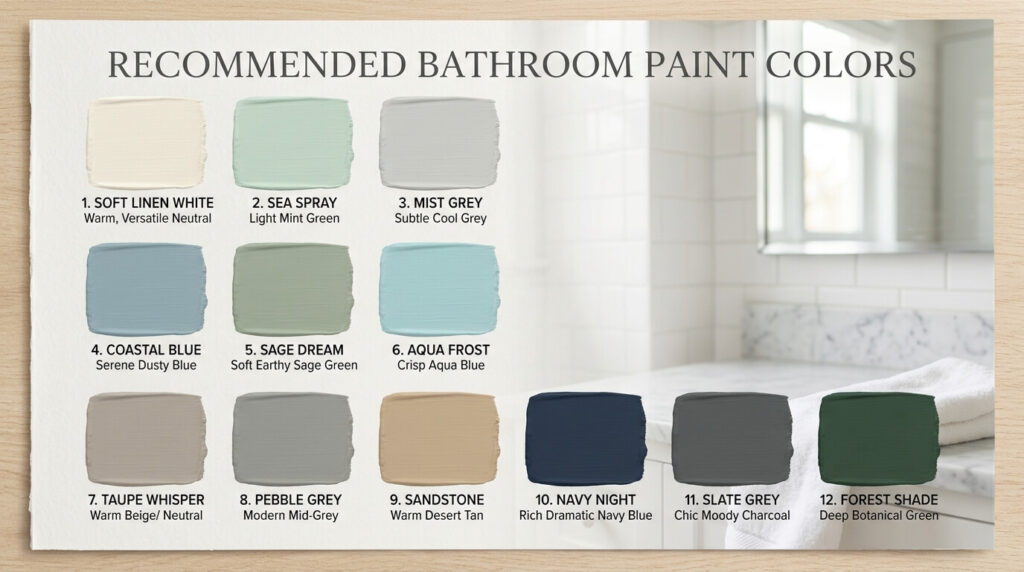
Sheen affects far more than shine. It determines how much moisture the surface repels and how easily you can scrub away fingerprints, hairspray overspray, or toothpaste splatter.
Semi-Gloss: The Industry Standard
Semi-gloss is the most commonly recommended finish for bathroom walls, and for good reason — it sheds water, resists staining, and cleans up with a damp cloth. The tradeoff is that its higher shine highlights wall imperfections like dents, drywall seams, and roller marks.
Satin: The Balanced Choice
Satin sits just below semi-gloss on the sheen scale. It’s slightly softer-looking, still moisture-resistant, and forgives minor wall flaws better than semi-gloss. Many painters treat satin as the sweet spot for family bathrooms that get heavy daily use.
Gloss: Best for Trim and Cabinetry
Full gloss is the most durable and water-resistant option, but the mirror-like shine is usually too intense for entire walls. It’s typically reserved for trim, door frames, and vanity cabinetry, where a hard, wipeable surface matters more than a soft look.
What Type of Paint for Bathroom Walls Works Best?
Eggshell and Flat/Matte: Use With Caution
Eggshell and flat finishes are more porous and far less forgiving of moisture and scrubbing. They’re generally not recommended for showers, tub surrounds, or high-use family bathrooms. A low-splash powder room with a pedestal sink — where water rarely touches the walls — is really the only place these finishes make sense.
Best Paint Formulas and Products for Bathrooms
Sheen is half the equation. The other half is the paint’s actual formulation.
Moisture- and Mildew-Resistant Formulas
Look for paint labeled “bathroom,” “kitchen & bath,” or “moisture-resistant.” These formulas include mildewcide additives that actively inhibit mold spore growth on the paint film itself, rather than just resisting water like a standard sheen does.
Specialty Bathroom Paint Products Worth Knowing
A few products have earned a reputation specifically for bathroom performance:
- Benjamin Moore Aura Bath & Spa — a matte-look formula engineered with above-average moisture and mildew resistance, popular for homeowners who want a soft look without sacrificing durability
- Zinsser Perma-White — a mold-proof, self-priming paint often used on bathrooms with a history of moisture problems or older, stained drywall
- Sherwin-Williams Emerald or Duration in a bath-rated line — premium acrylic formulas with built-in mildewcides and strong washability
- KILZ Kitchen & Bath — a budget-friendly option that still includes moisture-resistant, mildew-resistant additives
Ceiling Paint Deserves Its Own Look
Bathroom ceilings take the worst of the steam because heat and moisture rise and settle there first. Use a dedicated bathroom or “ceiling paint” formulated with the same mildewcide additives — not leftover flat wall paint from another room. A flat or matte sheen is fine on ceilings since scrubbing isn’t a factor, but moisture resistance still matters just as much as it does on the walls.
Choosing Paint and Primer by Surface Type
Drywall
Standard drywall is the most common bathroom surface and takes any quality bathroom-rated paint well, provided it’s properly primed first.
Painted Wood Trim and Cabinetry
Use a gloss or semi-gloss enamel — ideally a hybrid alkyd formula — for vanities, trim, and door casings. These areas get touched constantly and need a harder, more chip-resistant film than wall paint provides.
Tile and Previously Glazed Surfaces
Painting over ceramic tile is possible but requires a bonding primer specifically designed for glossy, non-porous surfaces, followed by a durable epoxy or urethane-based topcoat. Skip this step and paint will peel within months regardless of how good the topcoat is.
Primer Selection
Always prime bare drywall, patched areas, or previously stained walls with a stain-blocking, mildew-resistant primer before applying your topcoat. Primer seals the surface, blocks old stains from bleeding through, and gives the paint something consistent to grip — this single step affects long-term durability more than almost any other decision in the project.
Best Bathroom Paint Colors
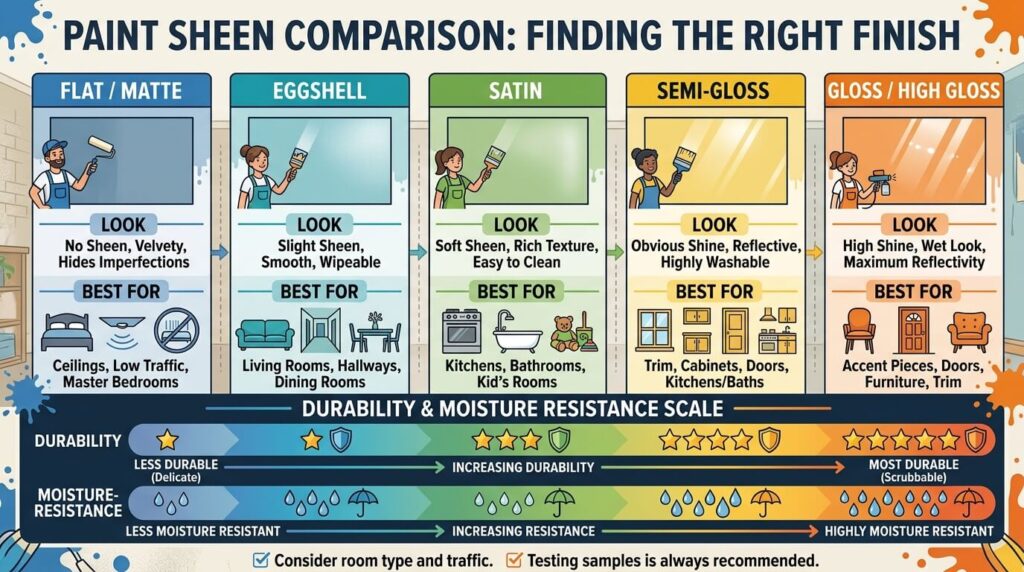
Color choice is personal, but a few tones consistently perform well in bathrooms because of how they interact with limited natural light and small square footage:
- Soft blues and greens — read as calming and pair naturally with white fixtures and natural light
- Warm greige or putty tones — hide water spots and soap residue better than stark white
- Deep navy or charcoal (accent wall or powder room) — works well in bathrooms with strong artificial lighting and brass or matte black fixtures
- Classic white or off-white — makes small, windowless bathrooms feel larger and brighter
If you’re unsure, test a sample on an actual wall section and view it under your bathroom’s real lighting — both daylight and the vanity bulbs — since bathroom colors shift more dramatically under artificial light than colors in any other room.
How Much Paint Do You Need?
A standard bathroom (about 100-120 square feet of wall space) typically needs one gallon for two coats. Measure wall height by width, subtract door and window area, and divide by 350 (average square footage a gallon covers per coat). Always plan for two coats in a bathroom — one coat rarely achieves the even moisture barrier you’re paying for.
Low-VOC and Eco-Friendly Options
Bathrooms are enclosed, poorly ventilated spaces where paint fumes linger longer than in open rooms. Low-VOC or zero-VOC bathroom-rated paints have narrowed the performance gap with traditional formulas significantly in recent years, making them a reasonable choice if indoor air quality is a priority — just confirm the specific product still carries a moisture/mildew-resistant rating, since not all low-VOC lines do.
Step-by-Step: Prepping and Painting a Bathroom
- Fix moisture problems first. Bubbling paint, dark spots, or a musty smell point to leaks, poor ventilation, or failing grout — resolve these before painting or the new coat will fail too.
- Clean thoroughly. Wash walls with warm water and mild detergent (or a vinegar solution) to remove soap scum and body oils, then rinse and let dry completely.
- Sand and patch. Lightly scuff glossy areas so new paint grips, and fill dings with a moisture-resistant spackling compound.
- Prime. Apply a mildew-resistant, stain-blocking primer and let it cure fully per the label.
- Cut in, then roll. Use a synthetic brush around trim and fixtures, then a dense foam or microfiber roller for the field of the wall while the cut-in edges are still wet.
- Apply two thin coats. Thin, even coats outperform one thick coat — thick applications trap moisture and are more prone to bubbling.
- Ventilate during and after. Run the exhaust fan or crack a window throughout painting and for at least 24 hours afterward.
- Wait before steam exposure. Avoid hot showers for at least 24-48 hours so the film can fully cure before facing real humidity.
Common Mistakes to Avoid
- Skipping primer on bare or patched drywall
- Using leftover flat paint from another room instead of a bathroom-rated formula
- Painting in a humid or poorly ventilated space, which slows curing and causes streaking
- Applying one thick coat instead of two thin ones
- Ignoring an existing moisture or mold problem and painting over it
DIY vs. Hiring a Professional
A small, straightforward bathroom is a reasonable weekend DIY project for most homeowners. Call in a professional painter if the bathroom has visible mold, damaged drywall, ventilation issues, or intricate tile work around the tub — in those cases, a pro can catch underlying problems before they turn into a repeat paint failure, which usually costs more to fix than the original job.
How Long Should Bathroom Paint Last?
With a quality bathroom-rated paint, proper prep, and decent ventilation, expect 5-10 years before you need a refresh. Peeling, bubbling, or dulling sheen are the clearest signs it’s time to repaint rather than just touch up.
What Type of Paint for Bathroom FAQ
What is the best type of paint for a bathroom with no windows?
Choose a semi-gloss or satin bathroom-rated paint with strong mildew resistance, and run the exhaust fan for at least 30 minutes after every shower. Without natural ventilation, the paint’s moisture resistance is doing more of the work, so don’t downgrade the formula to save money.
Is eggshell paint ever okay in a bathroom?
Only in low-splash areas like a powder room with a pedestal sink and no shower or tub. Anywhere water regularly touches the wall, eggshell will wear and stain faster than satin or semi-gloss.
Do I really need a special primer for bathrooms?
Yes, especially over bare drywall, patched areas, or old stains. A mildew-resistant, stain-blocking primer prevents old damage from bleeding through and gives the topcoat a more even surface to bond to.
Can I paint directly over bathroom tile?
You can, but only with a bonding primer made for glossy, non-porous surfaces and a durable epoxy or urethane topcoat. Skipping the bonding primer is the single most common reason tile paint jobs fail within months.
How long should I wait before showering after painting a bathroom?
Wait at least 24 hours before a hot, steamy shower, even if the paint feels dry to the touch. The film needs time to cure fully, and early steam exposure is a common cause of bubbling and surfactant leaching.
What paint sheen hides bathroom wall imperfections best?
Satin hides more flaws than semi-gloss or gloss because it reflects less light, while still holding up better than eggshell or flat against moisture and cleaning.
Final Thoughts
Choosing the right paint for bathroom walls really comes down to matching the sheen and formula to how hard that specific room gets used. A guest powder room and a kids’ bathroom with a daily bath routine have very different needs, even though they’re both technically “bathrooms.” Nail the prep work, pick a genuinely moisture-resistant product, and give it time to cure properly, and you’ll get years of clean, mildew-free walls out of a single weekend project.