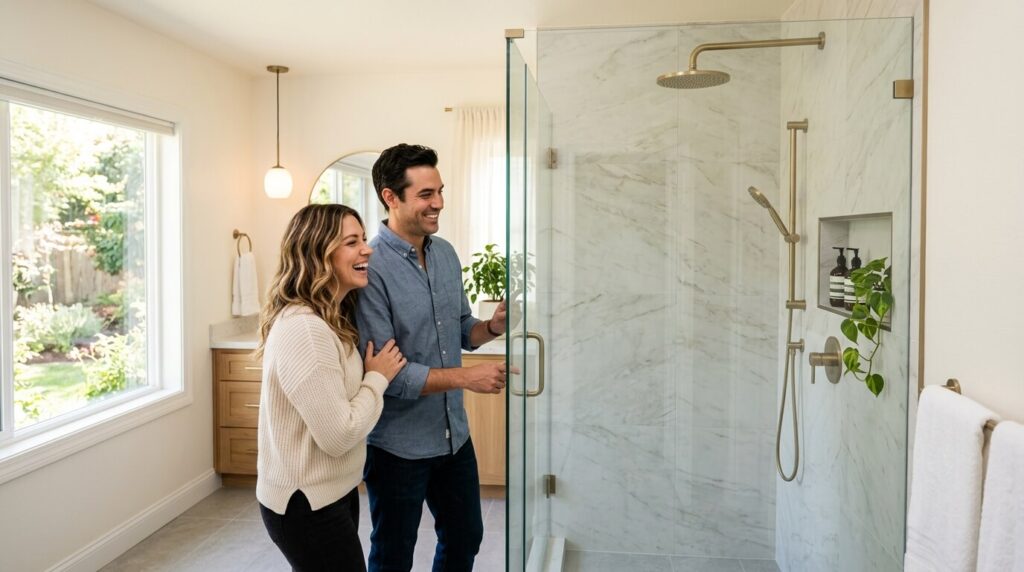
If your shower still looks the way it did when you moved in, you’re not alone. You don’t need a full bathroom renovation to improve it. The right shower upgrades can modernize your daily routine. They can also solve storage or accessibility problems. Many upgrades add value to your home. Most do not require plumbing changes or wall demolition.
This guide breaks down shower and tub upgrades by budget. It shows which projects you can safely DIY. It also explains how each option affects resale value. This information helps you make a confident decision before calling a contractor.
What Counts as a Shower Upgrade? (Upgrade vs. Remodel vs. Renovation)
“People frequently use these three terms as synonyms, but they do not refer to the same project.”
- Shower upgrade: A targeted improvement — a new showerhead, a niche, better lighting — that doesn’t change the shower’s footprint or plumbing.
- Shower remodel/replacement: Removing the existing shower or tub-shower combo and installing a new one, often with a new surround, base, or glass enclosure.
- Bathroom renovation: A full overhaul of the room — layout, plumbing, vanity, flooring, and shower all included.
Most homeowners start with an upgrade because it’s faster, cheaper, and far less disruptive than tearing the room down to the studs.
Shower Upgrade Ideas by Budget
Many lists of shower ideas start to feel repetitive. Most do not explain the actual costs involved. This guide provides that missing information. Here’s that missing piece.
Budget-Friendly Upgrades (Under $300)
- New showerhead: A rainfall or handheld showerhead is one of the highest-impact, lowest-cost upgrades available — most swaps take under an hour and require no professional installation.
- Shower caddy or corner shelf: An inexpensive storage fix while you plan a more permanent niche.
- Updated shower curtain or hardware: Swapping a curtain for a frameless-look liner and matte black hardware instantly modernizes the space.
- Re-caulking and re-grouting: Not glamorous, but it’s the cheapest way to make an old shower look — and function — like new.
Mid-Range Upgrades ($300–$2,000)
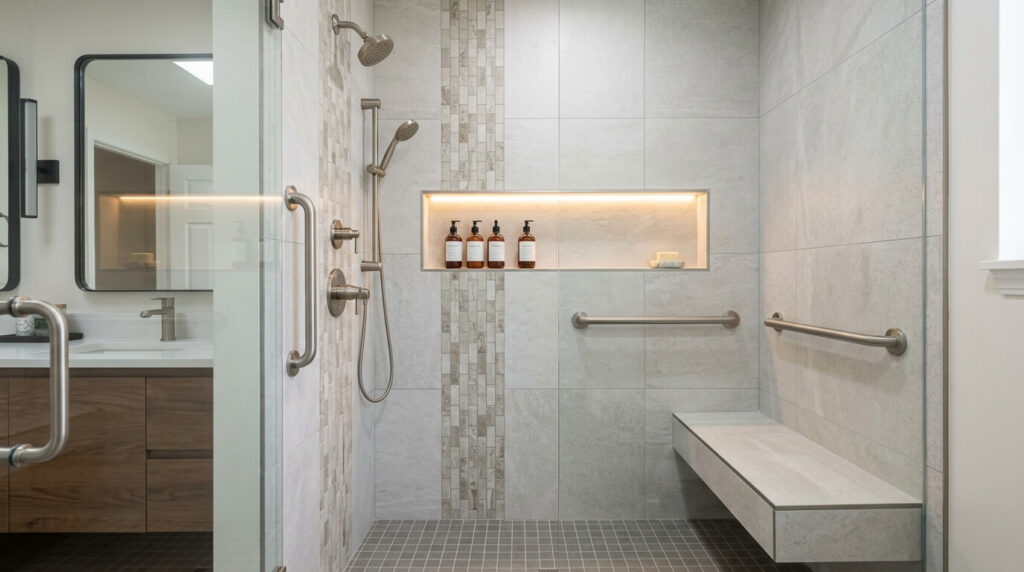
- Recessed shower niche: Built into the wall for soap, razors, and shampoo, keeping clutter off the floor and shelves.
- Grab bars: A small investment that meaningfully reduces fall risk — and one real estate agents increasingly flag as a buyer-pleaser, not just a senior-specific feature.
- LED shower lighting: Waterproof-rated LED strips or recessed lighting in niches and benches add a spa-like glow at a moderate cost.
- Digital shower valve/thermostatic control: Lets you set a precise temperature, useful for households with kids or anyone tired of fiddling with the tap.
High-Impact Upgrades ($2,000+)
- Tub-to-shower conversion: Removing an underused tub to install a larger walk-in shower.
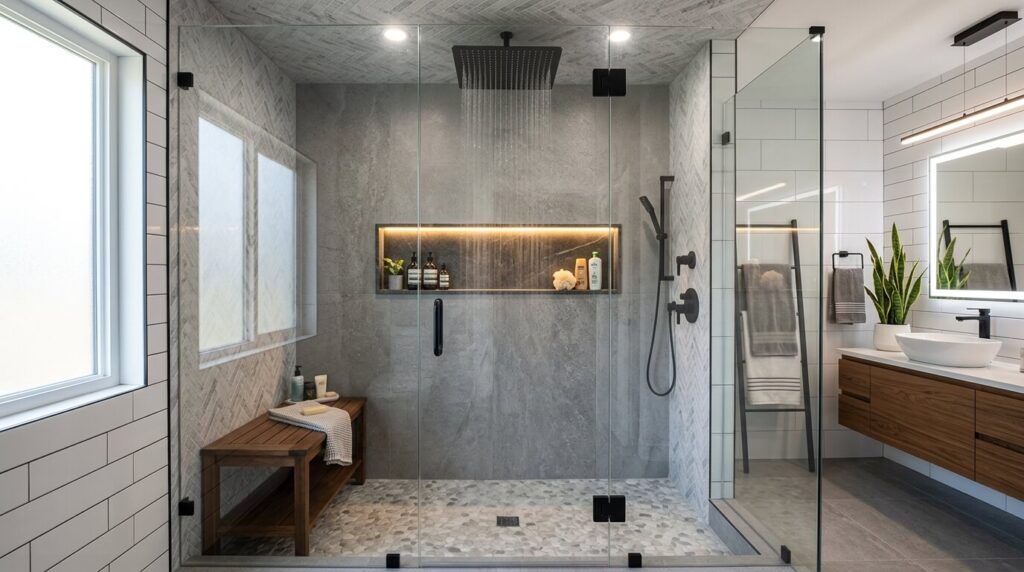
- Frameless glass enclosure: Replaces a shower curtain or framed door with a clean, glass-forward look that visually expands the room.
- Full surround replacement: New acrylic, solid-surface, or tiled walls paired with a new base — effectively a shower replacement without a full bathroom gut.
- Steam shower system: A premium addition for homeowners prioritizing a spa-style daily routine over resale ROI.
(Comparison takeaway: a $250 showerhead-and-niche refresh and a $4,000 tub-to-shower conversion are both “shower upgrades” — the right one depends on whether your goal is daily comfort or a structural fix.)
Structural Shower and Tub Upgrades Worth Considering
Tub-to-Shower Conversions
Converting a rarely used tub into a shower is one of the most requested upgrades, largely because it opens up floor space and modernizes the room’s look. It’s worth noting this isn’t reversible without significant additional cost, so it’s best suited to bathrooms where another tub exists elsewhere in the home.
Walk-In and Curbless Showers
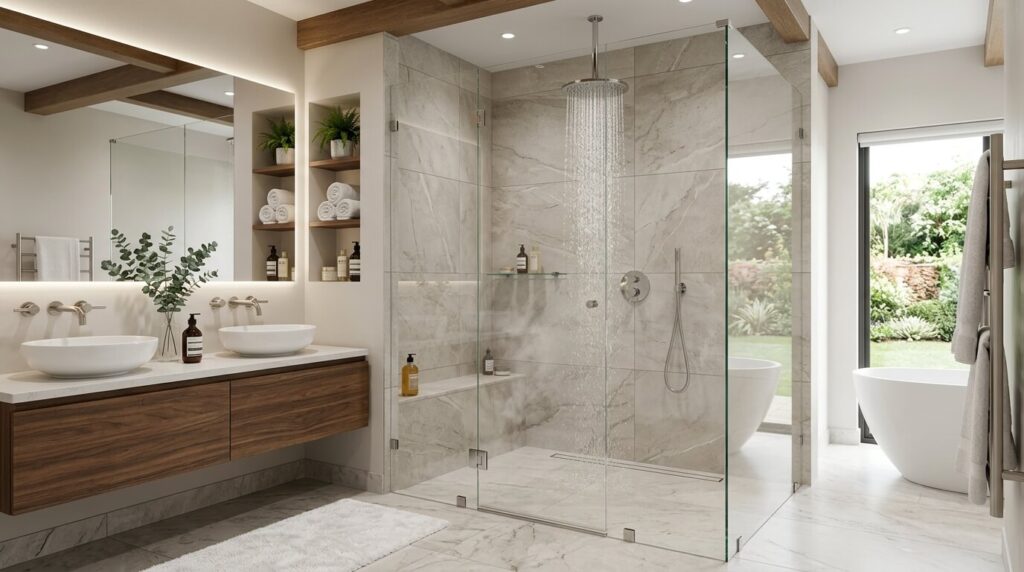
A walk-in shower removes the framed door and step-over curb in favor of an open, barrier-free entry. Beyond the modern look, the open design tends to make small bathrooms feel larger and is easier to clean since there are fewer corners and tracks for grime to collect.
Frameless Glass Enclosures
Frameless glass is one of the most frequently recommended single upgrades because it changes the perceived quality of an entire bathroom without altering the shower’s structure. It pairs well with almost any wall material, from tile to solid-surface panels.
Accessibility and Aging-in-Place Shower Upgrades
Accessibility upgrades are often treated as a niche category, but they’re increasingly mainstream — many of the same features that help an aging parent also reduce slip risk for kids and guests:
- Zero-threshold or low-curb entry for easier stepping in and out
- Grab bars placed at entry points and seated positions
- Slip-resistant flooring or textured tile in the shower base
- Built-in or fold-down seating for those who can’t stand for an entire shower
- Handheld showerheads on a sliding bar for seated or assisted use
These upgrades typically pair well with a tub-to-shower conversion, since removing the tub’s high step-over edge is itself one of the biggest accessibility wins.
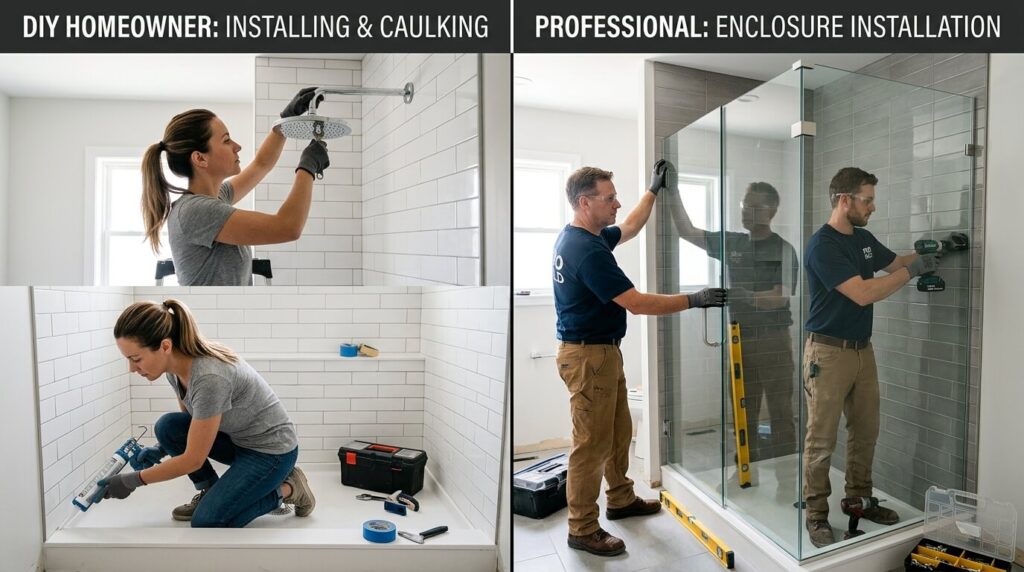
DIY vs. Professional Installation: What’s Safe to Do Yourself
| Upgrade | DIY-Friendly? | Why |
|---|---|---|
| Showerhead swap | Yes | Hand tools, no plumbing changes |
| Caulking/re-grouting | Yes | Time-intensive but low-skill |
| Shower curtain/hardware | Yes | No tools beyond a drill |
| Grab bars | Sometimes | Must be anchored into studs or blocking — get this wrong and it’s a safety hazard |
| Shower niche | Rarely | Requires cutting into a waterproofed wall cavity |
| Tub-to-shower conversion | No | Plumbing, waterproofing, and code compliance are involved |
| Frameless glass enclosure | No | Precise measurement and structural anchoring required |
A good rule of thumb: if the upgrade involves opening a wall, moving plumbing, or installing something a person’s safety will depend on (grab bars, glass, a shower base), bring in a licensed professional. (External link opportunity: link to a reputable source like the NKBA or a state licensing board page on contractor verification.)
How Shower Upgrades Impact Home Value
Shower and bathroom upgrades are consistently ranked among the renovation categories most likely to influence a buyer’s first impression, and several specific upgrade types have a more direct tie to resale value than others:
- Walk-in showers and frameless glass tend to read as “updated” to buyers and appraisers alike, even when the rest of the bathroom is original.
- Low-flow showerheads and water-saving fixtures can appeal to eco-conscious buyers and, in some markets, support utility-cost talking points during a sale.
- Accessibility features like grab bars and curbless entries broaden a home’s appeal to a wider range of buyers, including multigenerational households.
- Removing the only tub in a home is a calculated risk — buyer surveys consistently show many households, especially families with young children, still expect at least one bathtub somewhere in the home. If your home has multiple bathrooms, converting one tub to a shower carries far less resale risk than removing the last one.
Real estate ROI figures vary widely by region, home price point, and the specific report cited — treat any single “X% return” statistic as a general benchmark rather than a guarantee for your specific home. (Flag: insert a current, regionally relevant ROI statistic from a source like a recent Cost vs. Value report once available.)
How to Plan and Sequence a Shower Upgrade Project
- Identify the goal first — comfort, storage, accessibility, or resale value should drive which upgrades you prioritize, since trying to do all of them at once usually blows the budget.
- Get your budget tier locked in before talking to contractors, using the breakdown above as a starting point.
- Bundle structural work together. If you’re converting a tub to a shower, that’s the moment to also add the niche, bench, and grab bars — opening the wall once instead of twice saves money.
- Save cosmetic-only upgrades for last. Showerheads, curtains, and lighting can be swapped any time and don’t need to hold up a larger project.
- Confirm permit requirements. Anything involving plumbing relocation or structural changes to the shower base typically requires a permit — check with your local building department before work begins.
Frequently Asked Questions About Shower Upgrades
How much does it cost to upgrade a shower?
Costs range from under $50 for a new showerhead to $2,000–$10,000+ for a full tub-to-shower conversion with a new surround and glass enclosure, depending on materials and labor in your area.
What is the cheapest way to upgrade a shower?
A new showerhead, updated hardware, and fresh caulking deliver the most visible change for the lowest cost, typically under $150 combined.
Can I upgrade my shower without a full bathroom remodel?
Yes. Most of the upgrades in this guide — including tub-to-shower conversions and frameless glass — can be completed without touching the vanity, flooring, or layout of the rest of the bathroom.
Does upgrading a shower increase home value?
It can, particularly with walk-in showers, frameless glass, and accessibility features, though the exact return depends on your local market and whether the rest of the bathroom is updated to match.
How long does a shower upgrade take?
Cosmetic upgrades like a showerhead or curtain swap take under an hour. Structural upgrades like a tub-to-shower conversion typically take one to several days depending on the scope and whether plumbing needs to move.
Are walk-in showers worth it?
For most households, yes — particularly if another bathtub exists elsewhere in the home. If it’s the only tub in the house, weigh the resale trade-off against your own daily-use priorities.
Can I install a shower niche or bench myself?
It’s possible but not recommended for most DIYers, since it involves cutting into a waterproofed wall and re-sealing it correctly — a failed seal here leads to hidden water damage.