
Do you know what is the material surrounding the bathtub called? The material surrounding your bathtub is called a tub surround. Learn what it is, explore acrylic, tile, stone, and fiberglass options, and find the best choice for your home. The material that surrounds a bathtub is called a tub surround — also referred to as a bathtub surround, bathtub wall panels, or a tub enclosure. It covers the three walls that frame the bathtub, running from the rim of the tub up to the ceiling or a defined height, and its primary job is to keep water from seeping into the walls behind it.
If you’re planning a bathroom renovation, updating an old install, or simply trying to put the right name to the thing you stare at every morning, this guide breaks down exactly what a tub surround is, what it’s made from, and how to choose the right material for your home.
What Is a Tub Surround?
Definition and Purpose
A tub surround is the waterproof wall system that lines the walls around a bathtub — typically covering three sides. Its role is both functional and decorative: it protects the underlying wall structure from moisture damage and mold while creating a clean, finished look in the bathroom.
Most standard bathtub installations fit in an alcove — a three-walled nook — which is exactly where a surround is designed to go. The surround typically extends about 12 inches above the showerhead if one is present, or runs to a consistent height if the tub is used only for bathing.
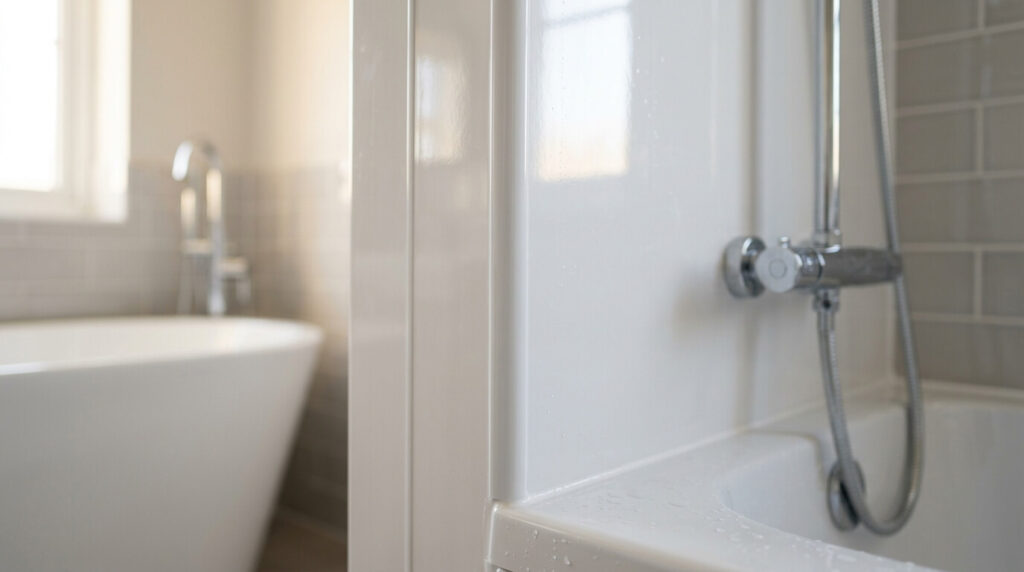
Tub Surround vs. Tub Enclosure vs. Tub Liner — What’s the Difference?
These terms are often used interchangeably, but they have distinct meanings:
| Term | What It Means |
| Tub Surround | The wall panels installed on the three sides of the bathtub. Can be tile, acrylic, stone, or other materials. |
| Tub Enclosure | Usually refers to the full system: surround panels plus a glass door or shower curtain rod setup. |
| Tub Liner | A thin acrylic or PVC shell fitted directly over the existing tub surface — covers the tub itself, not the walls. |
| Shower Surround | Same concept as a tub surround but installed in a standalone shower rather than around a bathtub. |
Common Materials Used for Bathtub Surrounds
When people ask what the material surrounding the bathtub is called, the answer depends on what was installed. Here are the six most common bathtub surround materials you’ll encounter:
1. Acrylic Tub Surround
Acrylic is currently the most popular choice for bathtub surrounds in American homes — and for good reason. It’s lightweight, nonporous, easy to clean, and resistant to mold and mildew because water cannot penetrate the surface.
- Pros: Durable, warm to the touch, wide color range, seamless panels available, easy DIY install
- Cons: Can scratch if cleaned with abrasive products; may show wear over many decades
- Typical lifespan: 10–20+ years with proper care
2. Fiberglass Tub Surround
Fiberglass is a budget-friendly option that’s been used for decades. It’s lightweight and comes in one-piece or multi-panel kits, making installation simple. The downside is that it shows its age faster than other materials, fading and chalking over time, especially when exposed to cleaning chemicals.
- Pros: Affordable, easy to install, no grout lines
- Cons: Fades, chalks, and yellows over time; cracks can harbor mold
- Typical lifespan: 10–15 years
3. Ceramic and Porcelain Tile Surround
Tile has been the go-to bathtub surround material for generations. It offers virtually unlimited design options — shapes, colors, patterns, and textures — and when properly installed and sealed, it’s durable and beautiful.
The trade-off is the grout. Grout lines are porous, meaning they absorb moisture and become breeding grounds for mold and mildew if not regularly sealed and cleaned. High-quality epoxy grout or smaller grout joints can reduce, but not eliminate, this problem.
- Pros: Timeless look, highly customizable, very durable tile surface
- Cons: Grout requires regular sealing and scrubbing; cracked tiles can allow water intrusion
- Typical lifespan: 20–30+ years (tile); grout may need replacement every 5–15 years
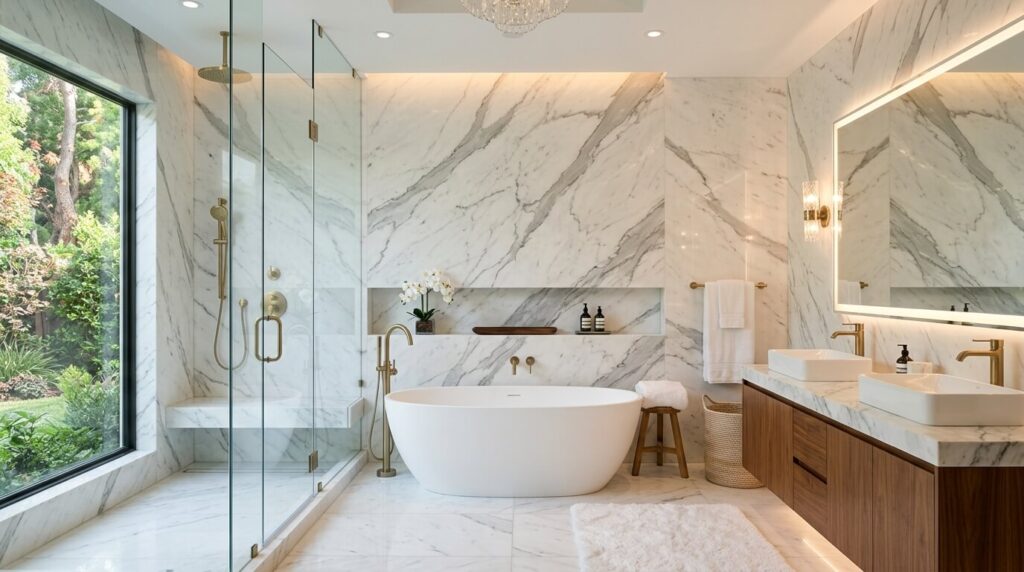
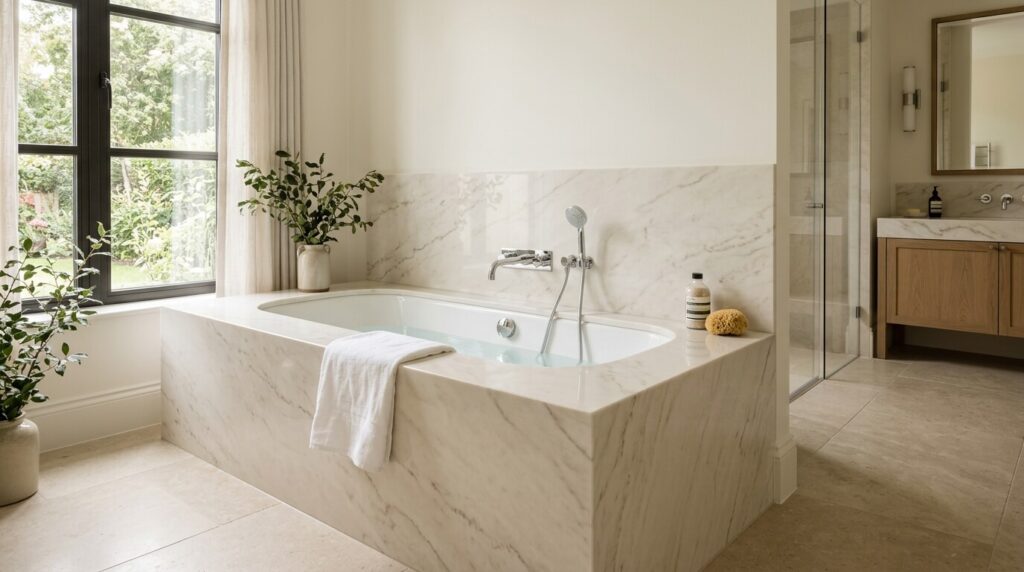
4. Natural Stone Surround (Marble, Granite, Slate, Limestone)
Natural stone delivers unmatched elegance and a truly unique aesthetic — no two stone installations look identical. However, stone is heavy, expensive, and requires regular sealing because it’s naturally porous.
- Pros: Stunning appearance, adds home value, long-lasting if maintained
- Cons: Expensive, heavy (may need structural support), requires sealing 1–2x per year, can stain
- Typical lifespan: 25–50+ years with proper maintenance
5. Cultured Marble Surround
Cultured marble is a man-made composite of ground marble and resin, then coated with a gel coat. It mimics the look of natural stone at a much lower cost and weight. Because the surface is sealed with gel coat, it’s nonporous and easier to maintain than real marble.
- Pros: Seamless installation options, stone aesthetic, less maintenance than real stone
- Cons: Gel coat can chip or scratch; refinishing eventually needed
- Typical lifespan: 15–25 years
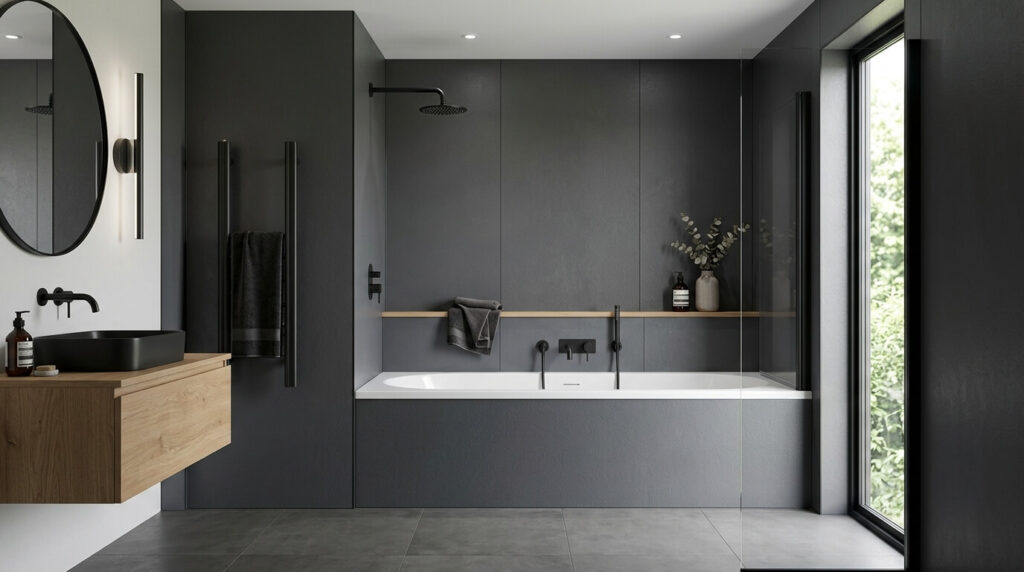
6. PVC and Solid Surface Panels
Modern solid surface panels (brands like Swanstone, Corian, and similar) and PVC wall panels are gaining popularity as a grout-free, waterproof alternative to tile. They install directly over existing tile or drywall, making them a favorite for renovations.
- Pros: Completely grout-free, waterproof, wide style range, quick installation
- Cons: Can look less premium than tile or stone; cost varies widely by brand
- Typical lifespan: 20–30 years
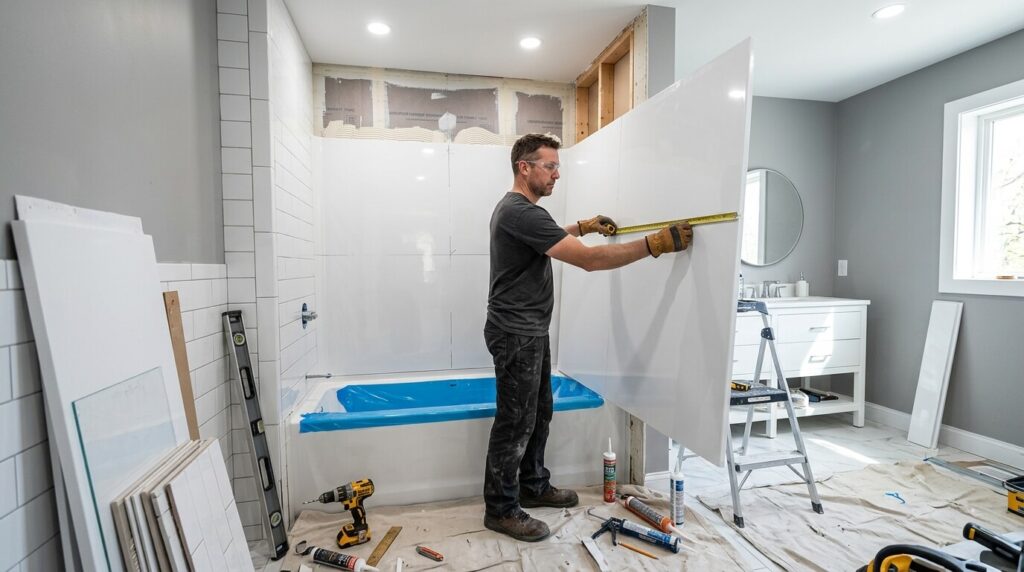
Material Comparison Table
| Material | Avg. Cost (Installed) | Durability | Maintenance | DIY Friendly? |
| Acrylic | $300–$900 | High | Low — wipe clean | Yes |
| Fiberglass | $200–$700 | Medium | Low (initially) | Yes |
| Ceramic/Porcelain Tile | $700–$2,500+ | Very High | High (grout upkeep) | Moderate |
| Natural Stone | $1,500–$5,000+ | Very High | High (sealing req.) | No — professional |
| Cultured Marble | $500–$1,500 | Medium-High | Medium | Moderate |
| PVC/Solid Surface | $400–$1,800 | High | Very Low | Yes |
Note: Costs are approximate U.S. averages and vary significantly by region, bathroom size, and labor rates.
How to Choose the Right Tub Surround Material
1. Consider Your Budget
For tight budgets, fiberglass or basic acrylic kits offer the most value. Mid-range budgets open the door to cultured marble, solid surface panels, and higher-end acrylic. If cost is no object, natural stone and premium tile deliver a showpiece bathroom.
2. Think About Maintenance Honestly
If you hate scrubbing grout, tile and stone are poor choices no matter how beautiful they look in the showroom. Acrylic, fiberglass, and solid surface panels are the low-maintenance options — a regular wipe-down is all they need.
3. Match Your Bathroom Style
Modern and minimalist bathrooms pair well with seamless acrylic or solid surface panels. Traditional and classic designs benefit from tile. Luxury bathrooms call for natural stone or cultured marble.
4. DIY vs. Professional Installation
Acrylic kits, fiberglass units, and PVC panels are DIY-friendly for reasonably handy homeowners. Tile, natural stone, and cultured marble almost always require professional installation to ensure proper waterproofing, leveling, and sealing.
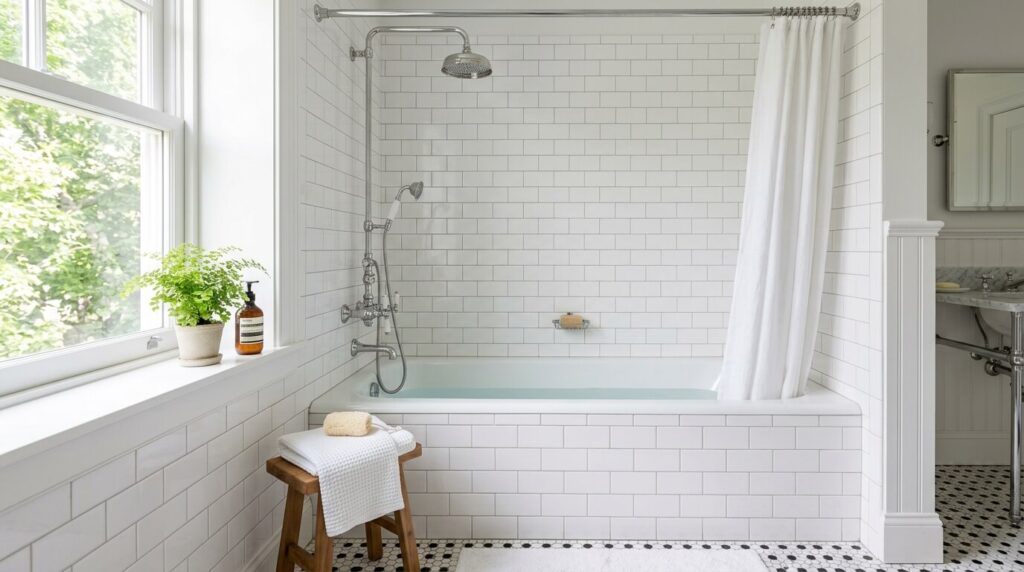
Common Mistakes to Avoid When Choosing a Tub Surround
- Choosing tile without planning for grout maintenance — beautiful tile becomes an eyesore when grout darkens with mold
- Skipping waterproofing behind the panels — even waterproof panels can fail at seams without proper backing
- Buying based on looks alone — always consider how easy each material is to clean for your household
- Ignoring the weight of natural stone — older homes may need structural reinforcement
- Going with the cheapest option — low-quality fiberglass can crack and delaminate within a few years, costing more in the long run
Expert Tips for a Long-Lasting Tub Surround
- Seal grout every 12 months if you have tile to prevent moisture infiltration
- Use a squeegee after every shower to reduce water exposure on all surround types
- Avoid abrasive scrubbers on acrylic, fiberglass, and cultured marble — they cause micro-scratches
- Inspect caulk seams around the tub rim and wall joints annually; re-caulk at the first sign of cracking or gaps
- Choose nonporous materials if anyone in your household has mold allergies or respiratory sensitivities
FAQ
Q1: What is the material surrounding the bathtub called?
It’s called a tub surround or bathtub surround. This is the waterproof wall system covering the three walls around a bathtub alcove. It can be made from acrylic, fiberglass, tile, natural stone, cultured marble, or solid surface panels.
Q2: What is the difference between a tub surround and a tub liner?
A tub surround refers to the wall panels on the sides of the bathtub. A tub liner is a thin shell installed directly over the bathtub surface itself — not the walls. Some bathroom remodels use both.
Q3: What is the most durable material for a bathtub surround?
Natural stone and ceramic/porcelain tile are the most durable materials, lasting 25–50+ years with proper care. Acrylic and solid surface panels offer high durability with far less maintenance.
Q4: Is a tile tub surround better than acrylic?
Tile offers more design flexibility and longevity but requires consistent grout maintenance to prevent mold. Acrylic is nonporous, easier to clean, and quicker to install — making it a better practical choice for many homeowners.
Q5: Can I install a tub surround myself?
Yes — acrylic, fiberglass, and PVC panel surrounds are DIY-friendly and come as kits. Tile and natural stone require professional installation for proper waterproofing and durability.
Q6: How much does it cost to replace a bathtub surround?
The average cost ranges from $200 for basic fiberglass kits to $5,000+ for custom natural stone. Most homeowners pay $700–$2,000 for a professionally installed acrylic or tile surround.
Q7: What is the easiest tub surround material to clean?
Acrylic and solid surface (PVC) panels are the easiest to clean — a damp cloth with mild soap is all that’s needed. Fiberglass is similar early on but degrades over time. Tile with grout is the hardest to keep clean.
Q8: How do I prevent mold on a bathtub surround?
Use nonporous materials like acrylic or solid surface panels, seal grout annually if you have tile, squeegee walls after each use, ensure proper bathroom ventilation, and inspect caulk seams regularly.
Q9: What is cultured marble tub surround?
Cultured marble is a synthetic material made from crushed marble mixed with resin, coated with a protective gel coat. It mimics the look of natural marble at a lower cost and is nonporous, making it easier to maintain.
Q10: How long does a tub surround last?
Lifespan varies by material: fiberglass lasts 10–15 years, acrylic 10–20+ years, cultured marble 15–25 years, tile 20–30+ years, and natural stone 25–50+ years with proper maintenance.
Q11: What is the cheapest tub surround option?
Fiberglass is the cheapest option, with kits starting around $100–$300. Acrylic panel kits are also affordable, typically $200–$500 for the materials alone before installation costs.
Q12: What is the best tub surround for a low-maintenance bathroom?
Acrylic, PVC panels, and solid surface surrounds are the top choices for low-maintenance bathrooms. They are nonporous, resistant to mold and mildew, and require only simple wiping to keep clean.
Q13: Can I put new tile over an existing tub surround?
In some cases, yes — new tile can be installed over old tile if the surface is structurally sound and level. However, it’s usually better to remove the old surround to check for water damage and ensure a proper waterproof installation.