
I’ve repainted enough bathrooms — mine and other people’s — to know the question isn’t really “what’s the best finish,” it’s “what’s the best finish for this bathroom.” A kid-heavy family bath with a weak exhaust fan needs something different than a powder room off the hallway that barely sees a drop of water.
Quick answer: For most bathrooms, satin or semi-gloss is the right paint finish for walls. Both resist moisture and wipe clean, with semi-gloss offering more protection for high-humidity, high-traffic bathrooms and satin giving a softer look for average use. Eggshell can work in low-moisture powder rooms, and flat/matte paint should generally be avoided on bathroom walls.
That’s the short version. Here’s everything that goes into actually getting it right — including where the finish matters less than people think, and where it matters a lot more.
What “Paint Finish” Actually Means
Paint finish (also called sheen) is the amount of light a dried paint film reflects. It’s created by the ratio of resin to pigment in the paint — more resin, more shine, more resistance to water and scrubbing. Less resin means a flatter look but a more porous, less durable surface.
Sheen level is typically measured on a gloss scale, and manufacturers group finishes into roughly these bands:
| Finish | Typical Sheen Level | Feel |
|---|---|---|
| Flat/Matte | 0–10% | No reflection, chalky texture |
| Eggshell | 10–25% | Slight shine, like an actual eggshell |
| Satin | 25–35% | Soft, pearly sheen |
| Semi-Gloss | 35–70% | Noticeable shine, hard surface |
| High-Gloss | 70–90%+ | Mirror-like, very reflective |
That resin content is why higher-sheen paints hold up in bathrooms and lower-sheen paints don’t: a tighter, harder film sheds water and wipes clean, while a porous flat film absorbs moisture and grime into itself.
Best Paint Finish by Bathroom Type
| Finish | Moisture Resistance | Durability/Cleanability | Best For | Watch Out For |
|---|---|---|---|---|
| Satin | High | High — easy to wipe | Most full bathrooms, primary/guest baths | Shows brush strokes on rough walls |
| Semi-Gloss | Very High | Very High — scrubbable | High-traffic, poorly ventilated, kids’ bathrooms | Highlights wall imperfections |
| Eggshell | Moderate | Moderate | Powder rooms, half-baths with no shower | Not durable enough for steamy showers |
| High-Gloss | Very High | Very High | Trim, cabinets, vanities (not full walls) | Too shiny/harsh for large wall areas |
| Flat/Matte | Low | Low | Not recommended for bathroom walls | Absorbs moisture, hard to clean, prone to mildew |
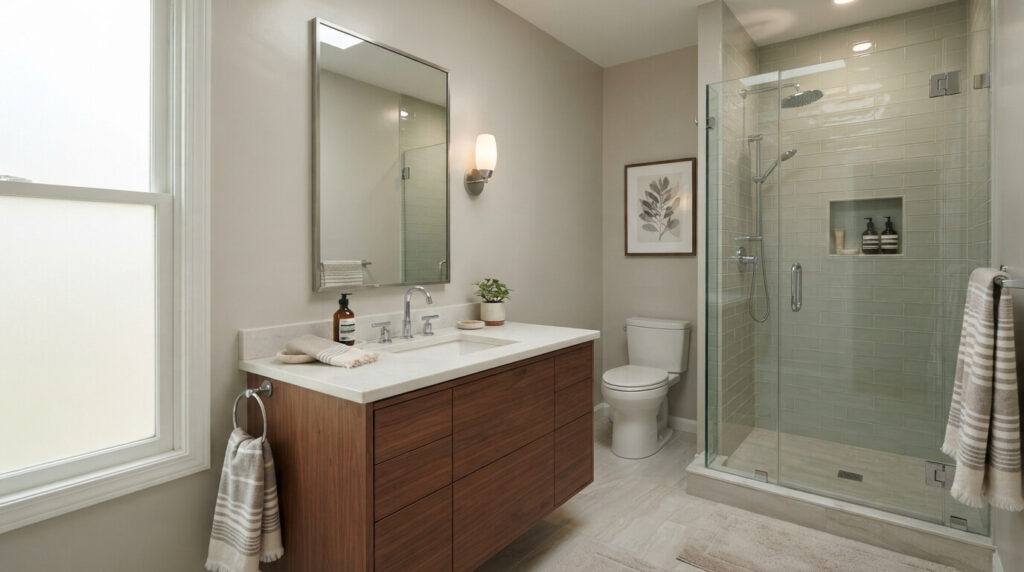
Satin: the default choice for most bathrooms
Satin is the middle ground most painters and designers reach for first. It has enough sheen to resist water and wipe clean, but it’s forgiving enough not to spotlight every dent or seam in the drywall. If you’re painting a primary bathroom, guest bath, or any full bathroom with a shower and average ventilation, satin is a safe, proven starting point.
Semi-gloss: step up when moisture or traffic is heavy
Choose semi-gloss when the bathroom gets hard use: multiple daily showers, kids, a fan that doesn’t quite keep up, or a room with no window. The tighter, harder film handles condensation and scrubbing better than satin, which matters more in a bathroom without good airflow, since trapped humidity is what actually feeds mildew growth. The trade-off is visual — semi-gloss reflects more light, so any wall flaws, patch jobs, or uneven texture will be more visible. Sand and prime before painting if you’re going this route.
Eggshell: fine for powder rooms, risky for full baths
Eggshell looks soft and elegant, and in a low-moisture space — a powder room with just a toilet and sink, no tub or shower — it can work well. It’s not built for steam exposure, though, so using it in a full bathroom with a shower is a common source of premature peeling and mildew along the tub surround.
High-gloss: save it for trim, not walls
High-gloss is the most durable, most water-resistant finish there is, which is exactly why it’s used on cabinetry, vanities, door trim, and window casings rather than entire walls. On a large wall surface, that level of shine reads as harsh and exaggerates every imperfection in the drywall.
Flat and matte: generally avoid on bathroom walls
Flat and matte paints have almost no resin film to speak of, which means they absorb moisture instead of shedding it. That makes them prone to peeling, staining, and mildew in a room that regularly fills with steam. The exception is a specialty “bath & spa” matte paint formulated specifically for high-humidity rooms — but standard interior flat paint is not the same product and shouldn’t be treated as interchangeable.
Walls, Ceiling, and Trim Don’t Need the Same Finish
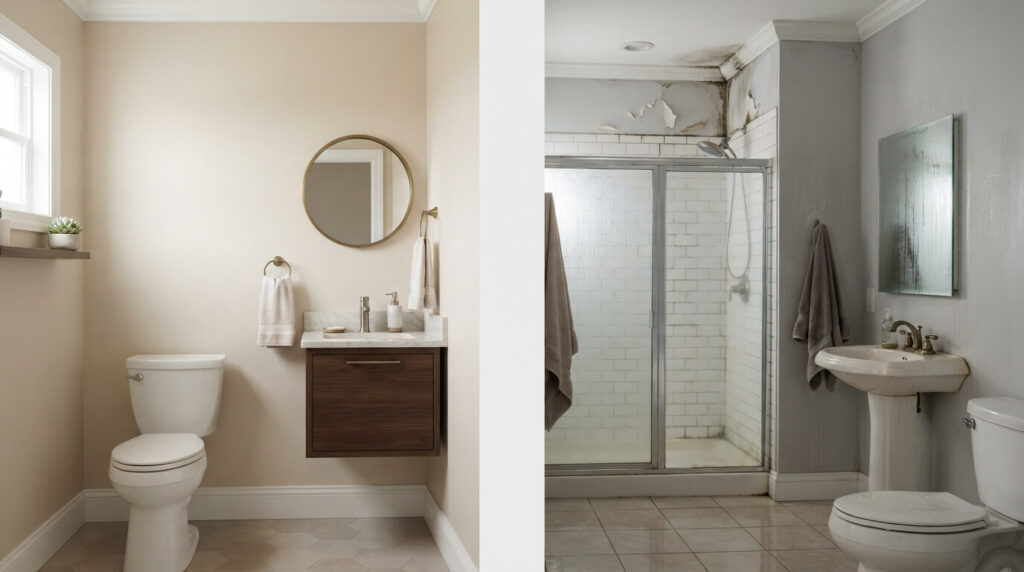
One mistake even careful DIYers make is using one sheen for the entire room. Steam rises, so the ceiling takes on moisture the walls never see — a flat ceiling paint that’s fine in a bedroom can fail in a bathroom.
- Walls: satin or semi-gloss, based on moisture and traffic
- Trim, doors, vanity: semi-gloss or high-gloss for scrubbability
- Ceiling: a moisture-resistant paint labeled for bathrooms/high-humidity areas — flat ceiling paint that isn’t rated for humidity is a common source of peeling and mildew over time
Why Ventilation Changes the Right Answer
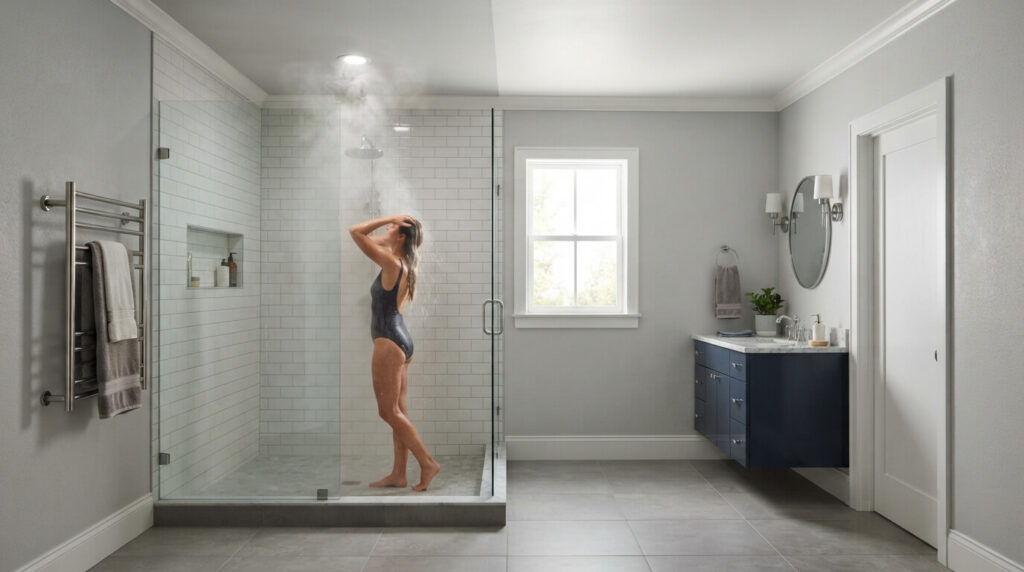
The Environmental Protection Agency recommends keeping indoor humidity between 30% and 50% to limit mold and mildew growth, but a bathroom with a shower running will spike well above that range temporarily, no matter how good your fan is. The paint’s job is to survive that spike and dry back out without holding onto the moisture.
That means the finish decision is really a ventilation decision in disguise:
- Good exhaust fan, opens to outside, used consistently: satin is usually enough
- Weak fan, no window, or a fan people forget to run: semi-gloss buys you more of a safety margin
- No shower or tub (powder room): eggshell or even matte-rated bath paint is on the table
Do You Need “Bathroom Paint,” or Just the Right Sheen?
You’ll see paint sold specifically as bathroom or “bath & spa” formulas, which typically add mildewcide and moisture-blocking resin on top of a satin or semi-gloss base. According to paint manufacturer product literature, these specialty lines are built to resist humidity damage better than a standard interior paint in the same sheen. They cost more per gallon, but for a bathroom with chronic moisture problems or a history of mildew, that upcharge is usually worth it. For an average bathroom with decent ventilation, a quality interior paint in the right sheen — satin or semi-gloss — will generally perform just fine.
Prep Matters as Much as the Finish You Pick
A lot of “the paint failed” complaints are actually prep failures, not finish failures. Before painting:
- Wash the walls — soap scum, hairspray residue, and skin oils will keep new paint from bonding, especially around the sink and shower.
- Treat any visible mildew before painting over it — paint does not kill mold, it just seals over it temporarily.
- Prime if you’re painting over a glossy or dark existing color, or if the walls have water stains — an ordinary topcoat won’t hide either.
- Use painter’s caulk at the tub/wall and vanity/wall seams to keep water from getting behind the paint film in the first place.
Cost Differences Between Finishes
Sheen has a smaller effect on price than brand and quality tier do, but within the same product line, semi-gloss and specialty moisture-resistant formulas typically run slightly more per gallon than flat or eggshell, reflecting the added resin and mildewcide additives. Budget for one gallon per roughly 350–400 square feet of wall, plus a bit extra for a second coat, which most bathrooms need regardless of finish.
Quick Decision Guide
- Full bathroom, average use, decent fan → Satin
- Family bathroom, heavy daily use, or weak ventilation → Semi-gloss
- Powder room, no shower/tub → Eggshell (or satin if you want extra durability)
- Trim, vanity, cabinets, doors → Semi-gloss or high-gloss
- Ceiling in a full bathroom → Moisture-resistant/bath-rated paint, not standard flat
FAQ
Is eggshell OK for a bathroom?
Eggshell works in low-moisture bathrooms like powder rooms without a shower or tub. In a full bathroom with regular steam exposure, it’s less durable and less moisture-resistant than satin or semi-gloss, and is more prone to peeling near wet areas over time.
Can you use flat paint in a bathroom?
Standard flat or matte paint isn’t recommended for bathroom walls because it absorbs moisture rather than repelling it, making it more prone to staining, peeling, and mildew. A specialty matte paint formulated for high-humidity rooms is a different product and can be an exception.
What’s the difference between satin and semi-gloss for bathrooms?
Both resist moisture well, but semi-gloss has a higher sheen and is more durable and scrubbable, making it better for high-traffic or poorly ventilated bathrooms. Satin has a softer look and is more forgiving of wall imperfections, making it the more common choice for average bathrooms.
What is the best paint finish for a bathroom with no windows?
Semi-gloss is generally the better choice for a windowless bathroom, since it holds up better against the trapped humidity that builds up without natural airflow. Running the exhaust fan during and after every shower matters as much as the paint choice.
Do you need special paint for a bathroom ceiling?
Yes — bathroom ceilings take on more steam exposure than walls, so a standard flat ceiling paint not rated for high humidity is a common source of peeling and mildew. A moisture-resistant or bath-rated ceiling paint is worth the extra cost.
Is semi-gloss too shiny for bathroom walls?
It can look glossier than expected, especially under bright vanity lighting, and it will show more wall imperfections than satin. Testing a sample patch under your actual lighting before committing to a whole room is the best way to avoid surprises.
How long does bathroom paint last before it needs redoing?
A well-prepped bathroom painted in the right finish (satin or semi-gloss, with proper primer and caulking) typically holds up for 5–7 years before it needs a refresh, though bathrooms with poor ventilation or heavy daily use may need touch-ups sooner.