
Most bathroom paint jobs don’t fail because of the color. They fail because someone reached for whatever gallon was already in the garage.
If you’re specifying paint for a bathroom — your own or a client’s — the short answer is this: use a 100% acrylic paint in a satin or semi-gloss finish that’s formulated with a mildew-inhibiting additive, and pair it with a mold-resistant primer if you’re covering bare drywall, stains, or a dark existing color. That combination handles the moisture, steam, and cleaning cycles a bathroom throws at a wall better than any other. Everything below explains why, and where the exceptions actually make sense.
Quick Answer: What Paint Should You Use in a Bathroom?
For most bathrooms, the best-performing option is a 100% acrylic latex paint in satin or semi-gloss, chosen specifically because these finishes shed water rather than absorb it and resist mildew growth better than flat paint. Skip flat, matte, and standard eggshell unless the product is explicitly labeled for bathrooms — their porous surface holds moisture and stains.
Why Bathroom Paint Is a Different Category
A bathroom isn’t just “a small room.” It’s a room that cycles through hot steam, standing humidity, and splashed water multiple times a day, then gets scrubbed with cleaning products on top of that. Interior wall paint designed for a bedroom or hallway simply isn’t engineered for that load.
The paint film needs three properties a living-room paint doesn’t have to prioritize: it has to resist water absorption, it has to inhibit mold and mildew at the surface, and it has to tolerate repeated scrubbing without burnishing or losing its finish. Miss any one of those, and you’re repainting in 18 months instead of 7–10 years.
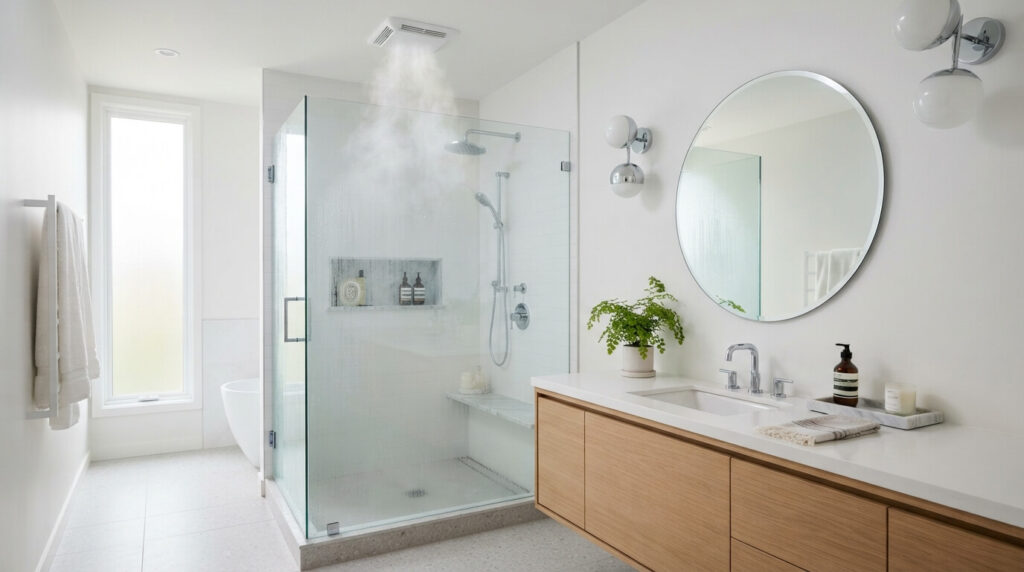
Bathroom Paint Finishes, Ranked by Performance
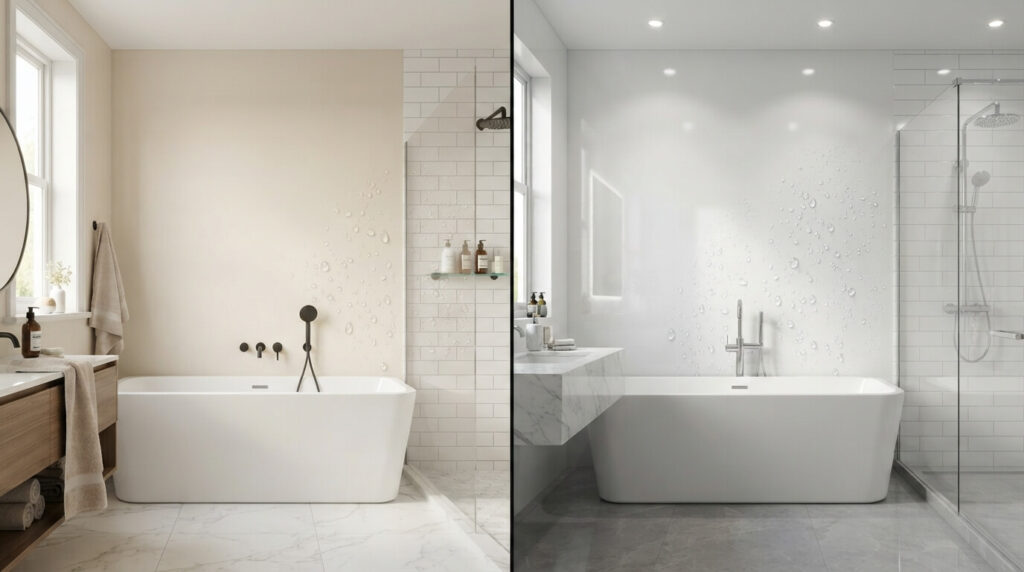
The finish (sheen level) is arguably a bigger performance factor than the brand you choose. Sheen determines how much water beads off the surface versus soaks in.
Semi-Gloss
Semi-gloss is the traditional pro recommendation for bathroom walls and trim. It cures to a hard, tight film that resists water penetration and wipes clean without dulling. The tradeoff is that its higher reflectivity shows wall imperfections — patched drywall, sanding marks, roller stipple — more than a lower sheen would.
Satin
Satin has become the more common choice in updated bathrooms because it splits the difference: enough sheen to repel moisture and clean easily, without the mirror-like glare of semi-gloss. On walls with any texture or minor imperfections, satin generally looks better while still holding up to daily steam.
Eggshell (bathroom-formulated only)
Standard eggshell is too porous for a full bath with a shower. However, eggshell paints specifically formulated with moisture- and mildew-resistant additives can work in powder rooms or half-baths that never see direct steam. If you go this route, confirm the label lists it as bath-and-spa or moisture-resistant — not just “eggshell.”
Flat and Matte
These finishes absorb water rather than shed it, which makes them prone to staining, watermarking, and mildew growth in a bathroom. They’re not recommended for shower/tub bathrooms under any circumstances, and only marginal even in a rarely-used powder room.
| Finish | Moisture Resistance | Cleanability | Best Use Case |
|---|---|---|---|
| Semi-Gloss | Excellent | Excellent | Full baths, high-splash zones, trim |
| Satin | Very Good | Very Good | Most full and half baths |
| Eggshell (bath-formulated) | Good | Good | Powder rooms, low-steam half-baths |
| Flat/Matte | Poor | Poor | Not recommended for bathrooms |
Acrylic, Latex, or Oil: Choosing the Paint Base
The finish tells you how the surface behaves; the base tells you how the paint film performs over time.
Acrylic is the standard recommendation for bathroom walls. It dries fast, resists yellowing under humidity, and — when formulated for high-moisture rooms — includes additives that actively slow mildew growth rather than just resisting water passively.
Latex (often used interchangeably with “acrylic” at the retail level, though true 100% acrylic resins outperform vinyl-acrylic blends) is easy to apply, low-odor, and a solid mid-range choice when paired with a bath-specific formula and a good primer.
Oil-based paint creates a very hard, moisture-resistant film and was the old-school default for bathrooms and trim. It’s rarely worth the tradeoff today: longer cure times, strong VOC odor that lingers in an unventilated room, and a tendency to yellow over years of humidity exposure. It still has a place on trim or cabinetry where extreme durability matters more than low odor.
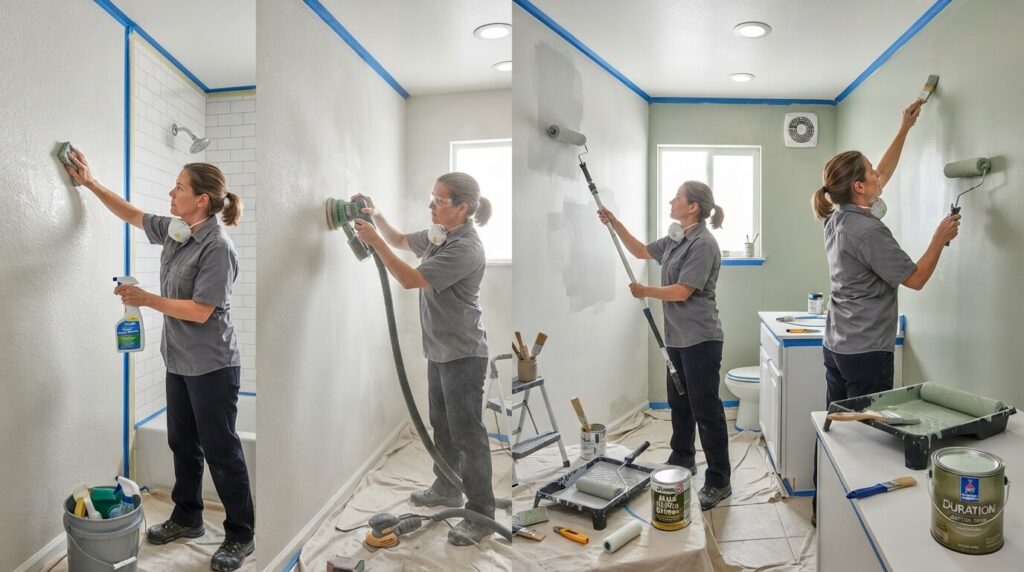
Primer: The Step Most People Skip
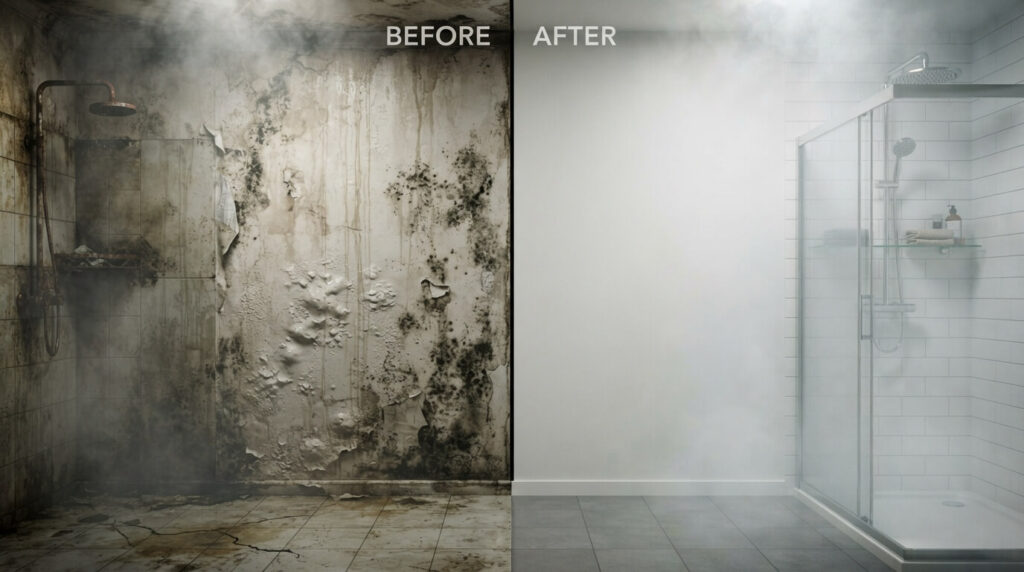
Primer isn’t optional on bare drywall, over dark colors, or on walls with existing water stains or soap-scum residue. A mold-resistant, stain-blocking primer seals the substrate so the topcoat’s mildew additives aren’t fighting contamination underneath it. Skipping primer on a stained or previously mildewed wall is one of the most common reasons a “good” bathroom paint job fails within a year — the paint didn’t fail; the surface underneath it did.
Bathroom Ceilings Need Their Own Plan
Ceilings take the worst of the steam because heat and moisture rise and collect there first. Use the same satin or semi-gloss logic on the ceiling that you’d use on the walls — a flat ceiling paint in a full bath is a near-guaranteed callback for staining or peeling within a couple of years. Several manufacturers sell ceiling-specific bath formulas built for this exact exposure; they’re worth the small price premium over a standard flat ceiling white.
Ventilation Changes the Math
Paint chemistry can only do so much if the room traps humidity. A bathroom with a working exhaust fan and reasonable air exchange lets even a mid-grade acrylic satin perform well for years. A bathroom with a weak or absent fan needs the highest-performing option in every category — semi-gloss, full acrylic, mildew-resistant primer — because the paint is doing work the ventilation should be sharing.
Running the exhaust fan for 25–30 minutes after a shower pulls residual moisture out of the room before it settles into the paint film, and it’s the single cheapest thing that extends a bathroom paint job’s lifespan.
Prep and Application: Where Paint Jobs Actually Succeed or Fail
Surface preparation determines adhesion far more than brand selection does. The sequence that consistently holds up:
- Clean walls thoroughly to remove soap scum, oils, and any surface mildew before sanding or priming.
- Lightly sand glossy existing paint so the new coat has something to grip.
- Spot-prime any stains, patches, or mildew-affected areas with a stain-blocking, mold-resistant primer.
- Cut in edges and trim with a brush before rolling the field, which produces cleaner lines and more even blending.
- Apply two coats of the topcoat, allowing full dry time between coats per the product label.
- Keep the exhaust fan running during application and for the first day of curing, and hold off on showering for at least 24–48 hours.
Best Paint for Bathroom: FAQ
What is the best paint finish for a bathroom?
Satin and semi-gloss are the two top-performing finishes because they resist water absorption and wipe clean without damage. Semi-gloss offers slightly more moisture resistance; satin offers a softer look with nearly the same durability.
Is semi-gloss or satin better for a bathroom?
Both work well in full bathrooms. Semi-gloss is marginally more moisture-resistant and easier to scrub, while satin hides wall imperfections better and reads as less “shiny.” The choice usually comes down to wall condition and aesthetic preference rather than performance.
Do you need special paint for a bathroom, or will regular interior paint work?
Bath-and-spa or moisture-resistant formulas contain mildew-inhibiting additives that standard interior paint lacks. Regular paint may look fine initially, but it’s more prone to mildew growth and premature failure in a high-humidity room.
Can you use flat or matte paint in a bathroom?
It’s not recommended. Flat and matte finishes absorb moisture instead of shedding it, which makes them more likely to stain, streak, and develop mildew in a room with regular steam exposure.
What’s the best primer for bathroom walls?
A mold- and mildew-resistant, stain-blocking primer is the standard choice, especially over bare drywall, dark existing paint, water stains, or any surface with prior mildew growth.
How long should you wait to shower after painting a bathroom?
Most acrylic bathroom paints need at least 24–48 hours to cure enough to tolerate steam and moisture, even though they may feel dry to the touch within a few hours. Check the specific product’s cure-time guidance, since formulas vary.
Does paint color affect how well bathroom paint performs?
Color affects appearance and perceived room size, not moisture resistance. Lighter colors tend to make small bathrooms feel larger and brighter, while darker tones can create a more spa-like feel in bigger spaces — but the finish and base are what determine durability, regardless of the color you pick.
Conclusion
The right bathroom paint job comes down to three decisions: pick a satin or semi-gloss finish, choose a 100% acrylic (or well-formulated latex) base with mold-inhibiting additives, and don’t skip the primer on any wall with stains, dark color, or bare drywall. Get those three right, keep the exhaust fan running, and a bathroom repaint should hold up cleanly for the better part of a decade.
If you’re speccing paint for a client project, browse our bathroom renovation guides for finish comparisons by room type, or check our interior painting cost breakdown to budget the full job — and if humidity has already caused visible mildew, see our mold-resistant paint buyer’s guide before you pick up a brush.
FAQ
Q: What is the best paint finish for a bathroom?
Satin and semi-gloss are the two top-performing finishes because they resist water absorption and wipe clean without damage. Semi-gloss offers slightly more moisture resistance; satin offers a softer look with nearly the same durability.
Q: Is semi-gloss or satin better for a bathroom?
A: Both work well in full bathrooms. Semi-gloss is marginally more moisture-resistant and easier to scrub, while satin hides wall imperfections better and reads as less shiny. The choice usually comes down to wall condition and aesthetic preference rather than performance.
Q: Do you need special paint for a bathroom, or will regular interior paint work?
A: Bath-and-spa or moisture-resistant formulas contain mildew-inhibiting additives that standard interior paint lacks. Regular paint may look fine initially, but it’s more prone to mildew growth and premature failure in a high-humidity room.
Q: Can you use flat or matte paint in a bathroom?
A: It’s not recommended. Flat and matte finishes absorb moisture instead of shedding it, which makes them more likely to stain, streak, and develop mildew in a room with regular steam exposure.
Q: What’s the best primer for bathroom walls?
A: A mold- and mildew-resistant, stain-blocking primer is the standard choice, especially over bare drywall, dark existing paint, water stains, or any surface with prior mildew growth.
Q: How long should you wait to shower after painting a bathroom?
A: Most acrylic bathroom paints need at least 24–48 hours to cure enough to tolerate steam and moisture, even though they may feel dry to the touch within a few hours. Check the specific product’s cure-time guidance, since formulas vary.
Q: Does paint color affect how well bathroom paint performs?
A: Color affects appearance and perceived room size, not moisture resistance. Lighter colors tend to make small bathrooms feel larger and brighter, while darker tones can create a more spa-like feel in bigger spaces — but the finish and base are what determine durability, regardless of the color you pick.