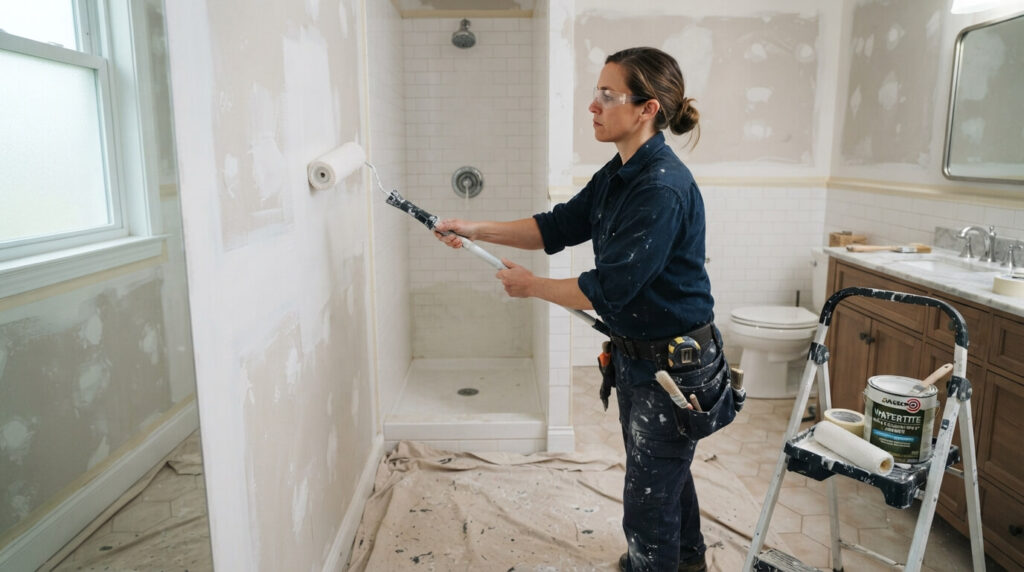
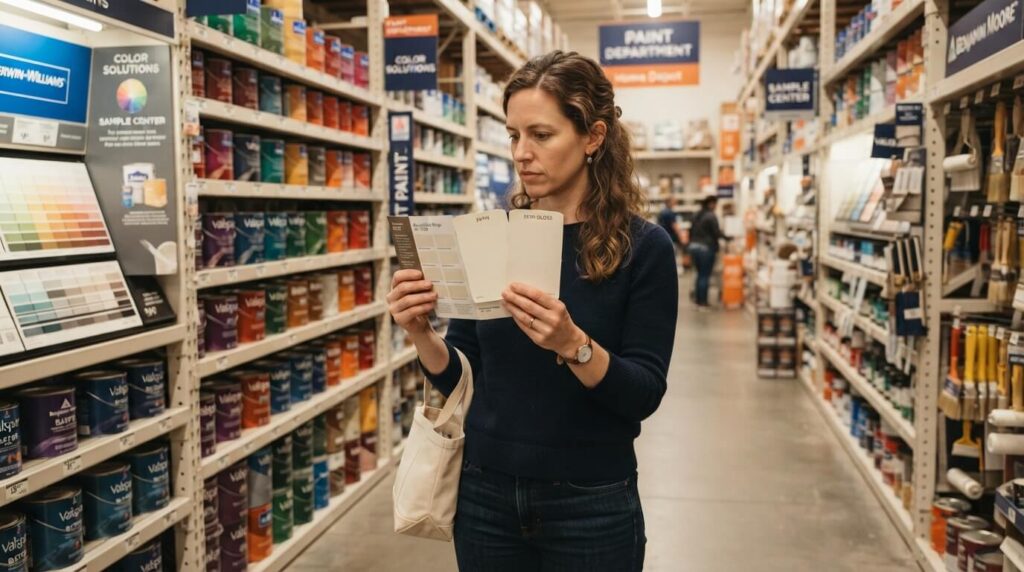
If you’ve stood in the paint aisle squinting at sheen samples, you already know the real question isn’t “what color” — it’s “what finish will actually survive my shower steam.” Semi-gloss keeps coming up in every bathroom paint conversation, and for good reason, but it’s not automatically the right call for every wall in every bathroom.
Quick answer: Semi-gloss is one of the two best paint sheens for bathrooms because its tight, low-porosity film resists moisture, wipes clean easily, and holds up in humid conditions. It’s the strongest choice for shower-adjacent walls, trim, and poorly ventilated bathrooms, though satin is often preferred on larger wall areas for a softer look with nearly the same protection.
What “Semi-Gloss” Actually Means
Paint sheen refers to how much light a dried paint film reflects, measured on a scale from flat (no shine) to high-gloss (mirror-like shine). Semi-gloss sits toward the shiny end of that scale, typically reflecting somewhere between satin and high-gloss.
That shine isn’t just cosmetic. Higher-sheen paints contain fewer flattening agents — the fine, often silica-based particles manufacturers add to reduce reflectivity. Fewer flattening agents mean a smoother, denser, more continuous paint film once it cures. A denser film has fewer microscopic gaps for water vapor to work its way into, which is exactly why sheen and moisture resistance move together.
Why Bathrooms Are a Different Problem Than Any Other Room
A bathroom can hit close to 100% relative humidity for several minutes after a hot shower, according to building-science research on residential moisture. That’s a level of sustained humidity almost no other room in the house experiences on a daily basis.
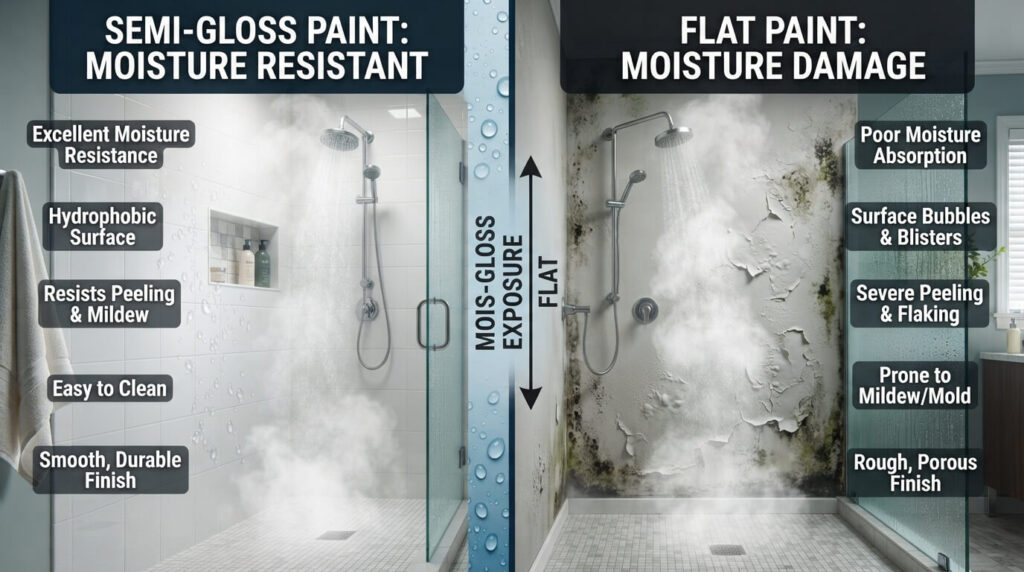
Paint film that works fine in a bedroom can fail in a bathroom within a year or two. Flat and matte finishes are more porous by design, which lets them absorb airborne moisture instead of shedding it. Over repeated humidity cycles, that trapped moisture softens the paint film, creates the ideal surface for mildew to colonize, and eventually causes bubbling or peeling — especially around the tub, shower, and any exterior-facing wall.
Semi-Gloss vs. Satin vs. Eggshell vs. Flat: How They Actually Compare
| Finish | Sheen Level | Moisture Resistance | Cleanability | Best Used For |
|---|---|---|---|---|
| Flat / Matte | None to very low | Poor | Difficult, can scrub off | Not recommended for bathrooms |
| Eggshell | Low | Fair | Moderate | Powder rooms, low-humidity half-baths |
| Satin | Medium | Good | Good | Most bathroom walls, ceilings with fans |
| Semi-Gloss | Medium-high | Very good | Excellent | Shower walls, trim, kids’ bathrooms, low-ventilation rooms |
| High-Gloss | Highest | Best | Best | Trim, doors, cabinets, vanities (rarely full walls) |
A few patterns are worth calling out. Satin and semi-gloss are the only two finishes most professional painters recommend for bathroom walls without qualification. High-gloss protects best but shows every wall imperfection, so it’s typically reserved for smaller surfaces like trim and cabinetry rather than open wall space. Flat and matte paints, despite improvements in modern formulas, still lag behind on moisture performance and are best avoided on any surface that gets direct steam exposure.
When Semi-Gloss Is the Right Call
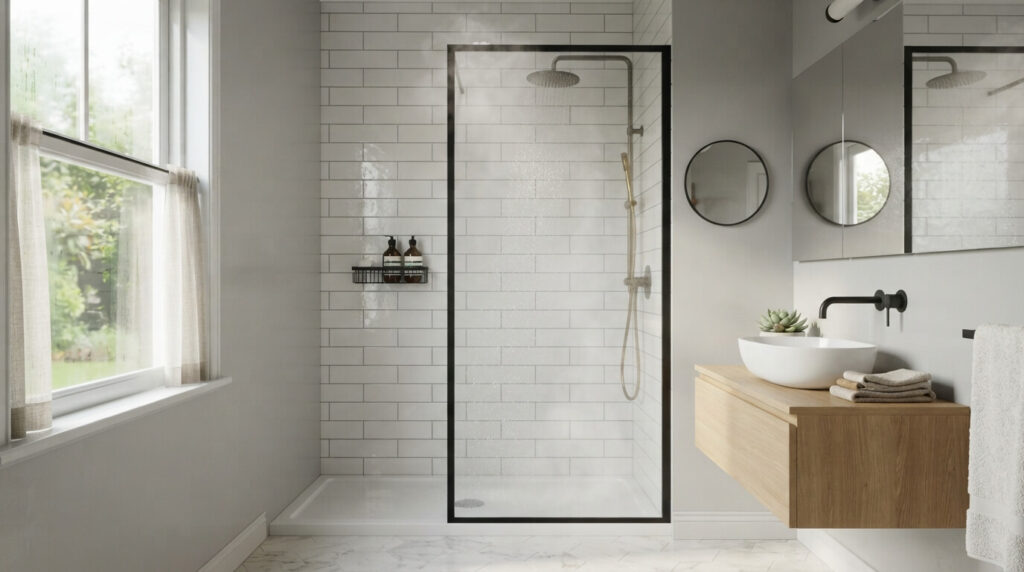
Semi-gloss earns its reputation in a few specific situations rather than as a universal bathroom default.
- Walls in the direct splash zone. Any wall next to a tub or a shower without a full enclosure takes on liquid water, not just humidity — a tougher test that favors semi-gloss’s denser film.
- Bathrooms with weak or no ventilation. Older homes with an undersized exhaust fan, or none at all, hold onto post-shower moisture far longer. That extended exposure window is where semi-gloss’s advantage over satin becomes measurable.
- Kids’ bathrooms and high-traffic family bathrooms. Toothpaste, soap residue, and general daily grime wipe off a semi-gloss surface without the scrubbing that can burnish or damage a flatter finish.
- Trim, doors, and cabinetry in any bathroom. Even in a bathroom where the walls are satin, semi-gloss (or high-gloss) on the trim gives a durable, easy-to-wipe contrast.
- Bathroom ceilings. Condensation often forms first on the ceiling, particularly if there’s poor attic insulation above. A semi-gloss or high-gloss ceiling handles that better than a flat one, though it will show more of the ceiling’s texture and any imperfections.
When to Choose Satin Instead
Modern satin formulations have closed much of the performance gap with semi-gloss. Advances in resin technology mean today’s premium satin paint resists moisture nearly as well as semi-gloss did a decade ago, so the choice increasingly comes down to look rather than pure durability.
Satin makes sense when the bathroom has decent ventilation, the walls aren’t in a direct splash zone, and you’d rather not deal with semi-gloss’s tendency to highlight drywall seams, roller marks, and minor wall flaws under bright bathroom lighting. Many full bathrooms with an exhaust fan in regular use do perfectly well with satin on the walls and semi-gloss reserved for trim.
Application Tips That Determine How Well It Performs
The finish you buy only performs as well as the surface prep and application behind it.
- Clean thoroughly first. Soap scum, mildew, and grime block adhesion. Wash walls with a mild detergent or a diluted vinegar solution and let them fully dry.
- Repair before you prime. Fill cracks and holes with joint compound, then sand smooth. Semi-gloss’s reflectivity makes patched areas more visible if they’re not properly feathered.
- Use a moisture-resistant primer. A primer built for high-humidity areas seals the substrate and gives the topcoat something consistent to bond to.
- Choose a paint labeled for bathrooms or high-moisture areas rather than a generic interior semi-gloss. These formulas typically include mildewcide additives that a standard semi-gloss may not.
- Ventilate during and after painting. Open a window or run a fan so the film cures properly; paint that dries too slowly in a humid room can trap moisture underneath it.
- Lightly sand any existing glossy surface before repainting over it, so the new coat has enough texture to grip.
Does Sheen Affect Mold Growth?
Sheen doesn’t stop mold on its own — mold needs moisture and an organic food source (like dust or soap film) regardless of what’s under it. What sheen affects is how much moisture the paint film itself absorbs and how easy the surface is to keep clean, both of which reduce the conditions mold needs to establish. Pairing a semi-gloss or satin finish with a paint that specifically lists mildew resistance on the label gives you both layers of protection.
Cost and Longevity: What to Expect
Semi-gloss and satin paints in the same product line are usually priced within a dollar or two of each other per gallon, so cost rarely drives the decision. The bigger financial factor is repaint frequency. Bathrooms generally need repainting every three to five years because of ongoing moisture exposure; choosing the right sheen from the start, on properly prepped and primed walls, is what stretches that cycle out rather than the paint brand alone.
Conclusion: Making the Call for Your Bathroom
There’s no single “correct” sheen for every bathroom — there’s a correct sheen for your bathroom’s ventilation, splash exposure, and how much wall imperfection you’re willing to show off. If your bathroom runs humid, gets direct splash, or sees heavy daily use, semi-gloss is the safer bet, especially on trim and any wall near the tub or shower. It’s well-ventilated and you’d rather soften the shine, a quality satin will hold up nearly as well.
If you’d rather have that decision made for you by someone who’s prepped and painted hundreds of bathrooms, best price bathroom can walk your space, factor in your ventilation and layout, and recommend (or apply) the right finish the first time.
FAQ
Is semi-gloss or satin better for a bathroom?
Both work well in bathrooms. Semi-gloss offers slightly better moisture resistance and is the stronger choice for walls in direct splash zones or poorly ventilated rooms, while satin gives a softer look with nearly comparable performance in well-ventilated spaces.
Can I use semi-gloss paint on a bathroom ceiling?
Yes. Semi-gloss or high-gloss on the ceiling handles condensation better than flat paint, since ceilings are often where moisture condenses first. The tradeoff is that the sheen will show more texture and imperfections than a flat ceiling would.
Does semi-gloss paint prevent mold in bathrooms?
Semi-gloss doesn’t prevent mold by itself; mold needs moisture and an organic surface to grow on. What semi-gloss does is reduce how much moisture the paint film absorbs and make the surface easier to clean, both of which lower the conditions mold needs. Pairing it with a paint labeled mildew-resistant adds a second layer of protection.
Is flat or matte paint ever okay in a bathroom?
Flat and matte finishes are generally not recommended for bathrooms because their more porous film absorbs moisture rather than repelling it, leading to peeling, staining, and mildew over time. If you want a matte look, consider using it only on a well-ventilated accent wall away from the shower.
How long does semi-gloss paint last in a bathroom?
Most bathrooms need repainting every three to five years due to ongoing moisture exposure, and semi-gloss on properly primed, prepped walls tends to fall on the longer end of that range compared to lower-sheen finishes.
What finish should I use for bathroom trim and cabinets?
Use semi-gloss or high-gloss for trim, doors, and cabinetry. These surfaces get the most direct contact and cleaning, and a higher-sheen finish holds up to wiping and scrubbing better than a wall-grade satin.
Is eggshell finish suitable for a bathroom?
Eggshell can work in low-moisture spaces like a powder room or half-bath without a shower, but it’s not recommended for a full bathroom with regular shower use, since its moisture resistance is noticeably lower than satin or semi-gloss.